Codex Medica
An Ethnobotanical Cross-Cultural Study Bible
Research constitution · evidence architecture · field templates · editorial canon
FOUNDING PROPOSITION. Humanity's medicinal plant knowledge is not a primitive draft of pharmacology. It is a plural archive of observation, relationship, ritual, ecology and experiment. The Codex preserves that archive faithfully, tests claims honestly, and refuses to confuse either reverence with proof or absence of trials with absence of knowledge.
| Edition | Status | Stewardship | Primary purpose |
|---|---|---|---|
| 0.2 · 30 July 2026 | Foundation locked | Community-governed, versioned corpus | Research and documentation; not a prescribing manual |
Truth without theft. Memory without romanticism. Evidence without contempt.
How to Use This Bible
This document is the governing scaffold for a living ethnobotanical corpus. It defines what the project may claim, how it records uncertainty, who retains authority over knowledge, and how each plant, preparation and therapeutic assertion moves from raw source to publishable conclusion.
NON-CLINICAL STATUS. The Codex documents historical and contemporary knowledge. It does not provide personalized treatment, dosage or instructions for preparing hazardous, intoxicating, abortifacient or otherwise high-risk substances.
The reader’s four routes
| Route | Question | Start here |
|---|---|---|
| Custodian | Is our community represented accurately and on our terms? | Books II-III: governance, consent and attribution |
| Researcher | How do I collect, compare and grade a claim? | Books IV-VIII: ontology, workflow and evidence |
| Editor | What may the Codex publish and in what language? | Books IX-X: adjudication and editorial canon |
| Builder | How should the corpus be stored and queried? | Book XI: schema and computational architecture |
The central rule
Every record must preserve three layers that are related but never collapsed:
The witnessed tradition: who used what, where, when, how and according to whom.
The interpreted mechanism: what taxonomy, chemistry, ecology or physiology might explain.
The tested outcome: what controlled observation in humans actually demonstrates.
Book I : Charter and Boundaries
1. Mission
Codex Medica is a cross-cultural atlas of relationships between people, plants, fungi, lichens and medicinal practice. It is designed to preserve provenance, make distinct knowledge systems legible beside one another, identify convergences without flattening difference, and generate ethically valid research questions.
2. What belongs
Named or identifiable biological taxa, including uncertainty and historical synonyms.
Medicinal, nutritional-medicinal, ritual-healing and preventive practices where context can be preserved.
Oral histories, field records, materia medica, pharmacopoeias, archaeological evidence, herbarium specimens, clinical literature and safety reports.
Preparation, route and context as recorded facts: not reconstructed instructions when the source is incomplete.
Negative knowledge: contraindications, taboo, ecological limits, failed treatments, poisonings and reasons a practice was abandoned.
3. What does not belong
Decontextualized lists of ‘tribal remedies’ with no named people, place, source or date.
Claims copied across websites and counted as independent confirmations.
Secret, sacred, gender-restricted, initiated or community-restricted knowledge without explicit authority to include it.
Foraging or preparation instructions for dangerous materials presented as wellness content.
A universal efficacy ranking that treats randomized trials as a measure of cultural worth.
4. Canonical objects
| Object | Meaning | Stable identifier |
|---|---|---|
| Taxon | A biological identity with accepted name, synonyms and uncertainty | TAX- |
| Knowledge holder | Community, lineage, practitioner or documented textual tradition | KNO- |
| Use report | One claim by one source about one practice | USE- |
| Preparation | Material transformation and route, recorded at safe resolution | PRE- |
| Claim | A normalized proposition assembled from use reports | CLM- |
| Evidence item | Text, specimen, study, assay or safety signal | EVD- |
| Restriction | Consent, access, cultural or hazard condition | RST- |
Book II : Ethics, Authority and Reciprocity
The Codex follows two simultaneous obligations: scientific traceability and the sovereignty of knowledge holders. ‘Open’ is not the default when openness would reproduce extraction.
5. Governing frameworks
| Framework | Codex interpretation |
|---|---|
| CARE | Collective Benefit, Authority to Control, Responsibility and Ethics govern Indigenous data throughout its lifecycle. |
| FAIR | Findable, Accessible, Interoperable and Reusable applies only within permissions established by CARE and community protocol. |
| Nagoya Protocol | Access, prior informed consent, mutually agreed terms and fair benefit-sharing are tracked where genetic resources or associated traditional knowledge are implicated. |
| Local Contexts | TK/BC Notices and community-applied Labels communicate provenance, authority and conditions of circulation. |
| WHO strategy 2025-2034 | Strengthen evidence and safety while respecting people-centred traditional, complementary and integrative medicine. |
6. Consent is a state machine, not a signature
| State | Meaning | Publication consequence |
|---|---|---|
| Unknown | No reliable permission record | Metadata only; no sensitive content |
| Contact initiated | Custodian identified; discussion begun | Hold |
| Conditional | Specified audience, purpose, duration or detail | Enforce conditions |
| Granted | Documented authority and scope | Publish within scope |
| Withdrawn | Authority revoked or conditions changed | Takedown/version action |
| Community governed | Ongoing review by nominated authority | Community decision controls |
7. Benefit-sharing ledger
Attribution in the language and hierarchy requested by the knowledge holders.
Copies, translations and usable data returned to the community.
Shared authorship, governance seats, paid review or research employment.
Material benefits arising from grants, licensing, patents or commercial products.
Conservation and cultivation support where increased attention could threaten a species.
STOP RULE If a record cannot answer ‘Who has the authority to permit this circulation?’ it cannot progress beyond restricted intake.
Book III : Cultural Fidelity
8. Name peoples precisely
Use the community’s current self-designation where known, retain historically used labels only as searchable source-language metadata, and record whether an ethnographer’s broad label collapses several peoples. Never silently modernize a quotation.
9. Preserve explanatory worlds
A humoral, ancestral, energetic, spiritual, ecological or biomedical explanation must be recorded in its own terms before any crosswalk is attempted. Translation fields may propose relationships; they may not replace the source concept.
| Source concept | Literal account | Analytical crosswalk | Rule |
|---|---|---|---|
| Recorded verbatim | Meaning supplied by custodian/source | Optional biomedical or comparative interpretation | Never overwrite source |
| Untranslatable | Marked as such with contextual note | No forced equivalence | Difference is data |
| Contested | Multiple authorized interpretations | Parallel readings | Do not select a winner |
10. Restricted knowledge classes
Public
Community-visible
Research-visible under agreement
Seasonal or ceremonial
Gender/age/initiation restricted
Sacred/secret
Embargoed
Withdrawn
Book IV : Taxonomy and Material Identity
11. Identity chain
Record the vernacular name exactly, including language, dialect, tone or click notation where relevant.
Record the collector’s proposed scientific identification and confidence.
Resolve accepted name, author citation, family and synonyms against an authoritative taxonomic backbone.
Link voucher specimen, herbarium, accession, photograph and geolocation at the permitted precision.
Record plant part, developmental stage, condition and co-harvested material.
Retain historical identity separately when a text cannot be mapped confidently to a modern taxon.
12. Identification confidence
| Code | Definition | Permitted inference |
|---|---|---|
| ID-4 | Voucher verified by qualified taxonomist or genomic authentication | Species-level |
| ID-3 | Diagnostic specimen/photo and expert identification | Usually species-level |
| ID-2 | Strong vernacular/geographic match; no voucher | Qualified species or genus |
| ID-1 | Ambiguous historical/vernacular identity | Genus/family or unresolved |
| ID-0 | No defensible biological identity | No chemical or safety extrapolation |
ANTI-SUBSTITUTION RULE. Evidence from bark extract, essential oil, resin, smoke and whole-plant decoction is not interchangeable: even when the species is identical.
Book V : The Use-Report Record
13. Minimum viable ethnobotanical record
| Domain | Required fields |
|---|---|
| Authority | Knowledge holder; recorder; consent state; access class; requested attribution |
| Place/time | Community-defined place; ecological region; collection/use date; historical period |
| Identity | Vernacular name; language; scientific identification; confidence; voucher |
| Material | Part; state; preparation class; route; dose fidelity; co-ingredients |
| Purpose | Source-language indication; symptoms; preventive/curative/ritual role; recipient |
| Outcome | Expected signs; observed response; time course; failure; adverse effects |
| Transmission | Oral/textual/clinical lineage; source genre; independence from other reports |
| Governance | Restrictions; benefit-sharing; review date; takedown contact |
14. Dose-fidelity scale
| Code | Record quality |
|---|---|
| D0 | No quantity or frequency |
| D1 | Qualitative amount only: pinch, handful, sip, body-length |
| D2 | Local unit documented but not calibrated |
| D3 | Approximate modern conversion possible |
| D4 | Measured amount, frequency, duration and preparation yield |
15. Preparation ontology
Raw • dried • powdered • chewed • cold infusion • hot infusion • decoction • expressed juice • fermented • smoked/fumigated • steamed/bathed • poultice • salve • oil infusion • alcohol extract • ash/mineralized • compound formula • ceremonial handling • unknown.
Book VI : Sources and Transmission
16. Source classes
| Class | Examples | Primary risk |
|---|---|---|
| Living authority | Community custodian, practitioner, patient, harvester | Extraction, mistranslation, power imbalance |
| Field ethnography | Interview notes, recordings, participant observation | Recorder bias; frozen historical label |
| Classical materia medica | Dioscorides, Ayurveda, Chinese, Arabic-Persian, African manuscripts | Taxonomic ambiguity; copyist layers |
| Colonial record | Mission, military, settler and administrative texts | Racism, erasure, coercive collection |
| Archaeological | Residue, dental calculus, coprolite, vessel or pollen evidence | Use and indication inferred indirectly |
| Commercial | Labels, advertisements, formularies, trade catalogues | Marketing inflation |
| Biomedical | Case report, assay, animal model, trial, review | Preparation mismatch; publication bias |
17. Independence test
Ten websites quoting one ethnobotanical database equal one lineage, not ten confirmations. Every use report carries a transmission-parent field. Apparent cross-cultural convergence is counted only after likely copying, trade diffusion and shared textual ancestry are considered.
| Status | Criterion |
|---|---|
| Independent | No identifiable shared source or transmission route |
| Possibly independent | No citation link, but contact/diffusion plausible |
| Derived | Direct citation, translation, paraphrase or product-copy lineage |
| Unknown | Insufficient provenance |
Book VII : Evidence Architecture
18. Six axes: not one ladder
| Axis | Question | Score |
|---|---|---|
| Cultural authenticity | Is this practice represented faithfully and with authority? | 0-4 |
| Source integrity | Can the report be traced, dated and interpreted? | 0-4 |
| Material identity | Do we know the organism, part and preparation? | 0-4 |
| Cross-cultural replication | How many independent traditions report a comparable use? | 0-4 |
| Biological plausibility | Do chemistry and experimental models support a mechanism? | 0-4 |
| Clinical evidence | What happens in appropriately matched human use? | 0-4 |
| Safety certainty | Can harms, interactions and vulnerable groups be characterized? | 0-4 |
19. Interpretation bands
| Band | Meaning | Editorial wording |
|---|---|---|
| A | Replicated, preparation-matched human evidence with characterized safety | ‘Evidence supports…’ |
| B | Promising human evidence with important limitations | ‘May…; evidence remains limited’ |
| C | Convergent tradition plus plausible experimental support | ‘Traditionally used; biologically plausible; unconfirmed clinically’ |
| D | Authentic use report without adequate experimental or human evidence | ‘Recorded as a traditional use’ |
| E | Ambiguous, derived, mismatched or contradicted claim | ‘Claim reported, but currently unreliable’ |
| X | Restricted, hazardous or ethically unsuitable for public synthesis | Metadata/restriction notice only |
20. No arithmetic laundering
Axis scores may support transparent comparison, but they are not averaged into a pseudo-scientific universal number. A culturally authentic practice can have no clinical evidence. A pharmacologically active extract can be culturally inauthentic. A strong efficacy signal can coexist with unacceptable ecological or safety risk.
21. Statistical synthesis gate
Same or justifiably equivalent taxon and authenticated material.
Comparable preparation, route and exposure.
Comparable population and condition.
Compatible outcomes and timepoints.
Controlled human data with extractable estimates.
Heterogeneity and publication-bias plan specified before pooling.
IF THE GATE FAILS Perform a structured evidence synthesis. Never create a pooled effect size from ethnography, cell assays, animal studies and unrelated clinical extracts.
Book VIII : Safety, Ecology and Misuse
22. Hazard domains
| Domain | Examples |
|---|---|
| Intrinsic toxicity | Hepatic, renal, neurological, cardiac, reproductive, carcinogenic |
| Identification | Look-alikes, toxic congeners, traded substitutions |
| Preparation | Concentration, fermentation, smoke, essential-oil distillation, solvent residues |
| Interaction | Medicines, alcohol, other botanicals, anaesthesia |
| Context | Pregnancy, children, frailty, psychiatric vulnerability, liver/kidney disease |
| Contamination | Pesticide, heavy metal, pathogen, mould, road/industrial pollution |
| Ecology | Threatened species, destructive harvest, habitat pressure |
| Information hazard | Instructions enabling poisoning, intoxication, illegal harvest or exploitation |
23. Safety language
Absence of reported harm is recorded as ‘no harm located in the searched sources,’ never ‘safe.’ Traditional longevity is relevant exposure information, not a substitute for surveillance. A preparation’s hazard cannot be inferred from the safety of another plant part or standardized extract.
24. Conservation brake
Public attention must not turn rare medicine into an extinction market. Records include conservation status, harvest impact, cultivation feasibility, substitute traditions, location obfuscation and a publication-risk decision.
Book IX : Comparative Method
25. Units of comparison
Compare complete practice complexes, not plant names alone:
Organism + part + preparation + route + purpose + explanatory model + setting + authority.
26. Convergence classes
| Class | Description | Inference |
|---|---|---|
| Material convergence | Same/similar taxon and part | Shared chemistry possible |
| Functional convergence | Different taxa used for similar purpose | Search for shared properties or ecology |
| Preparation convergence | Similar transformations across taxa | Technique may drive effect or safety |
| Symbolic convergence | Parallel ritual role or doctrine | Do not reduce automatically to pharmacology |
| Transmission convergence | Practice spread through trade, migration or texts | Historically meaningful, not independent replication |
27. Comparative fallacies
Doctrine of signatures presented as universal causality.
One vernacular name assumed to indicate one species.
One species assumed to have one stable chemistry across climate and soil.
Similar symptom words assumed to denote the same illness.
Colonial silence interpreted as cultural absence.
Ritual context stripped away as pharmacologically irrelevant without testing.
Book X : Claim Adjudication and Editorial Canon
28. Claim workflow
Atomize the assertion into taxon, material, action, population, condition and outcome.
Locate the earliest traceable use report and map its descendants.
Resolve cultural authority, consent and access conditions.
Authenticate the organism and preparation; mark unresolved elements.
Search independently for tradition, mechanism, clinical outcome and harm.
Assess transmission independence and preparation match.
Grade each evidence axis and record dissent.
Write a calibrated conclusion and community-review version.
Set review triggers: new trial, taxonomic revision, custodian correction or safety signal.
29. House language
| Avoid | Prefer |
|---|---|
| ‘The X tribe believed…’ | ‘A [date/source] record attributed this practice to [precise people/community]…’ |
| ‘Proven for centuries’ | ‘Documented over [period]; clinical efficacy has/has not been tested.’ |
| ‘Contains anti-inflammatory properties’ | ‘Specified constituents affected specified inflammatory markers in [model].’ |
| ‘No evidence’ | ‘No eligible controlled human evidence was located in this search.’ |
| ‘Safe and natural’ | ‘Safety evidence is limited/characterized for this preparation and exposure.’ |
| ‘The active ingredient’ | ‘A candidate constituent or mixture associated with the observed effect.’ |
30. Citation canon
Cite the closest source to the claim. A database entry should point to its underlying ethnography; a review should not replace the original trial when numerical results are discussed. Preserve page, passage, edition, translator, archive identifier and access date.
Book XI : Computational Architecture
31. Core relationship model
Knowledge Holder -> asserts -> Use Report -> concerns -> Taxon/Material -> uses -> Preparation -> for -> Indication. Evidence Items support, contradict or contextualize Claims. Restrictions govern every node and edge; they are not a final document-level checkbox.
32. Minimal claim record
| Field | Example |
|---|---|
| claim_id | CLM-PIN-SAB-ANTIRHEUM-001 |
| proposition | Pitch of identified foothill pine was chewed for rheumatism |
| source_term | Rheumatism |
| normalized_condition | Historical musculoskeletal/rheumatic complaint; not diagnostically resolved |
| taxon_id / confidence | TAX-PIN-SAB / ID-3 |
| preparation / route | Hardened pitch; chewed; buccal/oral exposure |
| transmission_lineage | Primary ethnobotanical record -> database -> derivative web pages |
| authority / restriction | To be verified with appropriate Ohlone community authority |
| axis_scores | Separate authenticity, source, identity, replication, plausibility, clinical and safety assessments |
| editorial_band | D/C boundary; traditional use with mechanistic plausibility, no direct trial |
33. Versioning
Every correction creates a new version with reason, author and authority.
Community corrections outrank editorial convenience and remain visible according to requested policy.
Retractions preserve a tombstone record unless the knowledge holder requires erasure.
Computational models may suggest links but may never relax restrictions or infer consent.
Book XII : Monograph Blueprint
34. Standard monograph
| Section | Contents |
|---|---|
| Identity | Accepted taxonomy, synonyms, vernacular names, language, voucher and uncertainty |
| Ecology | Range, habitat, seasonality, cultivation, conservation and harvest impact |
| Knowledge authorities | Named communities/traditions, attribution, consent and restrictions |
| Historical record | Chronological source map and transmission lineages |
| Practice complexes | Part, preparation, route, purpose, context and explanatory model |
| Cross-cultural comparison | Independent convergence, diffusion and meaningful differences |
| Chemistry | Preparation-matched constituents, variation and analytical methods |
| Pharmacology | Models, pathways, doses and translational limits |
| Human evidence | Case evidence, observational studies, trials and synthesis eligibility |
| Safety | Adverse events, toxicity, interactions, contraindications and identification hazards |
| Adjudicated claims | Calibrated conclusions with evidence-axis profiles |
| Custodian commentary | Authorized interpretation, corrections, restrictions and unresolved questions |
| Research agenda | Ethically permissible next studies and benefit-sharing plan |
Book XIII : Worked Specimen: Chewed Conifer Resin
35. Atomized research question
QUESTION Does chewing authenticated raw conifer resin reduce local or systemic inflammation in humans?
36. Evidence map
| Layer | Finding | Judgment |
|---|---|---|
| Direct tradition | One traceable Costanoan/Ohlone-attributed record: Pinus sabiniana pitch chewed for rheumatism | Authentic record pending contemporary authority review |
| Related traditions | Spruce/fir/pine resin chewed as gum and for dental, digestive or respiratory purposes | Contextual, not replication of rheumatism claim |
| Topical tradition | Widespread use for wounds, sores and painful areas | Supports biological interest, not oral efficacy |
| Mechanism | Abietane and related diterpenes affect inflammatory signalling in experimental models | Plausible; exposure and absorption unknown |
| Human topical evidence | Refined spruce-resin preparations studied in wound care | Preparation/route mismatch |
| Direct human oral evidence | No eligible controlled trial of raw chewed conifer resin located | Effect unknown |
| Safety | Raw composition variable; resin acids/rosin can sensitize; species and contamination matter | Repeated-use safety unresolved |
Plates: the resin taxa named in this specimen
These freely-licensed plates travel with the EPUB and PDF. They identify material; they are not preparation instructions. Credits: see Appendix E.
Pinus sabiniana: gray pine
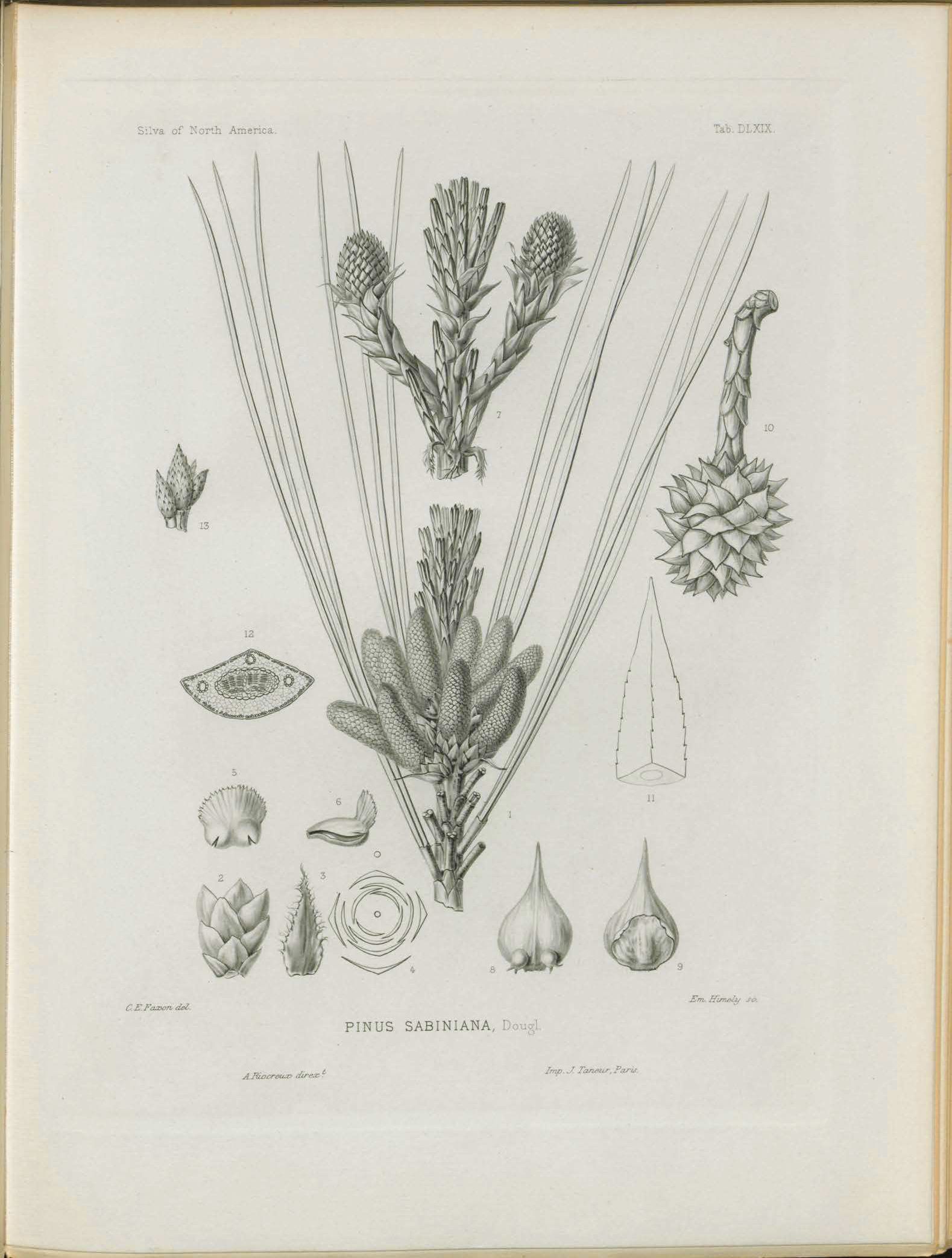
**Pinus sabiniana. Plate from Charles Sprague Sargent, The Silva of North America, Vol. XI (1897), drawn by Charles Edward Faxon. Colorado State University Libraries / DPLA via Wikimedia Commons (public domain).
Picea abies: Norway spruce
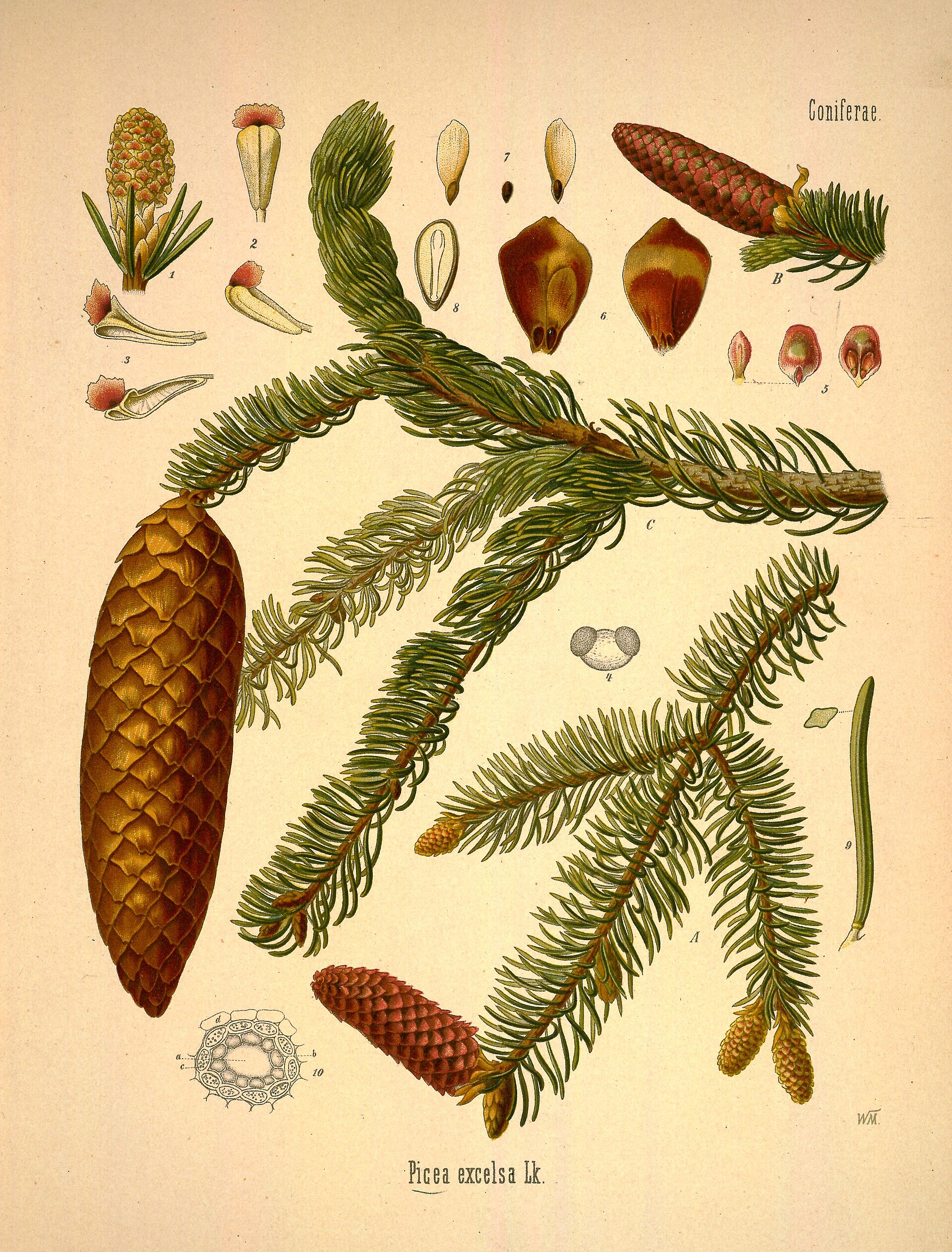
**Picea abies (Norway spruce). Plate 8 from F. E. Köhler, Köhler's Medizinal-Pflanzen (1887). Biodiversity Heritage Library via Wikimedia Commons (public domain).
Pinus nigra: black pine
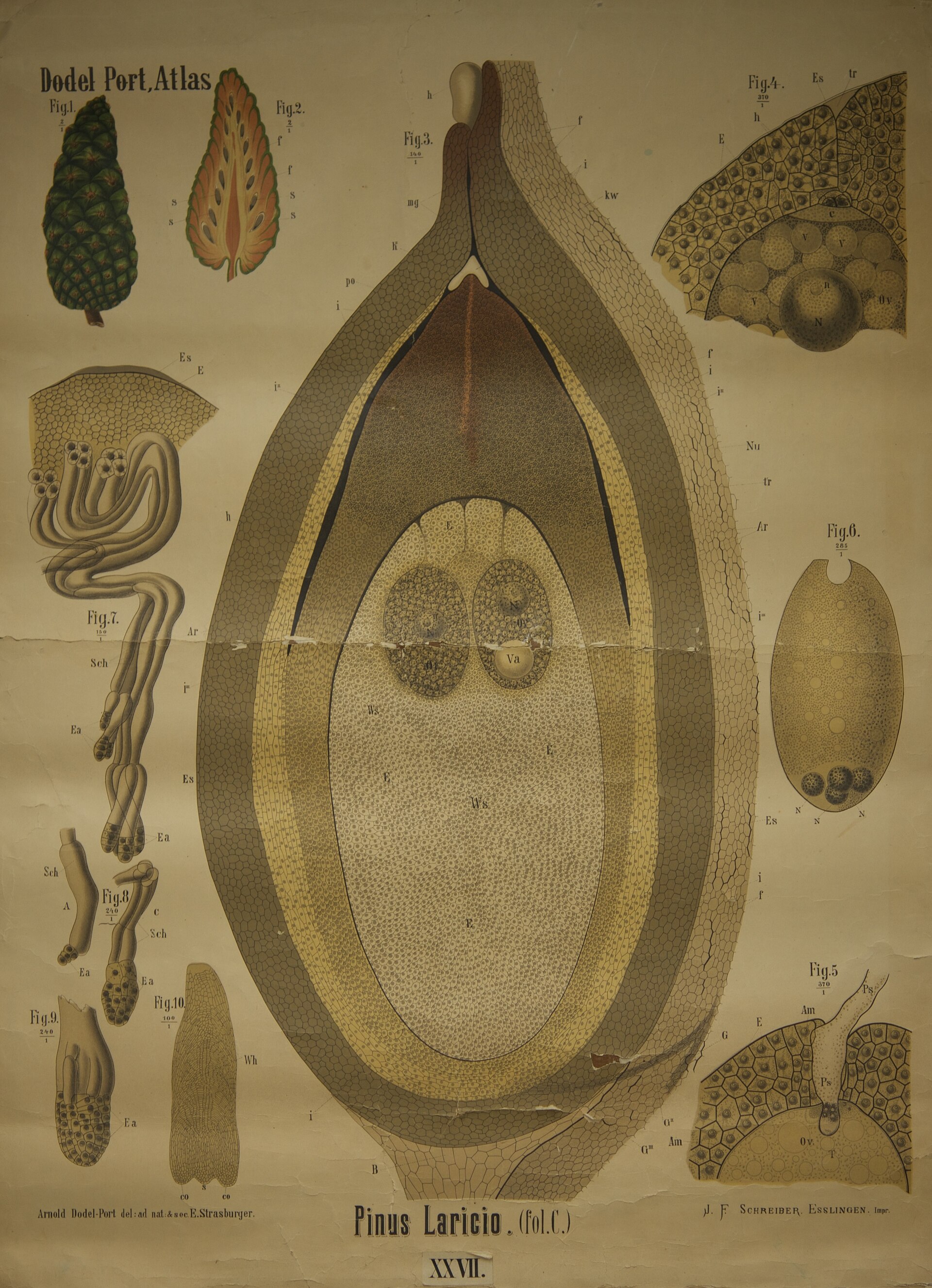
**Pinus laricio (= Pinus nigra subsp. laricio). Fol. C, Plate XXVII from Carolina and Arnold Dodel-Port, Atlas der Botanik. Wikimedia Commons (public domain).
Larix decidua: European larch
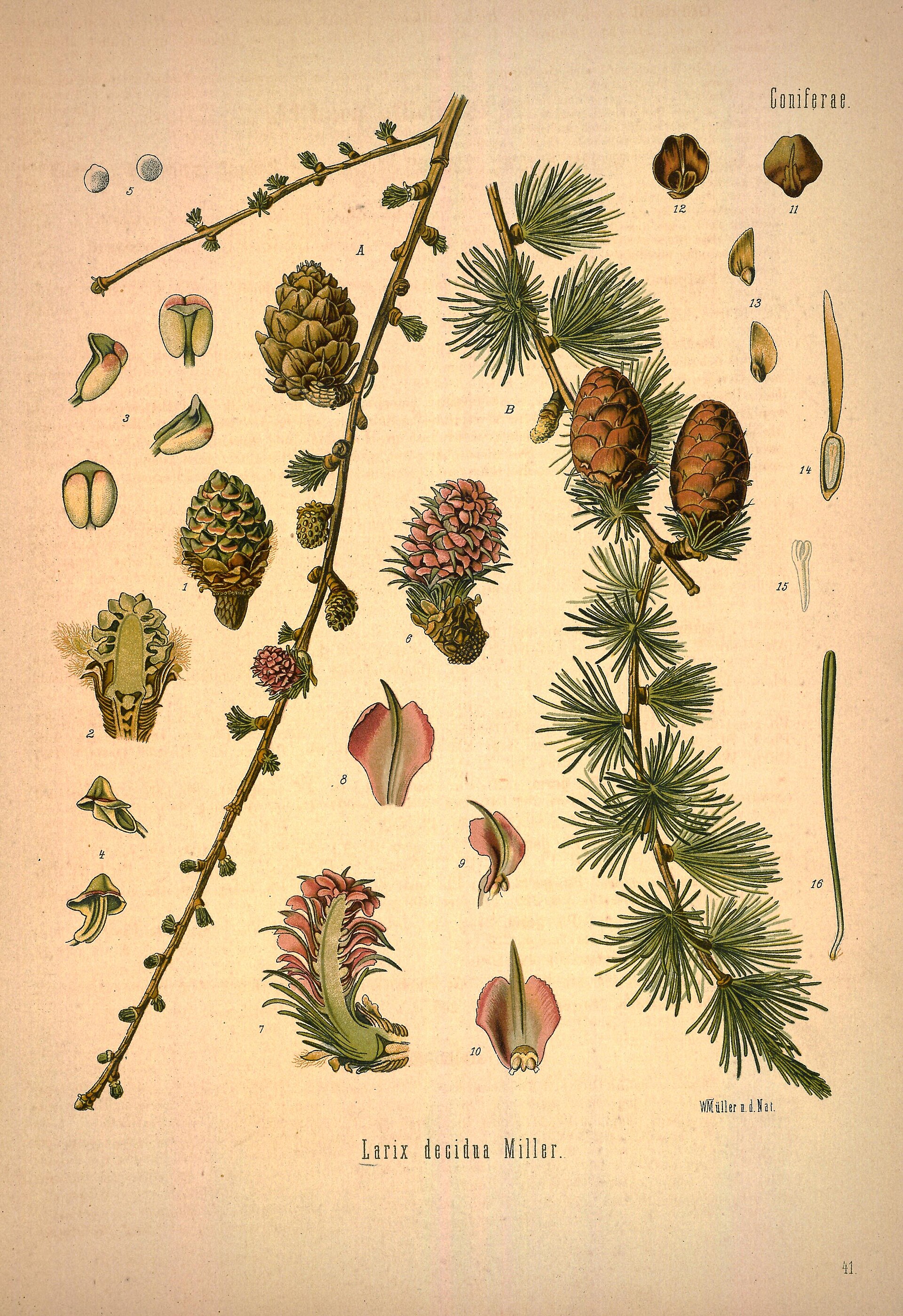
**Larix decidua (European larch). Plate 41 from F. E. Köhler, Köhler's Medizinal-Pflanzen (1887). Biodiversity Heritage Library via Wikimedia Commons (public domain).
37. Adjudication
Provisional band: D/C boundary. The practice is historically attested and mechanistically plausible, but direct clinical efficacy, exposure, absorption, preparation standardization and repeated-use safety are unknown.
38. Best next study
Begin locally, not systemically: a community-governed, chemically characterized, food-grade resin gum studied first for oral tolerability and gingival inflammatory outcomes. Only proceed after species authentication, contaminant testing, allergen assessment, regulatory review, benefit-sharing terms and independent ethics approval. A systemic arthritis claim would require a longer chain of evidence.
Book XIV : Research Programme
39. Phased build
| Phase | Deliverable | Exit criterion |
|---|---|---|
| 0 • Constitution | This research bible, governance board and controlled vocabularies | Custodian and scientific review |
| 1 • Pilot corpus | 50 deeply sourced monographs across 5 cultural/ecological regions | ≥90% provenance completeness |
| 2 • Comparative atlas | Claim lineages, convergence maps and safety registry | No unresolved public restrictions |
| 3 • Research engine | Prioritized validation studies with community partners | Benefit-sharing and preregistration |
| 4 • Living edition | Public, community and restricted access layers | Sustainable governance and review cycle |
40. Pilot portfolio design
Select common, culturally important and ecologically secure taxa: not only exotic or psychoactive plants.
Include positive, null, hazardous and abandoned practices to reduce survivorship bias.
Represent oral and textual traditions, women’s knowledge, domestic medicine and specialist practice.
Pair at least one African regional cluster with comparable but independently sourced traditions elsewhere.
Include one deliberately difficult identity problem and one restricted-knowledge case to test governance.
41. Governance roles
| Role | Authority |
|---|---|
| Community council/custodians | Consent, attribution, restriction, interpretation and benefit-sharing |
| Ethnobotany editor | Source fidelity, transmission mapping and comparative method |
| Taxonomy lead | Identity, voucher and synonym resolution |
| Clinical-methods lead | Evidence eligibility, bias and statistical synthesis |
| Safety lead | Toxicology, interactions, misuse and escalation |
| Conservation lead | Harvest impact, threatened taxa and publication risk |
| Data steward | CARE-aligned permissions, provenance, versioning and audit |
| Independent ombud | Grievance, correction, conflict and takedown pathway |
Appendix A : Intake Card
| Field | Entry |
|---|---|
| Record ID | ________________ |
| Knowledge holder / requested attribution | ________________ |
| Authority and consent state | ________________ |
| Language / exact vernacular name | ________________ |
| Taxon proposal / confidence / voucher | ________________ |
| Part / preparation / route | ________________ |
| Purpose in source terms | ________________ |
| Context / explanatory model | ________________ |
| Outcome / adverse event / failure | ________________ |
| Source / date / page / transmission parent | ________________ |
| Restriction / Local Contexts notice or label | ________________ |
| Benefit-sharing obligation / review date | ________________ |
Appendix B : Claim Adjudication Card
| Axis | 0 | 1 | 2 | 3 | 4 | Rationale |
|---|---|---|---|---|---|---|
| Cultural authenticity | [ ] | [ ] | [ ] | [ ] | [ ] | |
| Source integrity | [ ] | [ ] | [ ] | [ ] | [ ] | |
| Material identity | [ ] | [ ] | [ ] | [ ] | [ ] | |
| Independent convergence | [ ] | [ ] | [ ] | [ ] | [ ] | |
| Biological plausibility | [ ] | [ ] | [ ] | [ ] | [ ] | |
| Clinical evidence | [ ] | [ ] | [ ] | [ ] | [ ] | |
| Safety certainty | [ ] | [ ] | [ ] | [ ] | [ ] |
Preparation match: _______ Transmission independence: _______
Restrictions: _________ Editorial band: ___________
Calibrated conclusion:
____________________________
Required custodian/scientific review and next trigger:
____________________________
Appendix C : Core Bibliography and Standards
Convention on Biological Diversity. Nagoya Protocol on Access and Benefit-sharing; Article 12 and associated traditional knowledge guidance. https://www.cbd.int/access-benefit-sharing
Convention on Biological Diversity. Traditional Knowledge, Innovations and Practices; Article 8(j) programme. https://www.cbd.int/traditional/intro.shtml
Global Indigenous Data Alliance. CARE Principles for Indigenous Data Governance. https://www.gida-global.org/careprinciples
Local Contexts. Traditional Knowledge and Biocultural Labels and Notices. https://localcontexts.org/labels/traditional-knowledge-labels/
World Health Organization. Global Traditional Medicine Strategy 2025-2034. https://www.who.int/publications/i/item/9789240113176
Native American Ethnobotany Database. Pinus sabiniana: Costanoan antirheumatic use record. https://naeb.brit.org/uses/search/?string=Pinus+sabiniana
Batista et al. (2022). A scoping review on the therapeutic potential of resin from Picea abies, Pinus nigra and Larix decidua. https://pmc.ncbi.nlm.nih.gov/articles/PMC9204203/
Jokinen et al. (2016). Refined spruce resin to treat chronic wounds: rebirth of an old folkloristic therapy. https://pmc.ncbi.nlm.nih.gov/articles/PMC4827294/
Papp et al. (2022). The importance of pine species in ethnomedicine, pharmacology and trade. https://pmc.ncbi.nlm.nih.gov/articles/PMC9506106/
Yamileva et al. (2025). In-vitro evaluation of spruce-resin extract for oral inflammatory and plaque-related markers. https://pubmed.ncbi.nlm.nih.gov/39922393/
van Wyk, B.-E. & Gericke, N. (2018). People's Plants: A Guide to Useful Plants of Southern Africa (2nd ed.). Pretoria: Briza Publications. Secondary literature and Southern African atlas agenda (~700 plants, 20 use chapters). Cite; do not copy.
Book XV : Locked Decisions (Edition 0.2)
These were Appendix D open questions in edition 0.1 (29 July 2026). They are locked here so the constitution can govern a real corpus. Reopen only by versioned amendment with custodian review.
42. Geographic centre of gravity
Locked: Southern Africa first; comparative method global from day one.
Phase 1 (pilot corpus) centres Southern African knowledge systems and ecologies: Cape Floristic Region, Karoo, Highveld, Lowveld, Kalahari margins, and the Indian Ocean coastal belt. Comparative pairs from elsewhere are welcome in Phase 1 when independently sourced and useful as method tests. Pan-African expansion is Phase 2. A deliberately global encyclopaedia from volume one is rejected: it would flatten provenance and outrun consent capacity.
43. Public title and the word Medica
Locked title: Codex Medica
Locked subtitle: An Ethnobotanical Cross-Cultural Study Bible
Medica is retained as historical register (materia medica), not as clinical authority. Every public surface carries the non-clinical notice. The Codex does not diagnose, dose, prescribe, or instruct preparation of hazardous, intoxicating, abortifacient, or otherwise high-risk substances. If a future edition finds the word still misread as licence to practise, rename by amendment; do not quietly soften the notice.
44. Community governance and first invited seats
Locked model: community-governed corpus with standing role seats (Book XIV §41), CARE-first, consent as a state machine (Book II §6), Local Contexts notices/labels where communities apply them.
First invited seat classes (invitations, not appointments : empty until accepted in writing):
| Seat class | Why first |
|---|---|
| San / Khoekhoe knowledge holders (named lineages who consent) | Oldest continuous Southern African plant relationships; highest extraction risk historically |
| Nguni / Sotho-Tswana healer lineages who elect a liaison | Living clinical-traditional practice at scale in SA |
| Cape Malay / Islamic herbal tradition keepers | Documented Cape materia with its own textual and oral chain |
| Academic ethnobotany + taxonomy partners (SA universities / SANBI-adjacent) | Voucher, synonym, and conservation capacity |
| Independent ombud | Grievance and takedown pathway from day one |
No named individual is listed here until they accept. Seats stay visibly empty rather than filled with placeholders.
45. Languages of record and translation priority
Locked:
- English is the editorial language of this constitution (edition 0.2).
- Vernacular terms stay in the source language in every use report : never replaced by an
English gloss as if the gloss were the name.
- Community-facing cards (intake, consent, benefit-sharing) prioritise, in order: Afrikaans,
isiXhosa, isiZulu, Sesotho, Sepedi, Setswana, Xitsonga, Tshivenda, siSwati, isiNdebele : then other languages as custodians require.
- Translation of the full bible into those languages is a Phase 1-2 deliverable, not a gate on
starting the pilot corpus.
46. License boundaries and restricted metadata
Locked dual regime:
| Layer | Default |
|---|---|
| This research bible (editorial constitution) | Open text under the press's ordinary free-library terms; quote freely with attribution |
| Public corpus records (consent = Granted, no RST block) | Open metadata + public monograph text; CARE still governs correction and attribution |
| Restricted / sacred / initiated / hazard-sensitive records | Metadata-only or hold : never open by default; Local Contexts Labels override site defaults |
| Genetic-resource / Nagoya-implicated material | Mutually agreed terms required before any research use beyond documentation |
FAIR applies only inside permissions established by CARE and community protocol. "Open" is not the default when openness would reproduce extraction.
47. Published form
Locked: a linked family of editions, not one shape.
- Constitution : this bible (governance, evidence architecture, templates).
- Monographs : one taxon/claim family at a time, following Book XII.
- Database : CARE-aligned store (Book XI) queried by researchers and custodians.
- Narrative companions (optional, later) : public-facing essays that never outrun the
adjudicated bands underneath them.
Encyclopaedia-only and narrative-only were rejected as primary forms: the first cannot carry consent state machines; the second cannot carry audit trails.
48. Pilot portfolio and high-risk exclusion
Phase 1 pilot target: ~50 deeply sourced monographs across ≥5 Southern African cultural/ecological clusters, plus the already-worked comparative specimen (chewed conifer resin, Book XIII) as a method control from outside the region.
Inclusion bias for the pilot: taxa with (a) named people/place/source/date in the public record or under active consent talks, (b) voucher or high identification confidence pathway, (c) conservation status that publication will not worsen.
Hard exclusions from public detail (safety registry metadata may still exist):
- Personalized treatment, dosage, or preparation instructions for hazardous, intoxicating,
abortifacient, or high-toxicity materials
- Secret, sacred, gender-restricted, or initiated knowledge without explicit authority
- Commercial "wellness" foraging guides dressed as Codex entries
- Any record whose consent state is Unknown, Contact initiated, Conditional (outside scope),
Withdrawn, or Community-governed-without-decision
Illustrative Southern African starter shortlist (public, contested, or commercial : each still needs a full intake card; listing here is not adjudication):
| Working focus | Why on the shortlist |
|---|---|
| Aspalathus linearis (rooibos) | Strong documentary + commercial + safety literature; consent/benefit-sharing still live politics |
| Agathosma betulina (buchu) | Classic Cape materia; substitution and trade pressure teach the anti-substitution rule |
| Aloe ferox | Deep use record; conservation and export tension |
| Lessertia frutescens (sutherlandia) | High public claim density; clinical evidence contested : good adjudication drill |
| Artemisia afra | Pan-Southern use; pandemic-era claim inflation tests independence and source integrity |
| One restricted-knowledge hold case | Tests governance without publishing content |
Exact pilot roster is a living index under custodian review, not a closed shopping list.
Plates: starter shortlist taxa
Freely-licensed identification plates for Southern African taxa now live in Book XVI (## Identification plates (freely licensed)), with the consolidated credit register in Appendix E. Conifer resin specimen plates remain in Book XIII.
CLOSING AXIOM. The unit of knowledge is not the plant. It is the relationship: organism, people, place, preparation, purpose, authority and consequence.
Appendix E : Image Credits
Every figure in this edition is public domain, CC0, CC BY, or CC BY-SA via Wikimedia Commons. NC, ND, and all-rights-reserved images were refused. Full provenance with thumbnails:
design/IMAGE_COMPENDIUM.md.
Plates appear once in the body (Book XIII for conifers; Book XVI for the Southern African atlas seed). This appendix is the consolidated credit register (text only; no duplicate embeds).
| Taxon | Licence | Credit |
|---|---|---|
| Pinus sabiniana: gray pine | Public domain | Pinus sabiniana. Plate from Charles Sprague Sargent, The Silva of North America, Vol. XI (1897), drawn by Charles Edward Faxon. Colorado State University Libraries / DPLA via Wikimedia Commons (public domain). |
| Picea abies: Norway spruce | Public domain | Picea abies (Norway spruce). Plate 8 from F. E. Köhler, Köhler's Medizinal-Pflanzen (1887). Biodiversity Heritage Library via Wikimedia Commons (public domain). |
| Pinus nigra: black pine | Public domain | Pinus laricio (= Pinus nigra subsp. laricio). Fol. C, Plate XXVII from Carolina and Arnold Dodel-Port, Atlas der Botanik. Wikimedia Commons (public domain). |
| Larix decidua: European larch | Public domain | Larix decidua (European larch). Plate 41 from F. E. Köhler, Köhler's Medizinal-Pflanzen (1887). Biodiversity Heritage Library via Wikimedia Commons (public domain). |
| Aspalathus linearis: rooibos | CC BY-SA 2.5 | Rooibos (Aspalathus linearis), Clanwilliam, Western Cape. Photo: Winfried Bruenken (Amrum), Wikimedia Commons, CC BY-SA 2.5. |
| Agathosma betulina: buchu (round-leaf) | CC BY-SA 4.0 | Round-leaved buchu (Agathosma betulina), Cederberg, Western Cape. Photo: Margriet B. (iNaturalist / Wikimedia Commons), CC BY-SA 4.0. |
| Aloe ferox: Cape aloe / bitter aloe | Public domain | Aloe ferox Mill. Plate 32 from A. P. de Candolle, Plantarum historia succulentarum (Histoire des plantes grasses), drawn by Pierre-Joseph Redouté, 1802. Biodiversity Heritage Library via Wikimedia Commons (public domain). |
| Lessertia frutescens: cancer bush / sutherlandia | CC BY-SA 4.0 | Cancer bush (Lessertia frutescens; syn. Sutherlandia frutescens), flowers and developing pods, Pretoria National Botanical Garden. Photo: SAplants, Wikimedia Commons, CC BY-SA 4.0. |
| Artemisia afra: African wormwood / wilde-als | Public domain | Artemisia afra Jacq. Upper part of the plant. Plate (Tafel 467) from N. J. Jacquin, Plantarum rariorum Horti caesarei Schoenbrunnensis, vol. 4 (Vienna: C. F. Wappler, 1804). Scan: Oceancetaceen (Alice Chodura), Wikimedia Commons (public domain). |
| Harpagophytum procumbens: devil's claw | CC BY-SA 4.0 | Devil's claw (Harpagophytum procumbens), recently dehisced capsule (trample-burr), Manie van der Schijff Botanical Garden, University of Pretoria. Photo: SAplants, Wikimedia Commons, CC BY-SA 4.0. |
| Pelargonium sidoides: African geranium | CC0 | African geranium (Pelargonium sidoides), botanical specimen, Lyman Plant House, Smith College, Northampton, Massachusetts. Photo: Daderot, Wikimedia Commons, CC0. |
| Hypoxis hemerocallidea: African potato | CC BY-SA 4.0 | African potato (Hypoxis hemerocallidea), plant in flower, grassland, Brummeria, Pretoria, Gauteng. Photo: SAplants, Wikimedia Commons, CC BY-SA 4.0. |
| Siphonochilus aethiopicus: African ginger | CC BY-SA 3.0 | African ginger (Siphonochilus aethiopicus; syn. Kaempferia aethiopica), flower, SW Burkina Faso. Photo: Marco Schmidt, Wikimedia Commons, CC BY-SA 3.0. |
| Warburgia salutaris: pepper-bark tree | CC BY-SA 3.0 | Pepper-bark tree (Warburgia salutaris), foliage and flowers, Manie van der Schijff Botanical Garden, University of Pretoria. Photo: JMK, Wikimedia Commons, CC BY-SA 3.0. |
| Prunus africana: African cherry | CC BY-SA 4.0 | African cherry (Prunus africana), flowers, Kirstenbosch National Botanical Garden, Cape Town. Photo: SAplants, Wikimedia Commons, CC BY-SA 4.0. |
| Sclerocarya birrea: marula | CC BY-SA 2.0 | Marula (Sclerocarya birrea), fruits and leaves, H5 Road south of Lower Sabie, Kruger National Park, South Africa. Photo: Bernard Dupont, Wikimedia Commons, CC BY-SA 2.0. |
| Adansonia digitata: baobab | CC BY-SA 4.0 | African baobab (Adansonia digitata), Tarangire National Park, Tanzania. Photo: Diego Delso, delso.photo, Wikimedia Commons, CC BY-SA 4.0. |
| Carpobrotus edulis: sour fig | CC BY 4.0 | Sour fig (Carpobrotus edulis), Mosteiros, Sao Miguel, Azores. Photo: Krzysztof Ziarnek (Kenraiz), Wikimedia Commons, CC BY 4.0. |
| Cyclopia intermedia: honeybush (plate Cyclopia genistoides fallback) | CC BY-SA 4.0 | Honeybush (Cyclopia genistoides), flowers, fynbos along Palmiet River, Kleinmond, Western Cape. Photo: SAplants, Wikimedia Commons, CC BY-SA 4.0. |
| Aponogeton distachyos: waterblommetjie | CC BY-SA 3.0 | Waterblommetjie (Aponogeton distachyos) in a pond, Stellenbosch Botanical Garden, South Africa. Photo: Marco Schmidt, Wikimedia Commons, CC BY-SA 3.0. |
| Citrullus lanatus: tsamma / wild melon | CC BY-SA 2.0 | Tsamma melon (Citrullus lanatus), Twee Rivieren Camp, Kgalagadi Transfrontier Park, South Africa. Photo: Bernard Dupont, Wikimedia Commons, CC BY-SA 2.0. |
| Bulbine frutescens: burn jelly plant / geelkatstert | CC BY-SA 4.0 | Burn jelly plant (Bulbine frutescens), flower close-up. Photo: Pierre Mirosa, Wikimedia Commons, CC BY-SA 4.0. |
| Aloe arborescens: krantz aloe / tree aloe | CC BY-SA 3.0 | Krantz aloe (Aloe arborescens), Lisbon, Portugal. Photo: Diego Delso, Wikimedia Commons, CC BY-SA 3.0. |
| Agathosma crenulata: oval-leaf buchu / long-leaf buchu | CC BY-SA 4.0 | Oval-leaf buchu (Agathosma crenulata), developing and dehisced fruit, Harold Porter National Botanical Garden, Betty's Bay, Western Cape. Photo: SAplants, Wikimedia Commons, CC BY-SA 4.0. |
| Mentha longifolia: horsemint / wild mint (Cape form) | CC BY-SA 4.0 | Horsemint (Mentha longifolia subsp. capensis), flowers, Harold Porter National Botanical Garden, Betty's Bay, Western Cape. Photo: SAplants, Wikimedia Commons, CC BY-SA 4.0. |
| Juncus kraussii: sea rush / iNcema | CC BY 2.0 | Sea rush (Juncus kraussii), Paruna Reserve, Como, NSW, Australia. Photo: John Tann, Wikimedia Commons, CC BY 2.0. |
| Vachellia karroo: sweet thorn / soetdoring | CC BY-SA 4.0 | Sweet thorn (Vachellia karroo; syn. Acacia karroo), flowerheads near Wolmaransstad, North West, South Africa. Photo: SAplants, Wikimedia Commons, CC BY-SA 4.0. |
| Kigelia africana: sausage tree | CC BY-SA 4.0 | Sausage tree (Kigelia africana), hanging fruit on the Arbre du Retour, Ouidah, Benin. Photo: Ji-Elle, Wikimedia Commons, CC BY-SA 4.0. |
| Ziziphus mucronata: buffalo thorn / blinkblaar-wag-'n-bietjie | CC BY-SA 4.0 | Buffalo thorn (Ziziphus mucronata), fruit, Faerie Glen Nature Reserve, Pretoria, Gauteng. Photo: SAplants, Wikimedia Commons, CC BY-SA 4.0. |
Source links
- Pinus sabiniana: gray pine : File:Silva of North America. Volume XI, Coniferæ (pinus), The - DPLA - 3f6e22ceec126c964f4707deece445ac (page 130).jpg
- Picea abies: Norway spruce : File:Köhler's Medizinal-Pflanzen in naturgetreuen Abbildungen mit kurz erläuterndem Texte (Plate 8) BHL303576.jpg
- Pinus nigra: black pine : File:Dodel-Port Atlas Pinus laricio (Fol. C) XXVII.jpg
- Larix decidua: European larch : File:Köhler's Medizinal-Pflanzen in naturgetreuen Abbildungen mit kurz erläuterndem Texte (Plate 41) BHL303644.jpg
- Aspalathus linearis: rooibos : File:Rooibos (Aspalathus linearis)PICT2813.JPG
- Agathosma betulina: buchu (round-leaf) : File:Agathosma betulina MargrietB 2.jpg
- Aloe ferox: Cape aloe / bitter aloe : File:Plantarum historia succulentarum = (Plate 32) BHL280780.jpg
- Lessertia frutescens: cancer bush / sutherlandia : File:Lessertia frutescens 1DS-II 7937.jpg
- Artemisia afra: African wormwood / wilde-als : File:Artemisia afra.jpg
- Harpagophytum procumbens: devil's claw : File:Harpagophytum procumbens 1DS-II 1-2665.jpg
- Pelargonium sidoides: African geranium : File:Pelargonium sidoides - Lyman Plant House, Smith College - DSC01935.jpg
- Hypoxis hemerocallidea: African potato : File:Hypoxis hemerocallidea 5Dsr 1560.jpg
- Siphonochilus aethiopicus: African ginger : File:Kaempferia aethiopica MS 1121.jpg
- Warburgia salutaris: pepper-bark tree : File:Warburgia salutaris, loof en blomme, Manie van der Schijff BT, b.jpg
- Prunus africana: African cherry : File:Prunus africana 5Dsr 2538.jpg
- Sclerocarya birrea: marula : File:Marula (Sclerocarya birrea) fruits and leaves (12907256475).jpg
- Adansonia digitata: baobab : File:Baobab (Adansonia digitata), parque nacional de Tarangire, Tanzania, 2024-05-24, DD 78.jpg
- Carpobrotus edulis: sour fig : File:Carpobrotus edulis kz17.jpg
- Cyclopia intermedia: honeybush : File:Cyclopia genistoides 1DS-II 2-4428.jpg
- Aponogeton distachyos: waterblommetjie : File:Aponogeton distachyos MS 9152.jpg
- Citrullus lanatus: tsamma / wild melon : File:Tsamma Melon (Citrullus lanatus) (6856810070).jpg
- Bulbine frutescens: burn jelly plant / geelkatstert : File:Bulbine Jaune (Bulbine frutescens).jpg
- Aloe arborescens: krantz aloe / tree aloe : File:Aloe arborescens, Lisboa, Portugal, 2012-05-12, DD 01.jpg
- Agathosma crenulata: oval-leaf buchu / long-leaf buchu : File:Agathosma crenulata 1DS-II 1-C5215.jpg
- Mentha longifolia: horsemint / wild mint (Cape form) : File:Mentha longifolia subsp. capensis 1DS-II 1-C5191.jpg
- Juncus kraussii: sea rush / iNcema : File:Juncus kraussii (3392251680).jpg
- Vachellia karroo: sweet thorn / soetdoring : File:Vachellia karroo 1DS-II 6860.jpg
- Kigelia africana: sausage tree : File:Ouidah-Kigelia africana (4).jpg
- Ziziphus mucronata: buffalo thorn / blinkblaar-wag-'n-bietjie : File:Ziziphus mucronata 1DS-II 4-0765.jpg
Book XVI : Southern African Useful Plants Atlas (seed)
Edition 0.3 agenda. This atlas is the living Southern African centre of gravity locked in Book XV. It follows the publicly catalogued 20-chapter use taxonomy of van Wyk & Gericke, People's Plants (Briza, 2nd ed.), as a research agenda only. See
canon/SOURCESPEOPLESPLANTS.md: cite, do not copy. No text, anecdote, dose, or photograph from that book appears here.
Each row below is an open-source starter drawn from public ethnobotanical, SANBI, agricultural and conservation records. A row is not a monograph. A row is not permission to forage, dose, or prepare. HOLD rows are named so the corpus can refuse them honestly.
Seed size: 62 taxa · 31 open · 20 caution · 11 hold · 25 plated · 37 awaiting freely-licensed plates.
| Column | Meaning |
|---|---|
| Band | open = public food/craft/low-hazard; caution = documented use with safety/trade/claim risk; HOLD = intoxicant, poison, sacred-restricted, or high-toxicity until review |
| Plate | Whether a PD/CC identification image is already in design/images/ |
| Anchor | Public literature/database trail (not People's Plants page numbers) |
Foods and drinks
1. Cereals
| Taxon | Vernacular | Band | Plate | Public anchor |
|---|---|---|---|---|
| Cenchrus americanus | pearl millet; syn. Pennisetum glaucum; Afrikaans: babala | open | need | SANBI / FAO millet |
| Eragrostis tef | teff; used regionally / Ethiopian staple also grown in SA | open | need | Agricultural literature |
| Sorghum bicolor | sorghum / mabele; Sesotho: mabele; isiZulu: amabele | open | need | SANBI / staple cereal & beer |
| Vigna unguiculata | cowpea; Afrikaans: akkerboon; isiZulu: imbumba | open | need | SANBI / FAO staple legume |
2. Seeds and nuts
| Taxon | Vernacular | Band | Plate | Public anchor |
|---|---|---|---|---|
| Adansonia digitata | baobab; Afrikaans: kremetart | open | have | SANBI / FAO / novel food dossiers |
| Citrullus lanatus | tsamma / wild melon; Afrikaans: tsamma | open | have | SANBI / Kalahari water fruit |
| Schinziophyton rautanenii | manketti / mongongo; Afrikaans: manketti | open | need | SANBI / Kalahari oil nut |
| Trichilia emetica | natal mahogany; Afrikaans: rooiessenhout; isiZulu: umkhuhlu | caution | need | SANBI / oil seed + timber |
| Vigna unguiculata | cowpea; Afrikaans: akkerboon; isiZulu: imbumba | open | need | SANBI / FAO staple legume |
3. Fruits and berries
| Taxon | Vernacular | Band | Plate | Public anchor |
|---|---|---|---|---|
| Adansonia digitata | baobab; Afrikaans: kremetart | open | have | SANBI / FAO / novel food dossiers |
| Carpobrotus edulis | sour fig; Afrikaans: suurvy | open | have | SANBI / coastal food & topical tradition |
| Citrullus lanatus | tsamma / wild melon; Afrikaans: tsamma | open | have | SANBI / Kalahari water fruit |
| Dovyalis caffra | kei apple; Afrikaans: kei-appel | open | need | SANBI / hedge + fruit |
| Englerophytum magalismontanum | stamvrug; Afrikaans: stamvrug | open | need | SANBI / indigenous fruit |
| Grewia occidentalis | cross-berry; Afrikaans: kruisbessie | open | need | SANBI / fruit + fibre |
| Hyphaene coriacea | lala palm / ilala; isiZulu: ilala | open | need | SANBI / palm craft + sap traditions |
| Phoenix reclinata | wild date palm; Afrikaans: wilde-dadelboom; isiZulu: isundu | open | need | SANBI / widespread palm uses |
| Sclerocarya birrea | marula; Afrikaans: maroela; Tonga: canhi | open | have | SANBI / FAO NUS / commercial oil & fruit |
| Vangueria infausta | wild medlar; Afrikaans: wildemispel; isiZulu: umviyo | open | need | SANBI / indigenous fruit |
| Ximenia caffra | sourplum; Afrikaans: suurpruim; isiZulu: umthunduluka-obomvu | open | need | SANBI / oil seed + fruit |
| Ziziphus mucronata | buffalo thorn; Afrikaans: blinkblaar-wag-'n-bietjie; isiZulu: umphafa | caution | have | SANBI / cultural tree + medicine |
4. Vegetables
| Taxon | Vernacular | Band | Plate | Public anchor |
|---|---|---|---|---|
| Amaranthus hybridus | pigweed / thepe; Sesotho: thepe; Afrikaans: misbredie | open | need | SANBI / leafy vegetable tradition |
| Aponogeton distachyos | waterblommetjie; Afrikaans: waterblommetjie | open | have | SANBI / Cape culinary icon |
| Bidens pilosa | black jack; Afrikaans: knapsekêrel; isiZulu: ucucuza | open | need | SANBI / leafy vegetable weed |
| Carpobrotus edulis | sour fig; Afrikaans: suurvy | open | have | SANBI / coastal food & topical tradition |
| Cleome gynandra | spider plant / African cabbage; Afrikaans: snotterbel; isiZulu: unzeke | open | need | SANBI / FAO traditional leafy vegetable |
| Colocasia esculenta | amadumbe / taro; isiZulu: amadumbe | caution | need | SANBI / staple tuber; oxalate caution |
| Tulbaghia violacea | wild garlic; Afrikaans: wildeknoffel | open | need | SANBI / garden + culinary |
| Vigna unguiculata | cowpea; Afrikaans: akkerboon; isiZulu: imbumba | open | need | SANBI / FAO staple legume |
5. Roots, bulbs and tubers
| Taxon | Vernacular | Band | Plate | Public anchor |
|---|---|---|---|---|
| Colocasia esculenta | amadumbe / taro; isiZulu: amadumbe | caution | need | SANBI / staple tuber; oxalate caution |
6. Beverages
| Taxon | Vernacular | Band | Plate | Public anchor |
|---|---|---|---|---|
| Adansonia digitata | baobab; Afrikaans: kremetart | open | have | SANBI / FAO / novel food dossiers |
| Agathosma betulina | round-leaf buchu; Afrikaans: boegoe | caution | have | SANBI / Cape materia; substitution with A. crenulata |
| Agathosma crenulata | oval-leaf buchu; Afrikaans: anysboegoe | caution | have | SANBI / trade substitute for betulina |
| Artemisia afra | African wormwood; Afrikaans: wilde-als; isiZulu: umhlonyane | caution | have | SANBI / pandemic-era claim inflation |
| Aspalathus linearis | rooibos; Afrikaans: rooibos | open | have | SANBI / commercial + clinical safety literature |
| Catha edulis | khat / bushman's tea; Afrikaans: boesmanstee | HOLD | need | International control schedules vary |
| Citrullus lanatus | tsamma / wild melon; Afrikaans: tsamma | open | have | SANBI / Kalahari water fruit |
| Cyclopia intermedia | honeybush; Afrikaans: heuningbos | open | have | SANBI / commercial herbal tea |
| Hyphaene coriacea | lala palm / ilala; isiZulu: ilala | open | need | SANBI / palm craft + sap traditions |
| Mentha longifolia | wild mint; Afrikaans: kruisement; isiZulu: ufuthana | open | have | SANBI / widespread culinary-medicinal mint |
| Sclerocarya birrea | marula; Afrikaans: maroela; Tonga: canhi | open | have | SANBI / FAO NUS / commercial oil & fruit |
| Sorghum bicolor | sorghum / mabele; Sesotho: mabele; isiZulu: amabele | open | need | SANBI / staple cereal & beer |
Health and beauty
7. General medicines
| Taxon | Vernacular | Band | Plate | Public anchor |
|---|---|---|---|---|
| Acokanthera oppositifolia | bushman's poison; Afrikaans: boesmansgif; isiZulu: inhlungunyembe | HOLD | need | SANBI / arrow-poison tradition |
| Agathosma betulina | round-leaf buchu; Afrikaans: boegoe | caution | have | SANBI / Cape materia; substitution with A. crenulata |
| Agathosma crenulata | oval-leaf buchu; Afrikaans: anysboegoe | caution | have | SANBI / trade substitute for betulina |
| Alepidea amatymbica | larger tinsel flower; isiXhosa: ikhathaza | HOLD | need | SANBI / cold-flu + women's health traditions |
| Aloe arborescens | krantz aloe; Afrikaans: kransaalwyn | caution | have | SANBI / widely cultivated |
| Aloe ferox | Cape aloe / bitter aloe; Afrikaans: bitteraalwyn | caution | have | SANBI / export & CITES-adjacent trade tension |
| Artemisia afra | African wormwood; Afrikaans: wilde-als; isiZulu: umhlonyane | caution | have | SANBI / pandemic-era claim inflation |
| Bidens pilosa | black jack; Afrikaans: knapsekêrel; isiZulu: ucucuza | open | need | SANBI / leafy vegetable weed |
| Boophone disticha | century plant / sore-eye flower; Afrikaans: seeroogblom; isiZulu: incotho | HOLD | need | SANBI / highly toxic bulb |
| Cannabis sativa | cannabis / dagga; Afrikaans: dagga | HOLD | need | SA legal landscape evolving |
| Dodonaea viscosa | sand olive; Afrikaans: ysterhoutbos / sandolien | caution | need | SANBI / pantropical; local use reports vary |
| Eucomis autumnalis | pineapple flower; Afrikaans: pynappelblom | HOLD | need | SANBI / bulb medicine; conservation |
| Harpagophytum procumbens | devil's claw; Afrikaans: duiwelsklou | caution | have | SANBI / EU herbal monograph lineage |
| Hoodia gordonii | hoodia; Afrikaans: ghaap (regional) | HOLD | need | SANBI / San benefit-sharing landmark cases |
| Hypoxis hemerocallidea | African potato; Afrikaans: Afrika-patat; isiZulu: inkomfe | caution | have | SANBI / HIV-era claim inflation |
| Kigelia africana | sausage tree; Afrikaans: worsboom; isiZulu: umVunguta | caution | have | SANBI / cosmetic fruit tradition |
| Leonotis leonurus | wild dagga; Afrikaans: wilde-dagga | HOLD | need | SANBI / intoxicant-adjacent tradition |
| Lessertia frutescens | cancer bush / sutherlandia; syn. Sutherlandia frutescens | caution | have | SANBI / high claim density |
| Mentha longifolia | wild mint; Afrikaans: kruisement; isiZulu: ufuthana | open | have | SANBI / widespread culinary-medicinal mint |
| Olea europaea subsp. cuspidata | wild olive; Afrikaans: olienhout | open | need | SANBI / hard utility wood |
| Pelargonium sidoides | umckaloabo / African geranium; isiZulu: uvendle | caution | have | SANBI / commercial extract literature |
| Plumbago auriculata | Cape leadwort; Afrikaans: blousuurstof | caution | need | SANBI / common garden plant |
| Prunus africana | African cherry / red stinkwood; Afrikaans: rooistinkhout | caution | have | CITES Appendix II / SANBI |
| Ricinus communis | castor oil plant; Afrikaans: kasterolieboom | HOLD | need | Naturalised; ricin in seeds |
| Siphonochilus aethiopicus | African ginger; isiZulu: indungulo / isiphephetho | caution | have | SANBI / threatened wild populations |
| Tulbaghia violacea | wild garlic; Afrikaans: wildeknoffel | open | need | SANBI / garden + culinary |
| Vachellia karroo | sweet thorn; syn. Acacia karroo; Afrikaans: soetdoring | open | have | SANBI / POWO Vachellia |
| Warburgia salutaris | pepper-bark tree; Afrikaans: peperbasboom; isiZulu: isibaha | caution | have | SANBI / Red List threatened |
| Zanthoxylum capense | small knobwood; Afrikaans: kleinperdepram; isiZulu: umnungumabele | caution | need | SANBI / toothache tradition |
| Ziziphus mucronata | buffalo thorn; Afrikaans: blinkblaar-wag-'n-bietjie; isiZulu: umphafa | caution | have | SANBI / cultural tree + medicine |
8. Tonic plants
| Taxon | Vernacular | Band | Plate | Public anchor |
|---|---|---|---|---|
| Aspalathus linearis | rooibos; Afrikaans: rooibos | open | have | SANBI / commercial + clinical safety literature |
| Cyclopia intermedia | honeybush; Afrikaans: heuningbos | open | have | SANBI / commercial herbal tea |
| Harpagophytum procumbens | devil's claw; Afrikaans: duiwelsklou | caution | have | SANBI / EU herbal monograph lineage |
| Hoodia gordonii | hoodia; Afrikaans: ghaap (regional) | HOLD | need | SANBI / San benefit-sharing landmark cases |
| Hypoxis hemerocallidea | African potato; Afrikaans: Afrika-patat; isiZulu: inkomfe | caution | have | SANBI / HIV-era claim inflation |
| Lessertia frutescens | cancer bush / sutherlandia; syn. Sutherlandia frutescens | caution | have | SANBI / high claim density |
| Withania somnifera | winter cherry / ashwagandha; Afrikaans: geneesblaarbossie | caution | need | SANBI / pantropical; SA populations |
9. Mind and mood plants
| Taxon | Vernacular | Band | Plate | Public anchor |
|---|---|---|---|---|
| Boophone disticha | century plant / sore-eye flower; Afrikaans: seeroogblom; isiZulu: incotho | HOLD | need | SANBI / highly toxic bulb |
| Cannabis sativa | cannabis / dagga; Afrikaans: dagga | HOLD | need | SA legal landscape evolving |
| Catha edulis | khat / bushman's tea; Afrikaans: boesmanstee | HOLD | need | International control schedules vary |
| Leonotis leonurus | wild dagga; Afrikaans: wilde-dagga | HOLD | need | SANBI / intoxicant-adjacent tradition |
| Sceletium tortuosum | kanna; Afrikaans: kougoed | HOLD | need | SANBI / commercial standardised extracts |
| Withania somnifera | winter cherry / ashwagandha; Afrikaans: geneesblaarbossie | caution | need | SANBI / pantropical; SA populations |
10. Women's health
| Taxon | Vernacular | Band | Plate | Public anchor |
|---|---|---|---|---|
| Alepidea amatymbica | larger tinsel flower; isiXhosa: ikhathaza | HOLD | need | SANBI / cold-flu + women's health traditions |
| Eucomis autumnalis | pineapple flower; Afrikaans: pynappelblom | HOLD | need | SANBI / bulb medicine; conservation |
11. Wounds, burns and skin conditions
| Taxon | Vernacular | Band | Plate | Public anchor |
|---|---|---|---|---|
| Aloe arborescens | krantz aloe; Afrikaans: kransaalwyn | caution | have | SANBI / widely cultivated |
| Aloe ferox | Cape aloe / bitter aloe; Afrikaans: bitteraalwyn | caution | have | SANBI / export & CITES-adjacent trade tension |
| Boophone disticha | century plant / sore-eye flower; Afrikaans: seeroogblom; isiZulu: incotho | HOLD | need | SANBI / highly toxic bulb |
| Bulbine frutescens | burn jelly plant; Afrikaans: waterblaar / geelkopieva | open | have | SANBI / common garden medicinal |
| Carpobrotus edulis | sour fig; Afrikaans: suurvy | open | have | SANBI / coastal food & topical tradition |
| Dodonaea viscosa | sand olive; Afrikaans: ysterhoutbos / sandolien | caution | need | SANBI / pantropical; local use reports vary |
| Plumbago auriculata | Cape leadwort; Afrikaans: blousuurstof | caution | need | SANBI / common garden plant |
12. Dental care
| Taxon | Vernacular | Band | Plate | Public anchor |
|---|---|---|---|---|
| Zanthoxylum capense | small knobwood; Afrikaans: kleinperdepram; isiZulu: umnungumabele | caution | need | SANBI / toothache tradition |
13. Perfumes and repellents
| Taxon | Vernacular | Band | Plate | Public anchor |
|---|---|---|---|---|
| Agathosma betulina | round-leaf buchu; Afrikaans: boegoe | caution | have | SANBI / Cape materia; substitution with A. crenulata |
| Agathosma crenulata | oval-leaf buchu; Afrikaans: anysboegoe | caution | have | SANBI / trade substitute for betulina |
| Leonotis leonurus | wild dagga; Afrikaans: wilde-dagga | HOLD | need | SANBI / intoxicant-adjacent tradition |
| Mentha longifolia | wild mint; Afrikaans: kruisement; isiZulu: ufuthana | open | have | SANBI / widespread culinary-medicinal mint |
| Siphonochilus aethiopicus | African ginger; isiZulu: indungulo / isiphephetho | caution | have | SANBI / threatened wild populations |
| Tulbaghia violacea | wild garlic; Afrikaans: wildeknoffel | open | need | SANBI / garden + culinary |
14. Soaps and cosmetics
| Taxon | Vernacular | Band | Plate | Public anchor |
|---|---|---|---|---|
| Aloe arborescens | krantz aloe; Afrikaans: kransaalwyn | caution | have | SANBI / widely cultivated |
| Aloe ferox | Cape aloe / bitter aloe; Afrikaans: bitteraalwyn | caution | have | SANBI / export & CITES-adjacent trade tension |
| Kigelia africana | sausage tree; Afrikaans: worsboom; isiZulu: umVunguta | caution | have | SANBI / cosmetic fruit tradition |
| Ricinus communis | castor oil plant; Afrikaans: kasterolieboom | HOLD | need | Naturalised; ricin in seeds |
| Sclerocarya birrea | marula; Afrikaans: maroela; Tonga: canhi | open | have | SANBI / FAO NUS / commercial oil & fruit |
| Trichilia emetica | natal mahogany; Afrikaans: rooiessenhout; isiZulu: umkhuhlu | caution | need | SANBI / oil seed + timber |
| Ximenia caffra | sourplum; Afrikaans: suurpruim; isiZulu: umthunduluka-obomvu | open | need | SANBI / oil seed + fruit |
Skills and crafts
15. Hunting and fishing
| Taxon | Vernacular | Band | Plate | Public anchor |
|---|---|---|---|---|
| Acokanthera oppositifolia | bushman's poison; Afrikaans: boesmansgif; isiZulu: inhlungunyembe | HOLD | need | SANBI / arrow-poison tradition |
| Strophanthus speciosus | common poison rope; Afrikaans: giftobbie | HOLD | need | SANBI / cardiac glycoside tradition |
16. Dyes and tans
| Taxon | Vernacular | Band | Plate | Public anchor |
|---|---|---|---|---|
| Combretum imberbe | leadwood; Afrikaans: hardekool; isiZulu: umbondwe | open | need | SANBI / protected timber in places |
| Dovyalis caffra | kei apple; Afrikaans: kei-appel | open | need | SANBI / hedge + fruit |
| Vachellia karroo | sweet thorn; syn. Acacia karroo; Afrikaans: soetdoring | open | have | SANBI / POWO Vachellia |
17. Utility timbers
| Taxon | Vernacular | Band | Plate | Public anchor |
|---|---|---|---|---|
| Adansonia digitata | baobab; Afrikaans: kremetart | open | have | SANBI / FAO / novel food dossiers |
| Combretum imberbe | leadwood; Afrikaans: hardekool; isiZulu: umbondwe | open | need | SANBI / protected timber in places |
| Dodonaea viscosa | sand olive; Afrikaans: ysterhoutbos / sandolien | caution | need | SANBI / pantropical; local use reports vary |
| Kigelia africana | sausage tree; Afrikaans: worsboom; isiZulu: umVunguta | caution | have | SANBI / cosmetic fruit tradition |
| Olea europaea subsp. cuspidata | wild olive; Afrikaans: olienhout | open | need | SANBI / hard utility wood |
| Prunus africana | African cherry / red stinkwood; Afrikaans: rooistinkhout | caution | have | CITES Appendix II / SANBI |
| Schinziophyton rautanenii | manketti / mongongo; Afrikaans: manketti | open | need | SANBI / Kalahari oil nut |
| Sclerocarya birrea | marula; Afrikaans: maroela; Tonga: canhi | open | have | SANBI / FAO NUS / commercial oil & fruit |
| Trichilia emetica | natal mahogany; Afrikaans: rooiessenhout; isiZulu: umkhuhlu | caution | need | SANBI / oil seed + timber |
| Vachellia karroo | sweet thorn; syn. Acacia karroo; Afrikaans: soetdoring | open | have | SANBI / POWO Vachellia |
| Zanthoxylum capense | small knobwood; Afrikaans: kleinperdepram; isiZulu: umnungumabele | caution | need | SANBI / toothache tradition |
| Ziziphus mucronata | buffalo thorn; Afrikaans: blinkblaar-wag-'n-bietjie; isiZulu: umphafa | caution | have | SANBI / cultural tree + medicine |
18. Fire-making and firewood
| Taxon | Vernacular | Band | Plate | Public anchor |
|---|---|---|---|---|
| Combretum imberbe | leadwood; Afrikaans: hardekool; isiZulu: umbondwe | open | need | SANBI / protected timber in places |
| Olea europaea subsp. cuspidata | wild olive; Afrikaans: olienhout | open | need | SANBI / hard utility wood |
| Vachellia karroo | sweet thorn; syn. Acacia karroo; Afrikaans: soetdoring | open | have | SANBI / POWO Vachellia |
19. Basketry, weaving and ropes
| Taxon | Vernacular | Band | Plate | Public anchor |
|---|---|---|---|---|
| Cyperus textilis | mat sedge / imizi; isiZulu: imizi | open | need | SANBI / mat weaving |
| Grewia occidentalis | cross-berry; Afrikaans: kruisbessie | open | need | SANBI / fruit + fibre |
| Hyphaene coriacea | lala palm / ilala; isiZulu: ilala | open | need | SANBI / palm craft + sap traditions |
| Juncus kraussii | dune cord-rush / ncema; isiZulu: incema | open | have | SANBI / famous craft fibre |
| Phoenix reclinata | wild date palm; Afrikaans: wilde-dadelboom; isiZulu: isundu | open | need | SANBI / widespread palm uses |
20. Thatching, mats and brooms
| Taxon | Vernacular | Band | Plate | Public anchor |
|---|---|---|---|---|
| Cyperus textilis | mat sedge / imizi; isiZulu: imizi | open | need | SANBI / mat weaving |
| Juncus kraussii | dune cord-rush / ncema; isiZulu: incema | open | have | SANBI / famous craft fibre |
| Phoenix reclinata | wild date palm; Afrikaans: wilde-dadelboom; isiZulu: isundu | open | need | SANBI / widespread palm uses |
| Thamnochortus insignis | thatching reed / dekriet; Afrikaans: dekriet | open | need | SANBI / Cape thatching industry |
Identification plates (freely licensed)
These freely-licensed plates travel with the EPUB and PDF. They identify material; they are not permission to forage, dose, or prepare. Full provenance: design/IMAGE_COMPENDIUM.md. Credits are consolidated in Appendix E (text register only).
Aspalathus linearis: rooibos
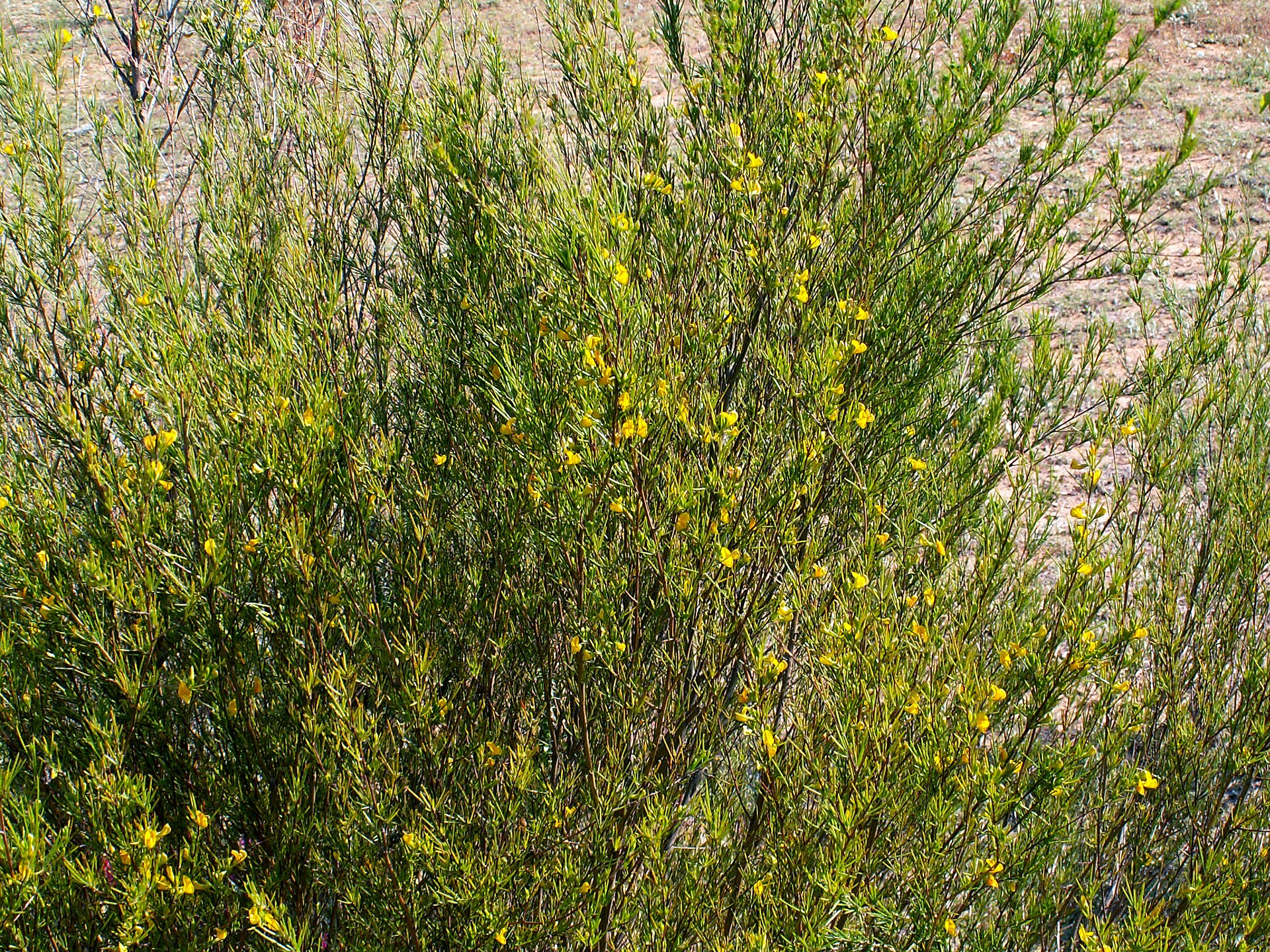
Rooibos (Aspalathus linearis), Clanwilliam, Western Cape. Photo: Winfried Bruenken (Amrum), Wikimedia Commons, CC BY-SA 2.5.
Agathosma betulina: buchu (round-leaf)
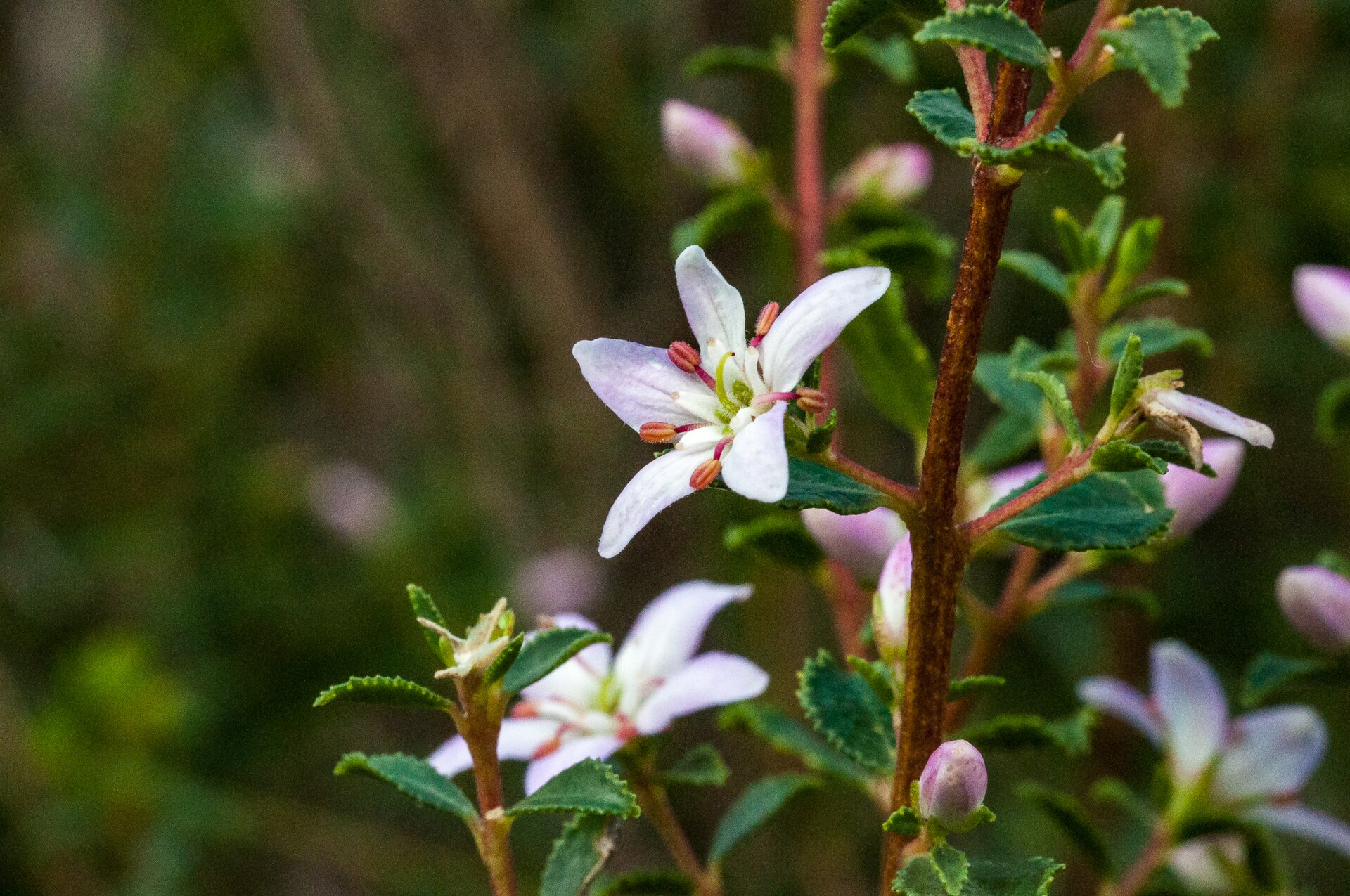
Round-leaved buchu (Agathosma betulina), Cederberg, Western Cape. Photo: Margriet B. (iNaturalist / Wikimedia Commons), CC BY-SA 4.0.
Aloe ferox: Cape aloe / bitter aloe
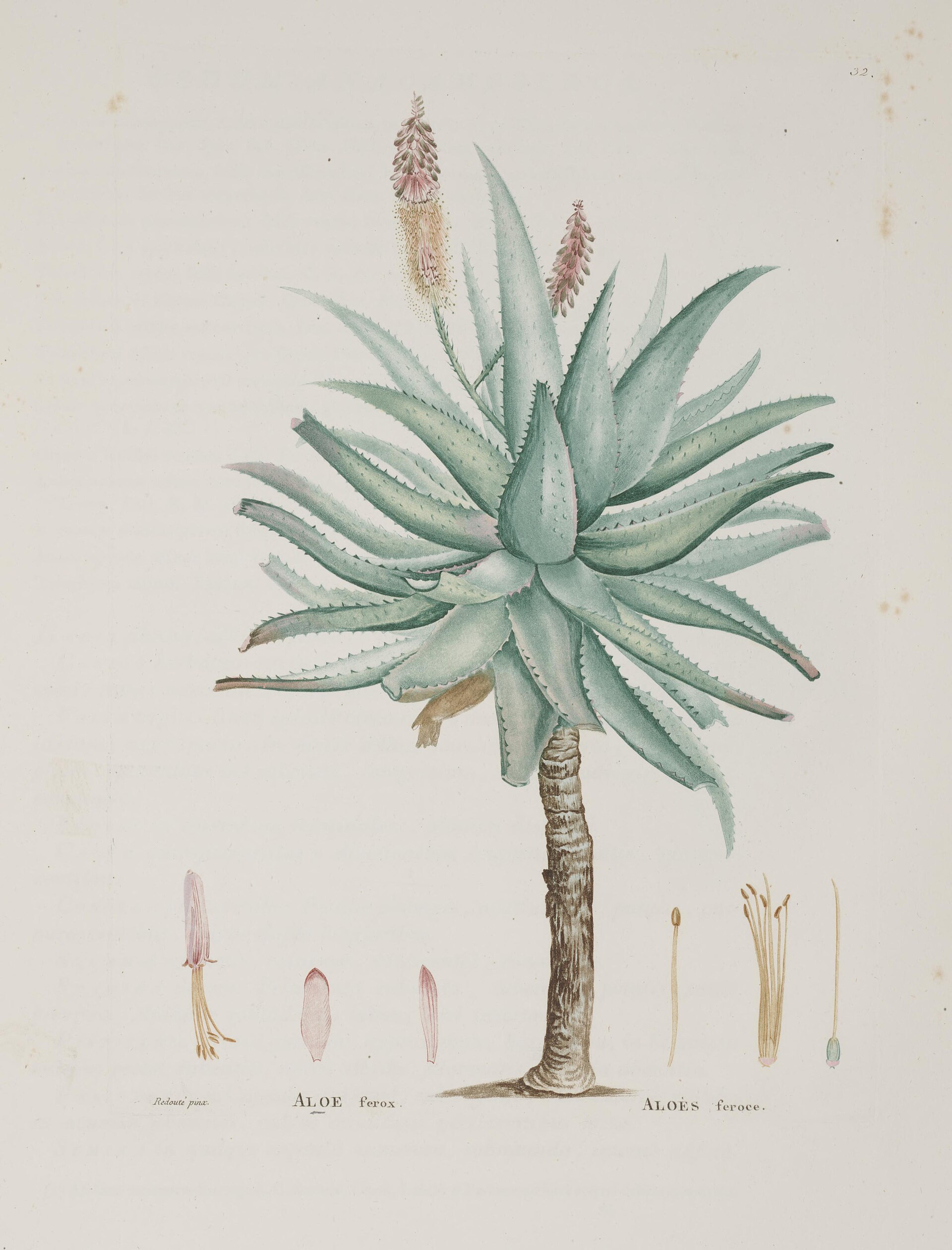
Aloe ferox Mill. Plate 32 from A. P. de Candolle, Plantarum historia succulentarum (Histoire des plantes grasses), drawn by Pierre-Joseph Redouté, 1802. Biodiversity Heritage Library via Wikimedia Commons (public domain).
Lessertia frutescens: cancer bush / sutherlandia
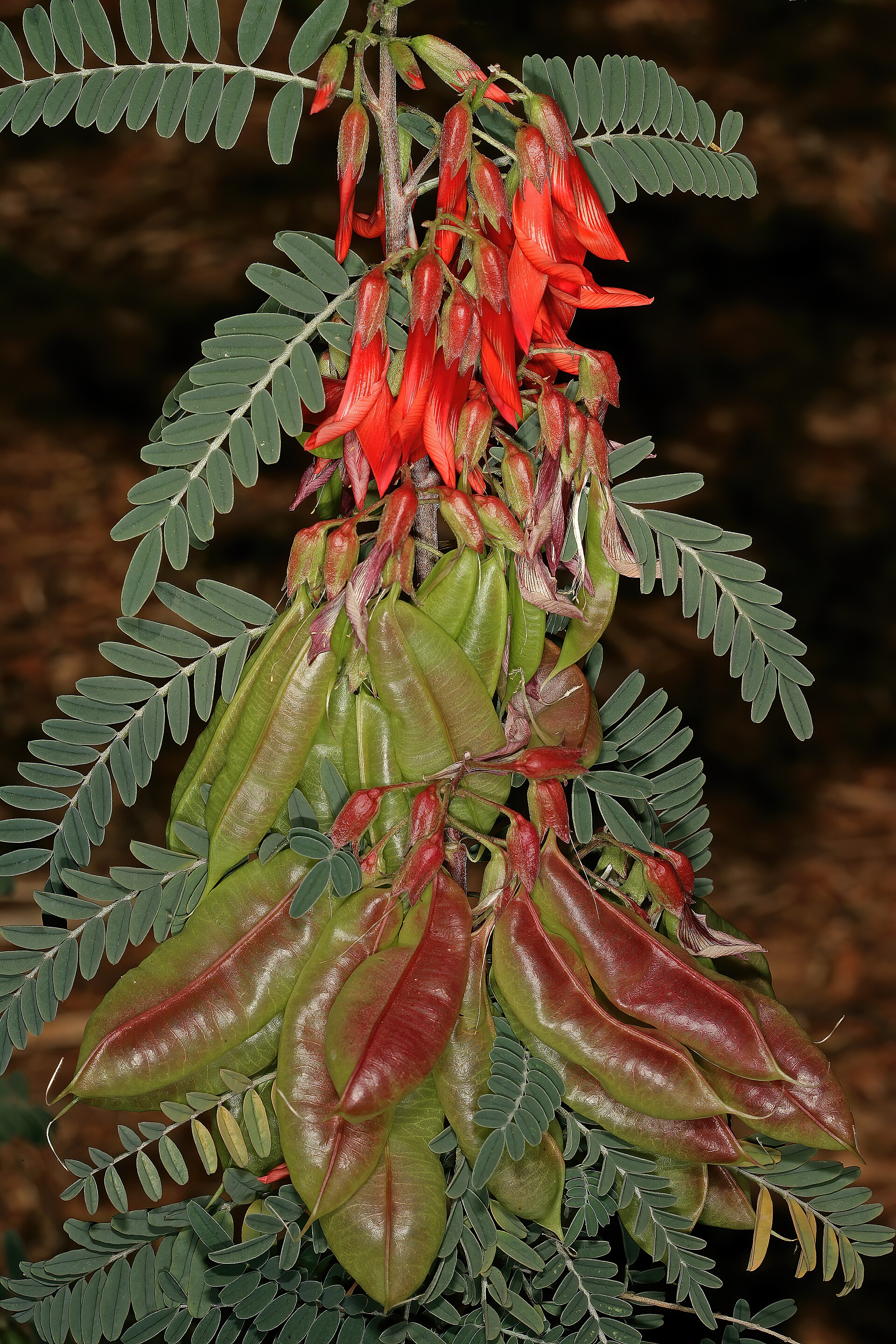
Cancer bush (Lessertia frutescens; syn. Sutherlandia frutescens), flowers and developing pods, Pretoria National Botanical Garden. Photo: SAplants, Wikimedia Commons, CC BY-SA 4.0.
Artemisia afra: African wormwood / wilde-als
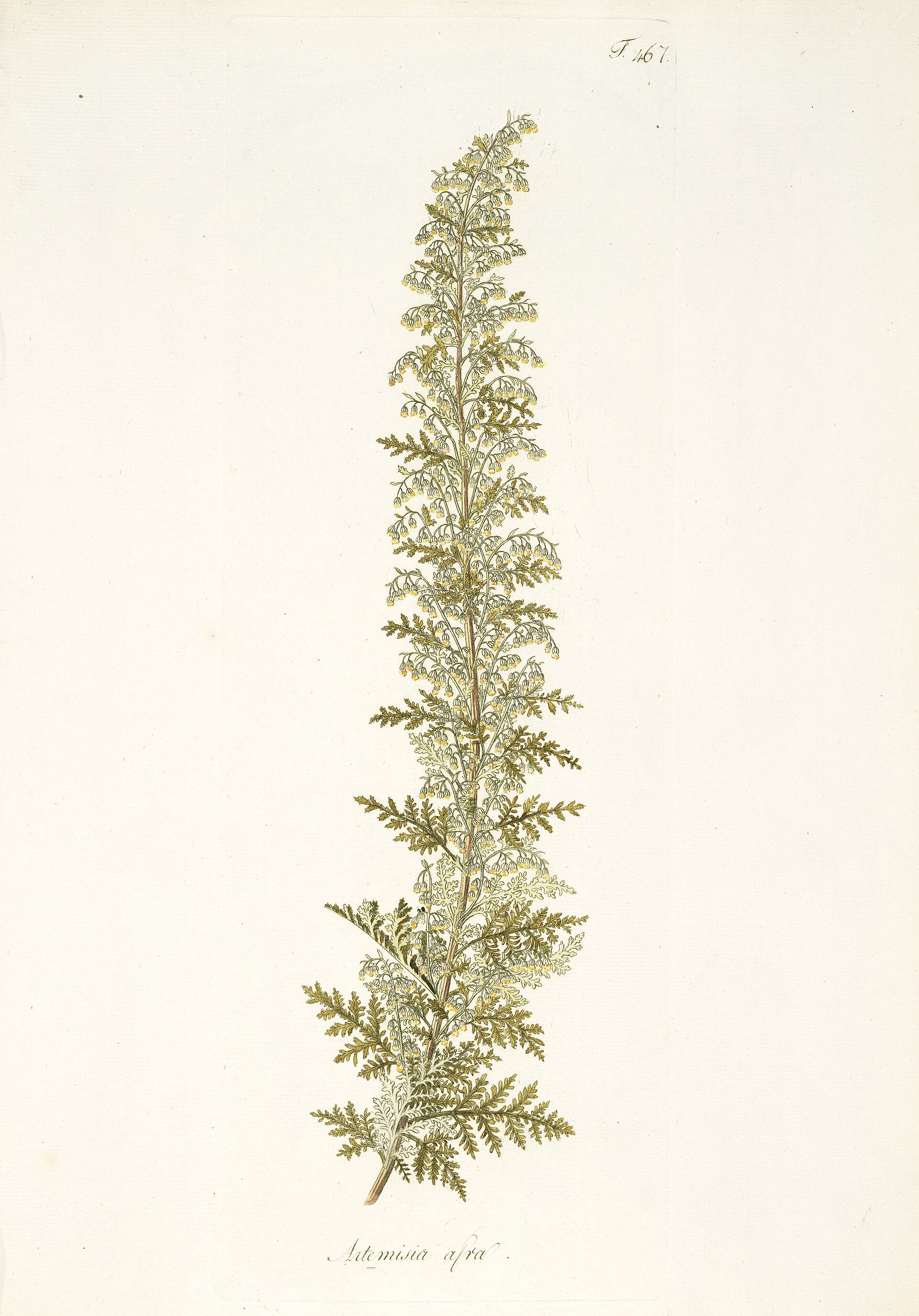
Artemisia afra Jacq. Upper part of the plant. Plate (Tafel 467) from N. J. Jacquin, Plantarum rariorum Horti caesarei Schoenbrunnensis, vol. 4 (Vienna: C. F. Wappler, 1804). Scan: Oceancetaceen (Alice Chodura), Wikimedia Commons (public domain).
Sclerocarya birrea: marula
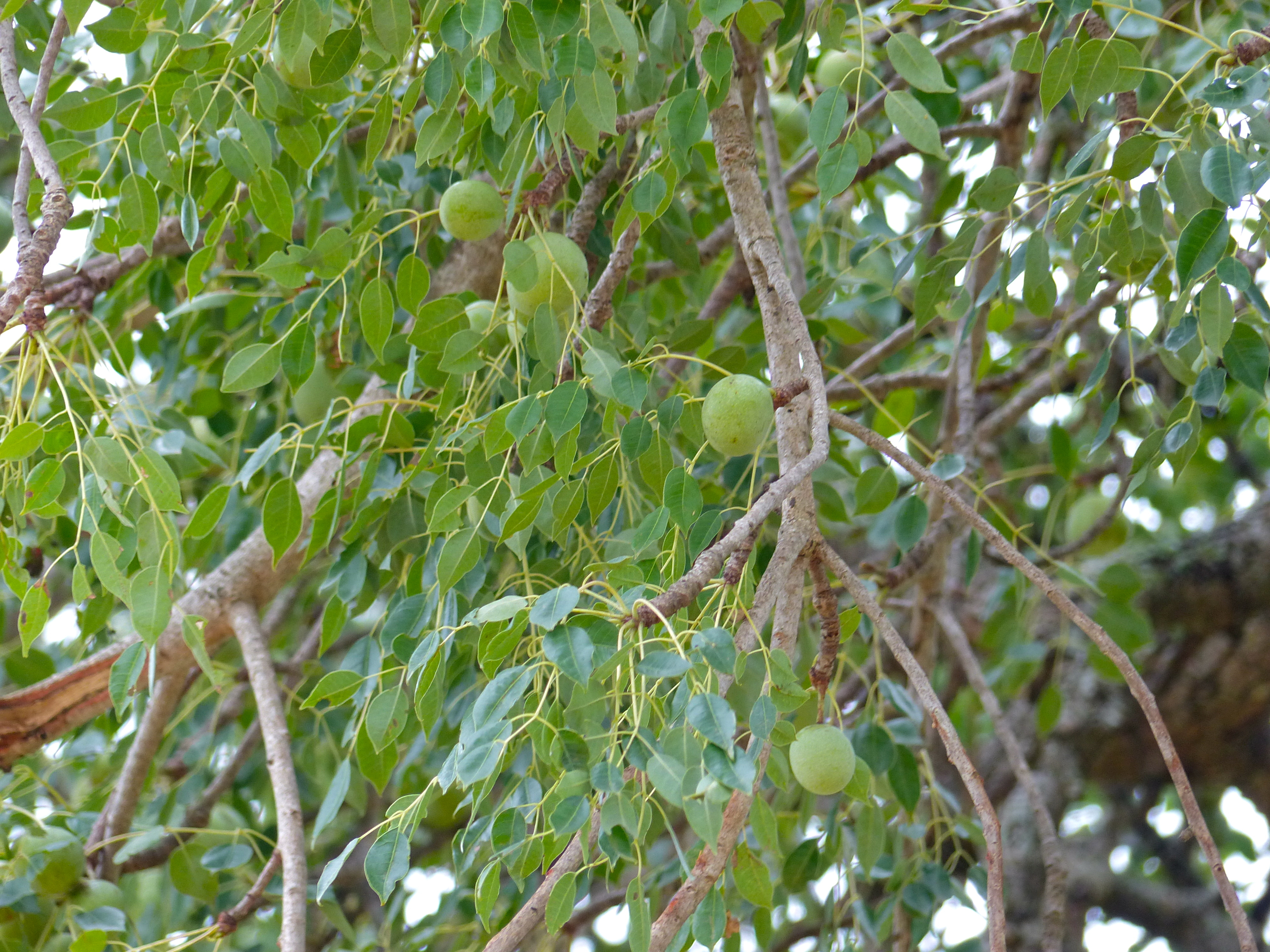
Marula (Sclerocarya birrea), fruits and leaves, H5 Road south of Lower Sabie, Kruger National Park, South Africa. Photo: Bernard Dupont, Wikimedia Commons, CC BY-SA 2.0.
Adansonia digitata: baobab
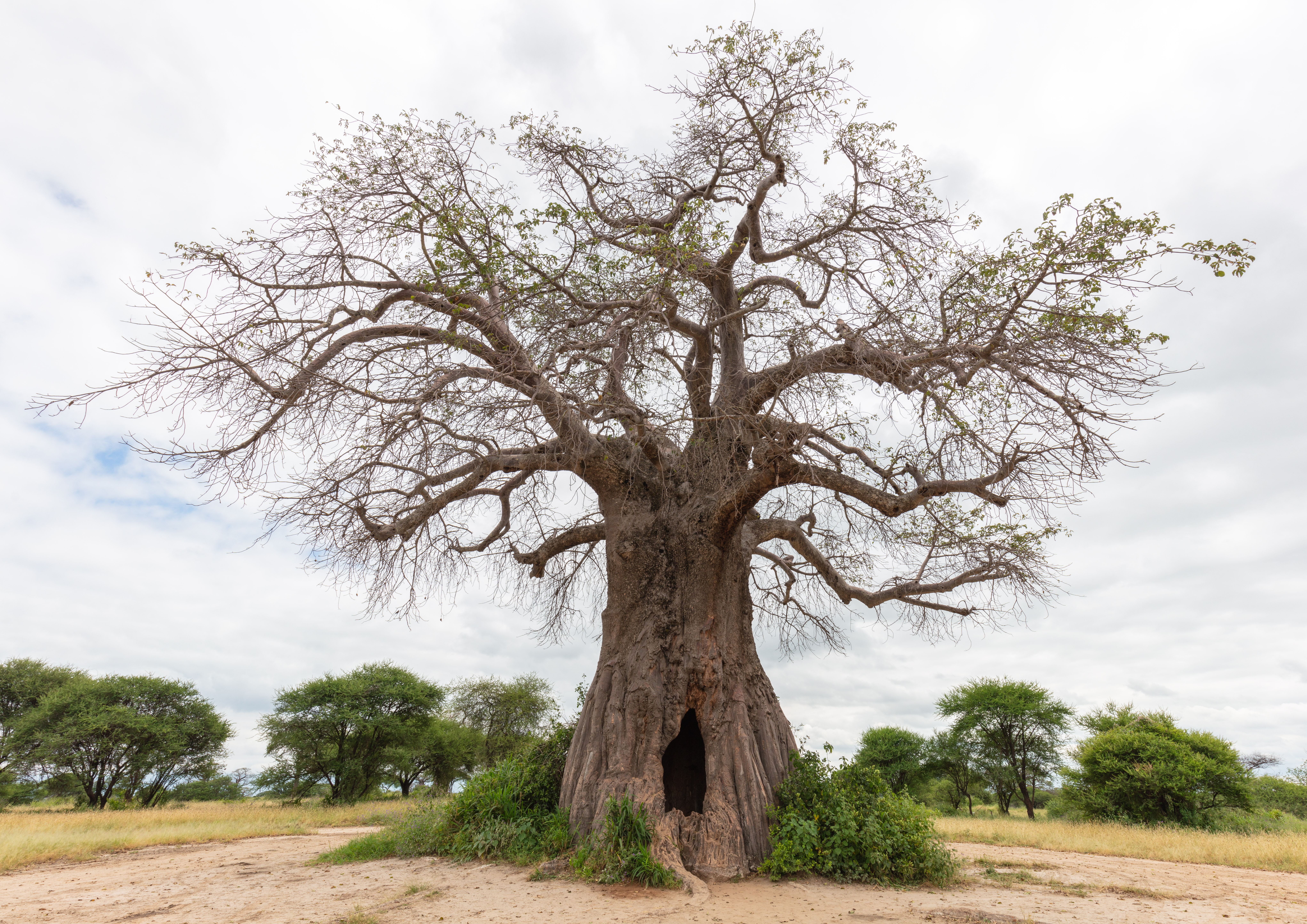
African baobab (Adansonia digitata), Tarangire National Park, Tanzania. Photo: Diego Delso, delso.photo, Wikimedia Commons, CC BY-SA 4.0.
Harpagophytum procumbens: devil's claw
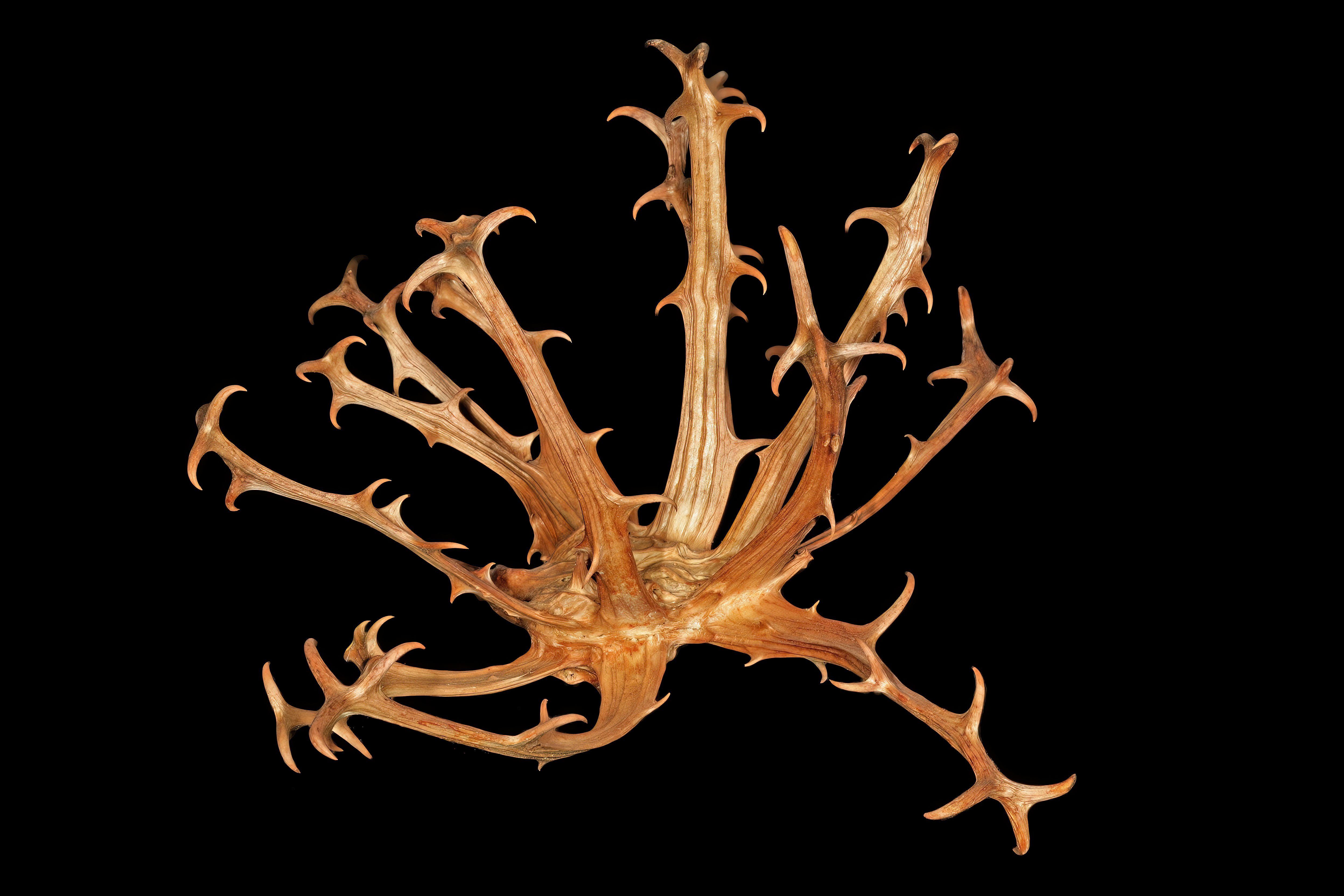
Devil's claw (Harpagophytum procumbens), recently dehisced capsule (trample-burr), Manie van der Schijff Botanical Garden, University of Pretoria. Photo: SAplants, Wikimedia Commons, CC BY-SA 4.0.
Pelargonium sidoides: African geranium
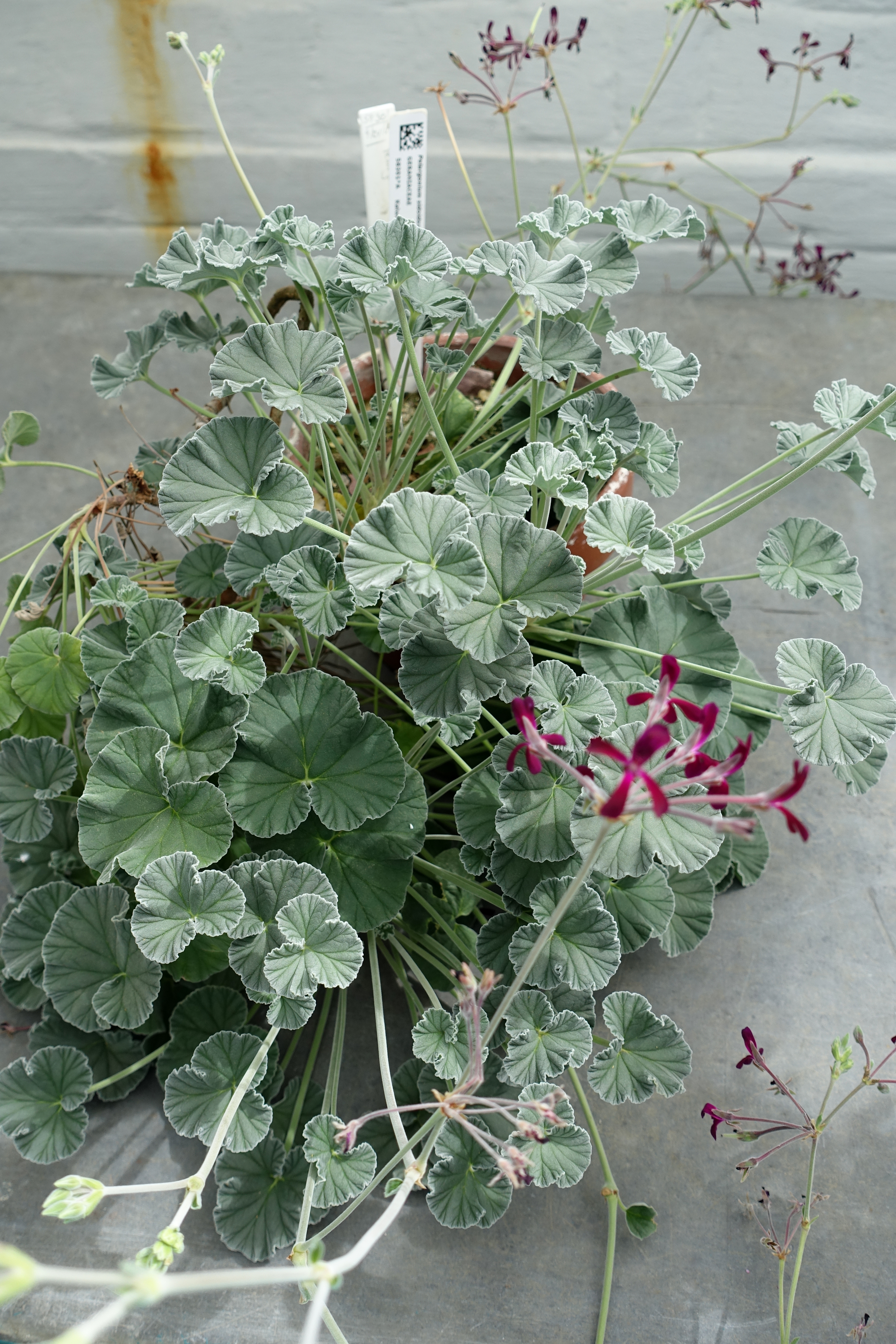
African geranium (Pelargonium sidoides), botanical specimen, Lyman Plant House, Smith College, Northampton, Massachusetts. Photo: Daderot, Wikimedia Commons, CC0.
Hypoxis hemerocallidea: African potato
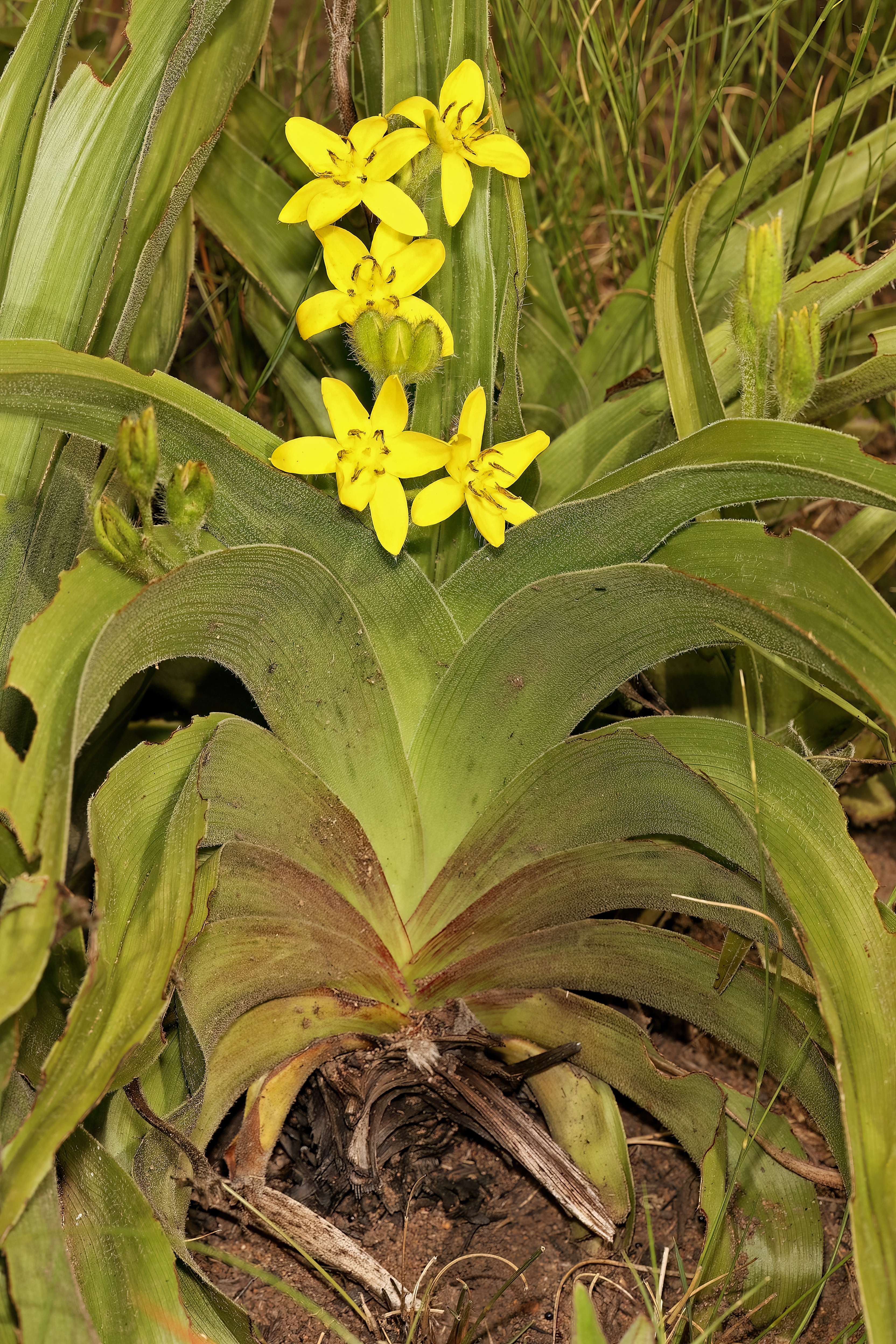
African potato (Hypoxis hemerocallidea), plant in flower, grassland, Brummeria, Pretoria, Gauteng. Photo: SAplants, Wikimedia Commons, CC BY-SA 4.0.
Siphonochilus aethiopicus: African ginger
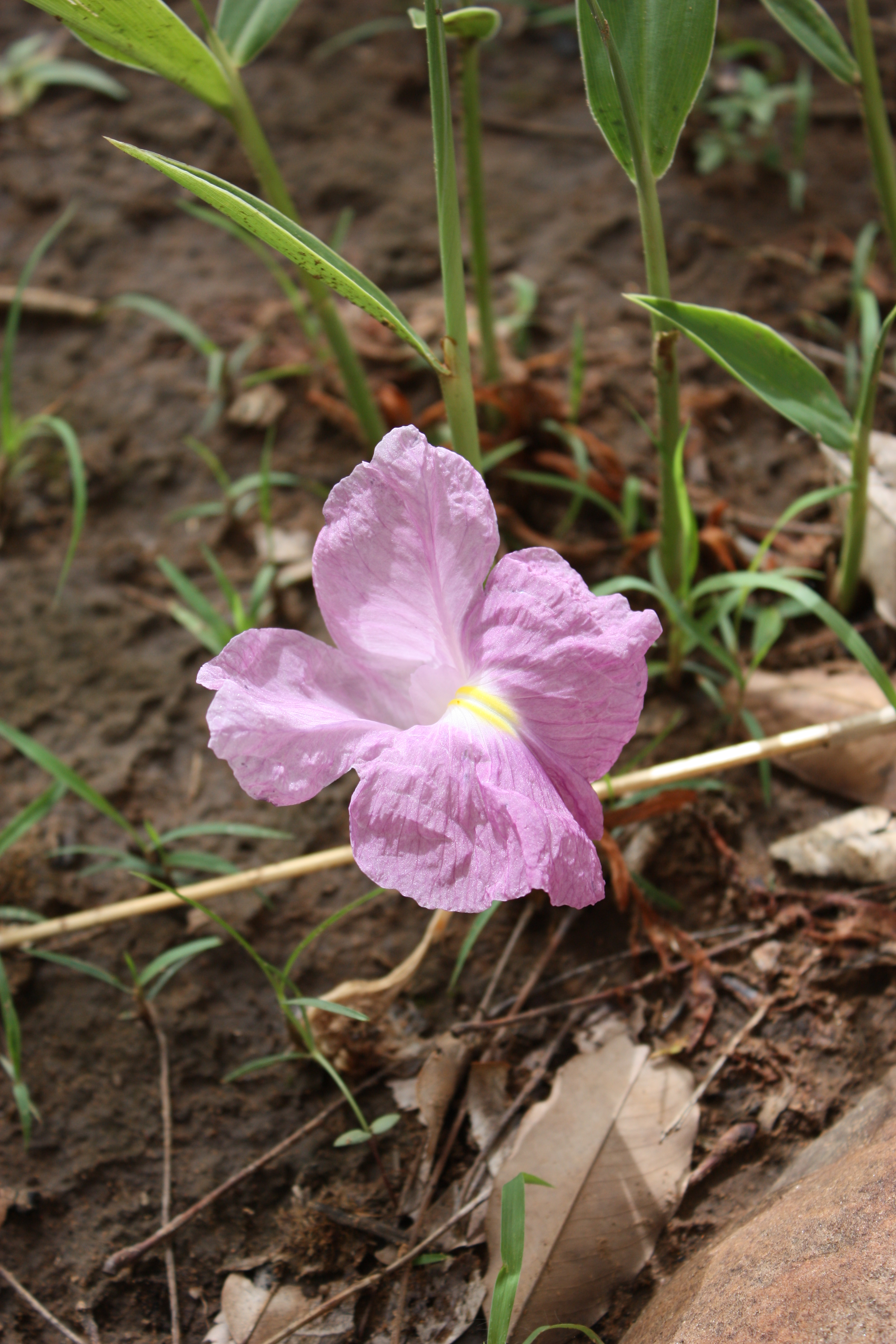
African ginger (Siphonochilus aethiopicus; syn. Kaempferia aethiopica), flower, SW Burkina Faso. Photo: Marco Schmidt, Wikimedia Commons, CC BY-SA 3.0.
Warburgia salutaris: pepper-bark tree
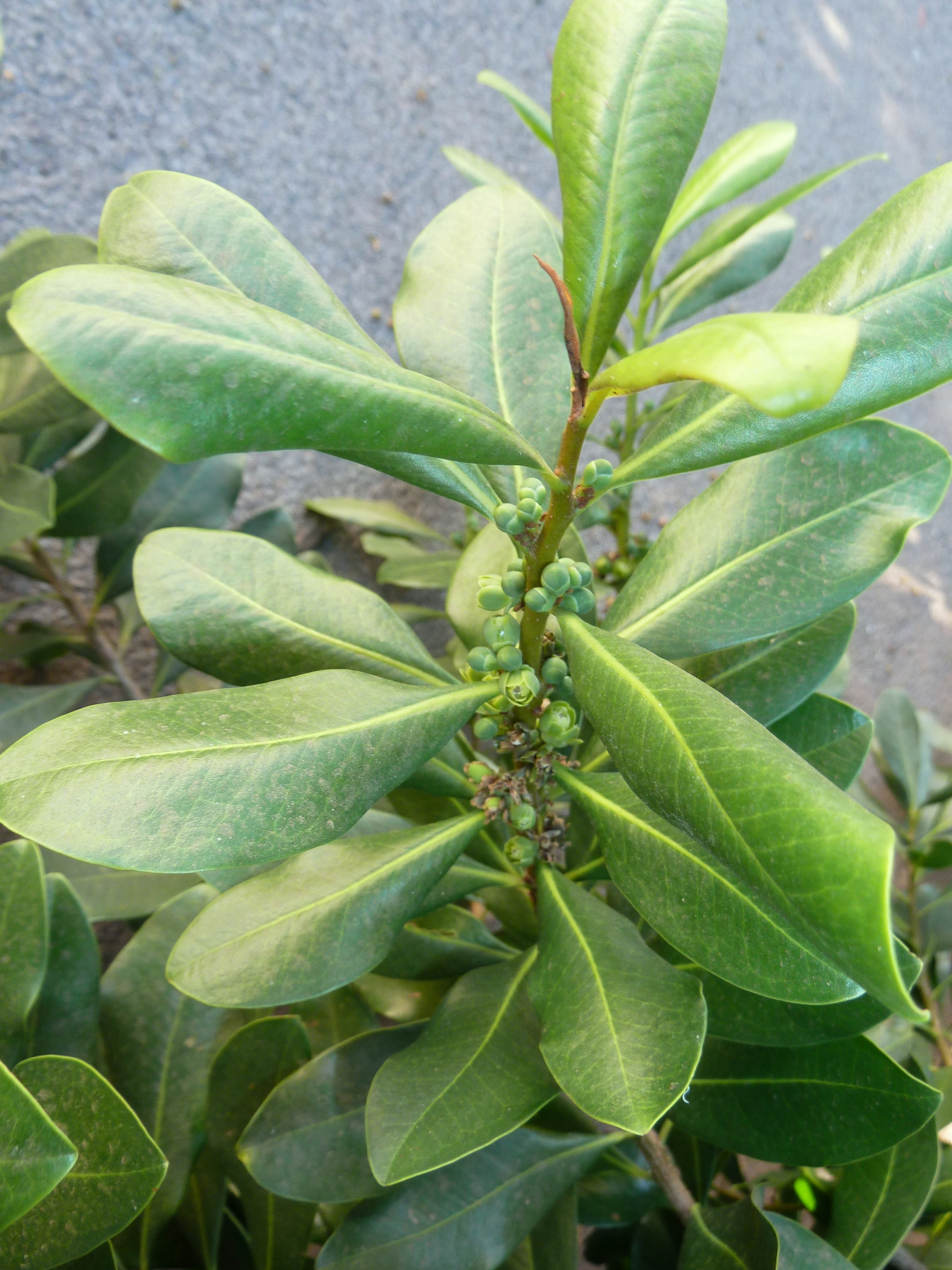
Pepper-bark tree (Warburgia salutaris), foliage and flowers, Manie van der Schijff Botanical Garden, University of Pretoria. Photo: JMK, Wikimedia Commons, CC BY-SA 3.0.
Prunus africana: African cherry
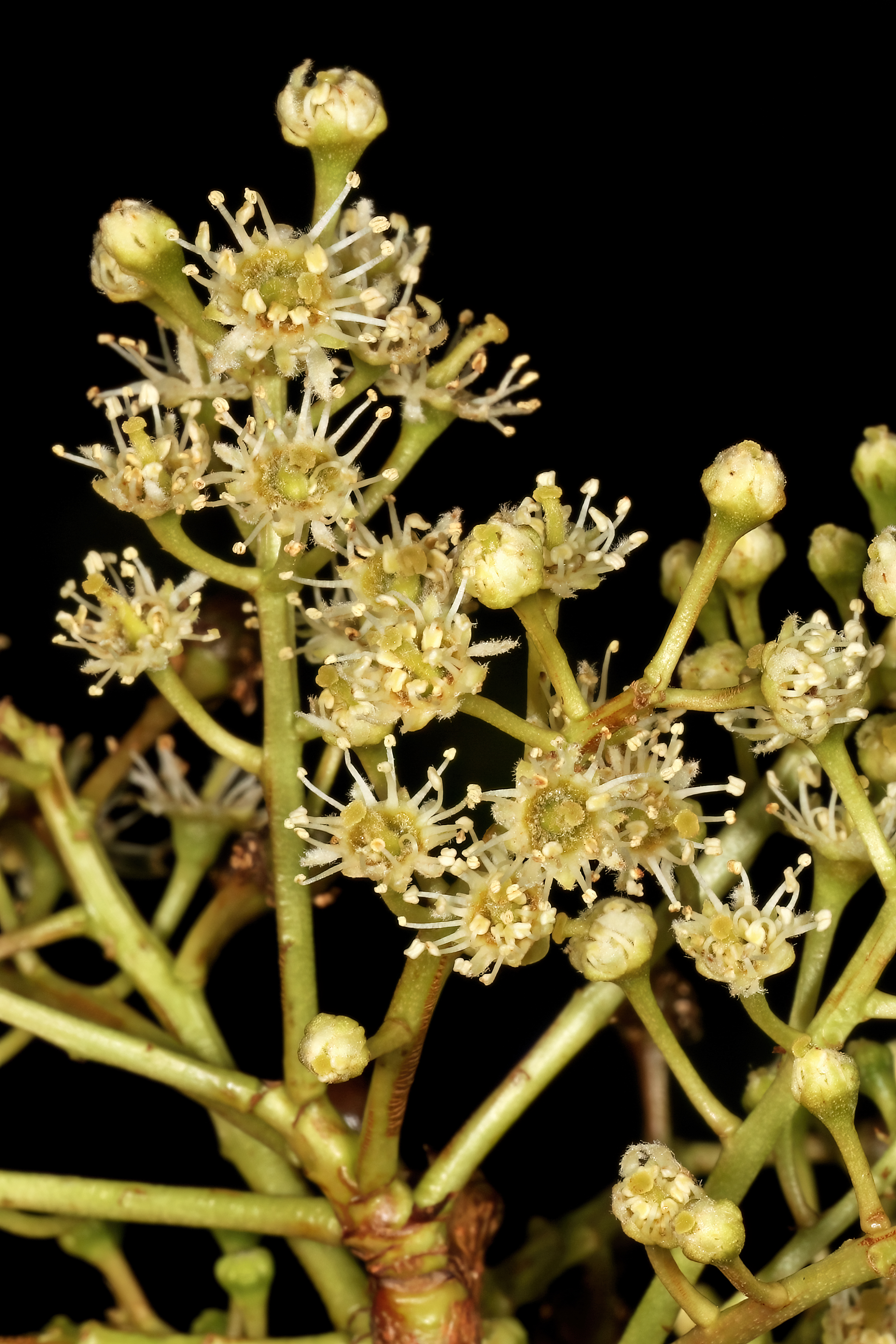
African cherry (Prunus africana), flowers, Kirstenbosch National Botanical Garden, Cape Town. Photo: SAplants, Wikimedia Commons, CC BY-SA 4.0.
Carpobrotus edulis: sour fig
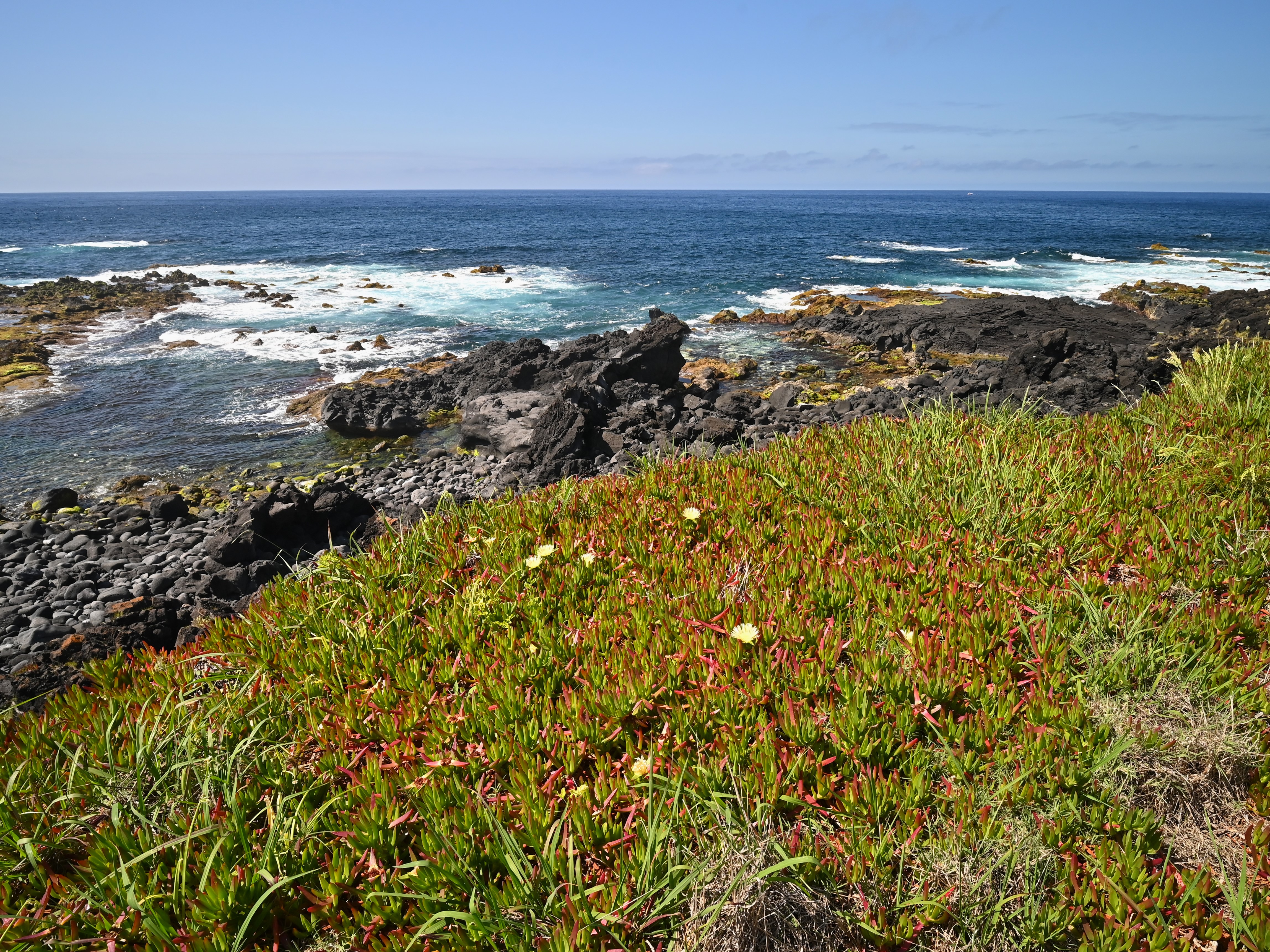
Sour fig (Carpobrotus edulis), Mosteiros, Sao Miguel, Azores. Photo: Krzysztof Ziarnek (Kenraiz), Wikimedia Commons, CC BY 4.0.
Bulbine frutescens: burn jelly plant / geelkatstert
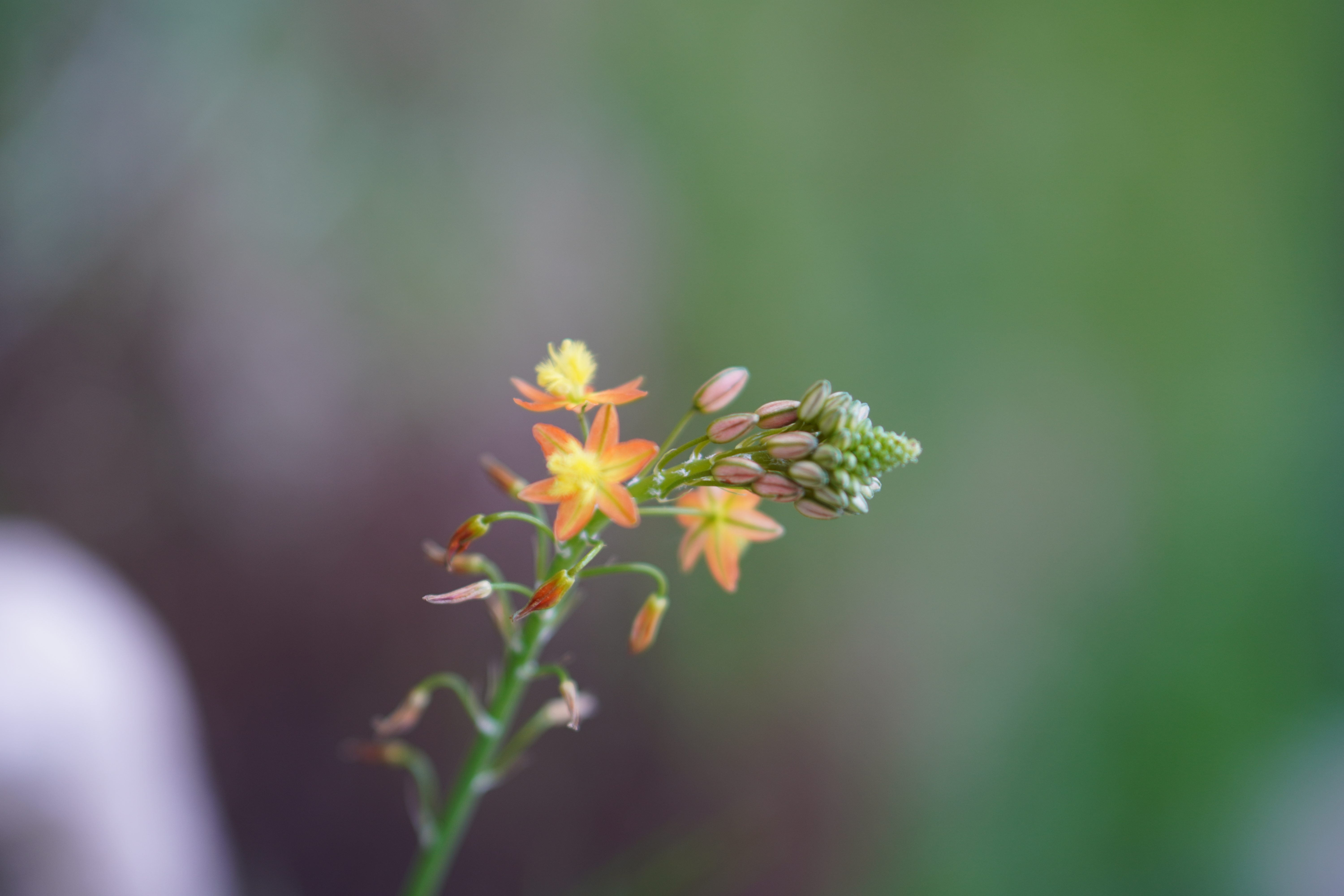
Burn jelly plant (Bulbine frutescens), flower close-up. Photo: Pierre Mirosa, Wikimedia Commons, CC BY-SA 4.0.
Mentha longifolia: horsemint / wild mint (Cape form)
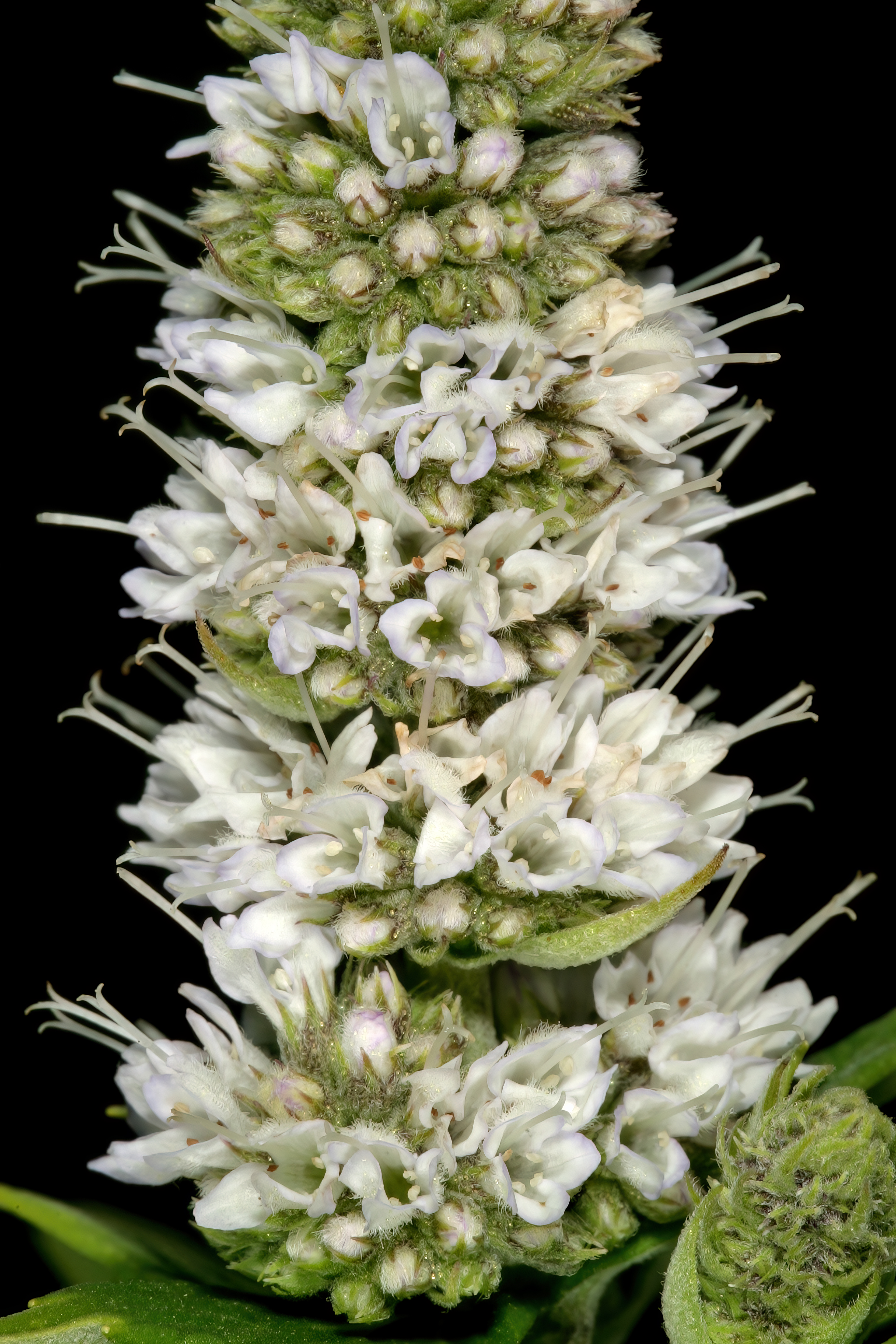
Horsemint (Mentha longifolia subsp. capensis), flowers, Harold Porter National Botanical Garden, Betty's Bay, Western Cape. Photo: SAplants, Wikimedia Commons, CC BY-SA 4.0.
Aloe arborescens: krantz aloe / tree aloe
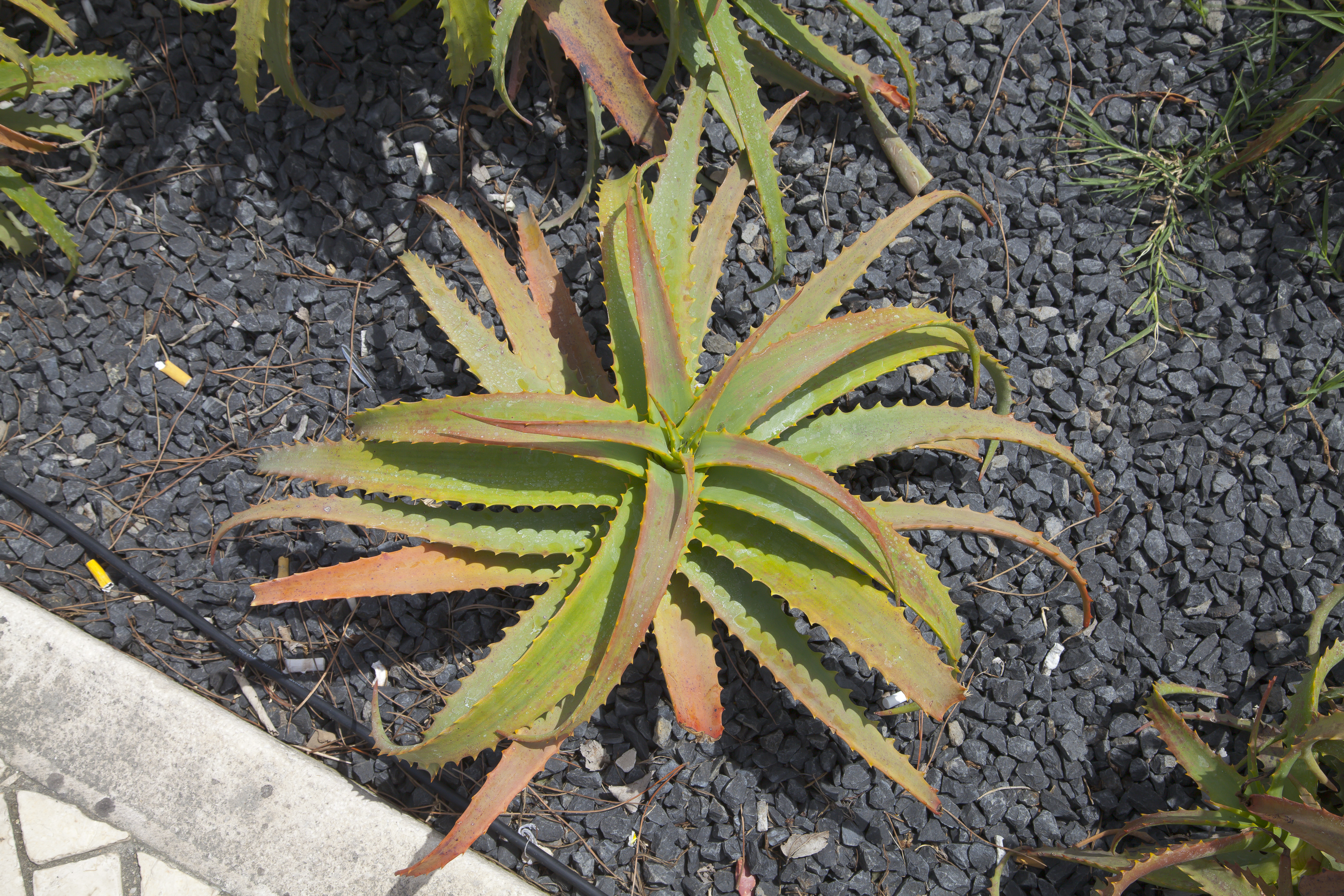
Krantz aloe (Aloe arborescens), Lisbon, Portugal. Photo: Diego Delso, Wikimedia Commons, CC BY-SA 3.0.
Agathosma crenulata: oval-leaf buchu / long-leaf buchu
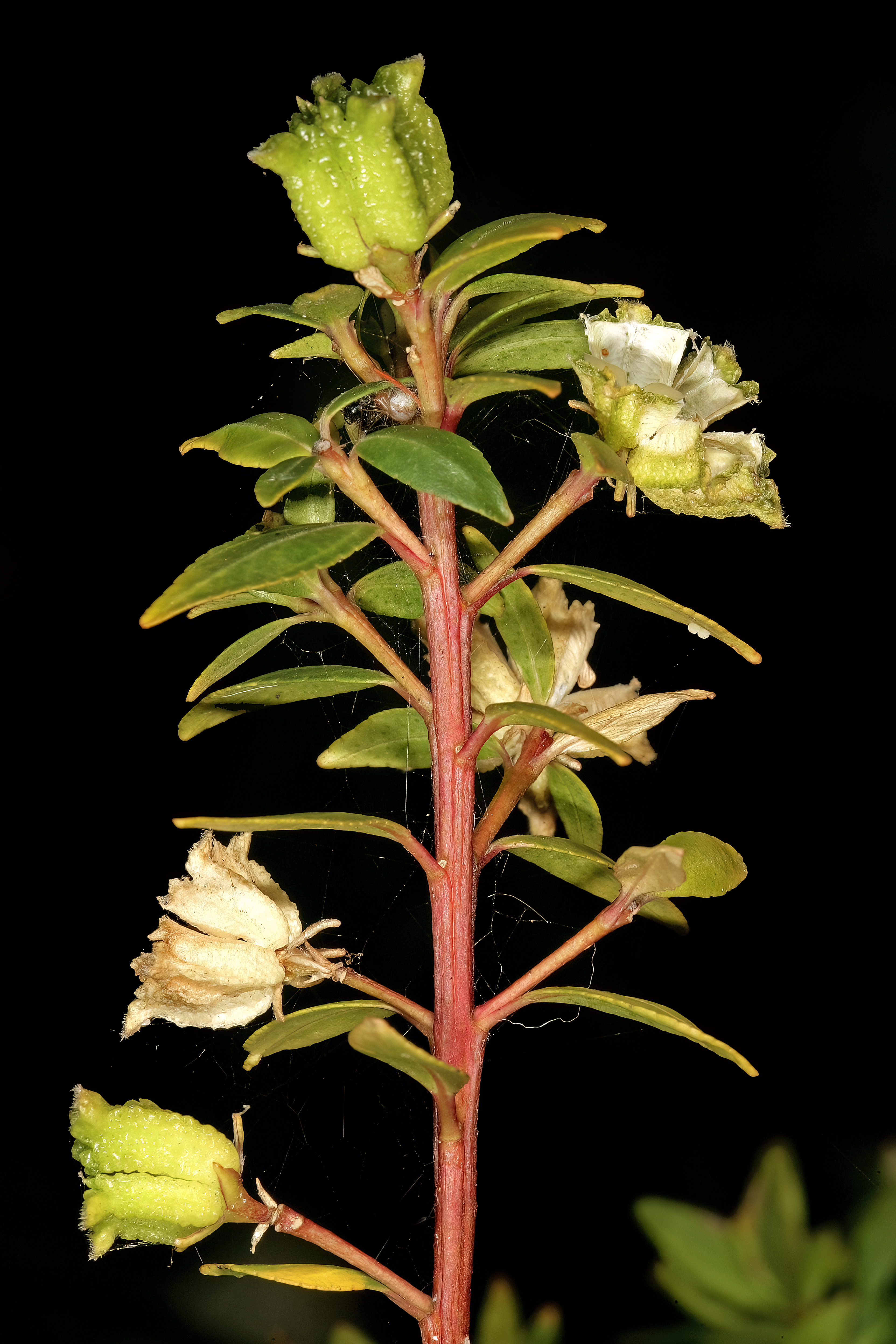
Oval-leaf buchu (Agathosma crenulata), developing and dehisced fruit, Harold Porter National Botanical Garden, Betty's Bay, Western Cape. Photo: SAplants, Wikimedia Commons, CC BY-SA 4.0.
Cyclopia intermedia: honeybush
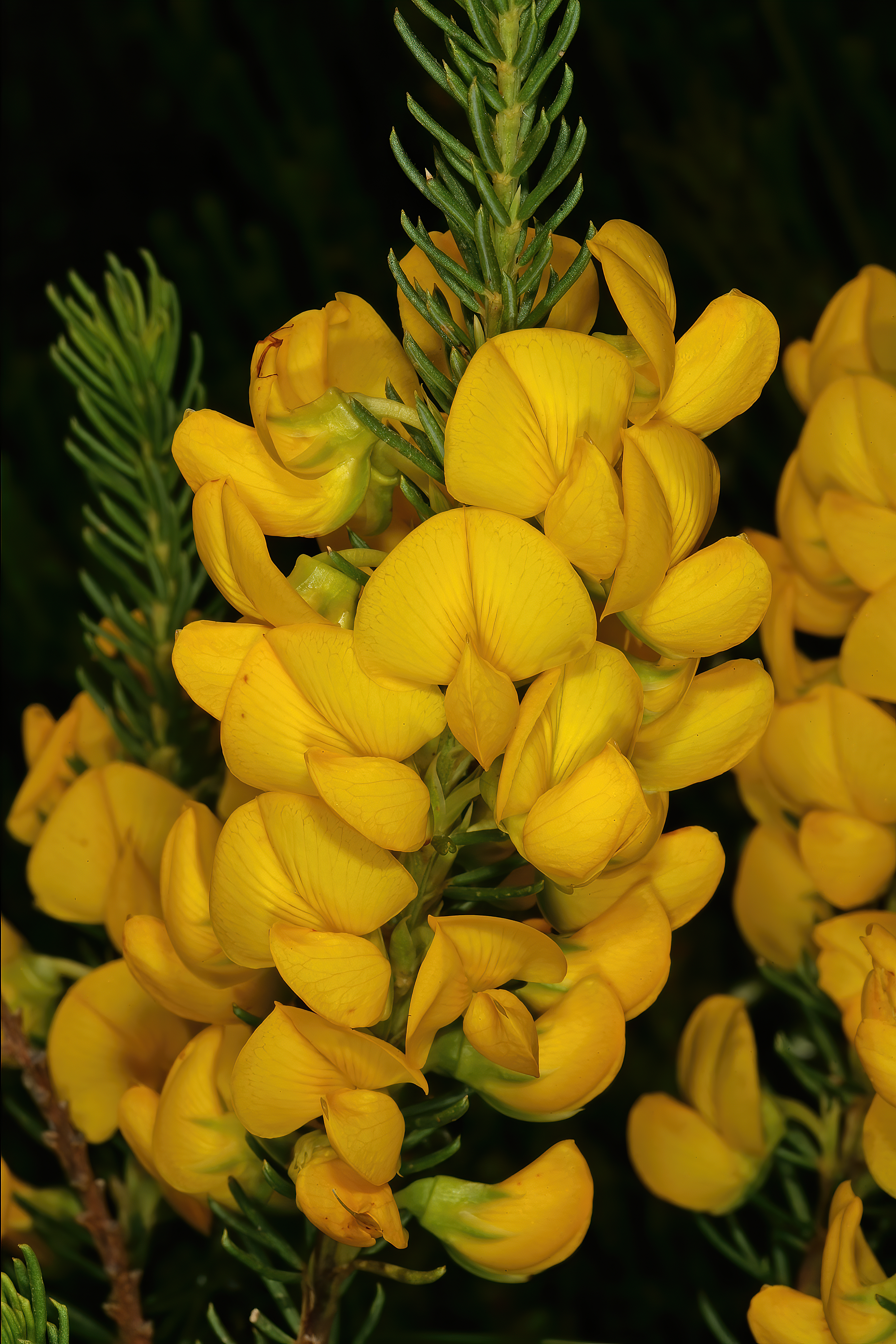
Honeybush (Cyclopia genistoides), flowers, fynbos along Palmiet River, Kleinmond, Western Cape. Photo: SAplants, Wikimedia Commons, CC BY-SA 4.0.
Note: plate is Cyclopia genistoides fallback (no print-ready Cyclopia intermedia bitmap on Commons at ingest).
Juncus kraussii: sea rush / iNcema
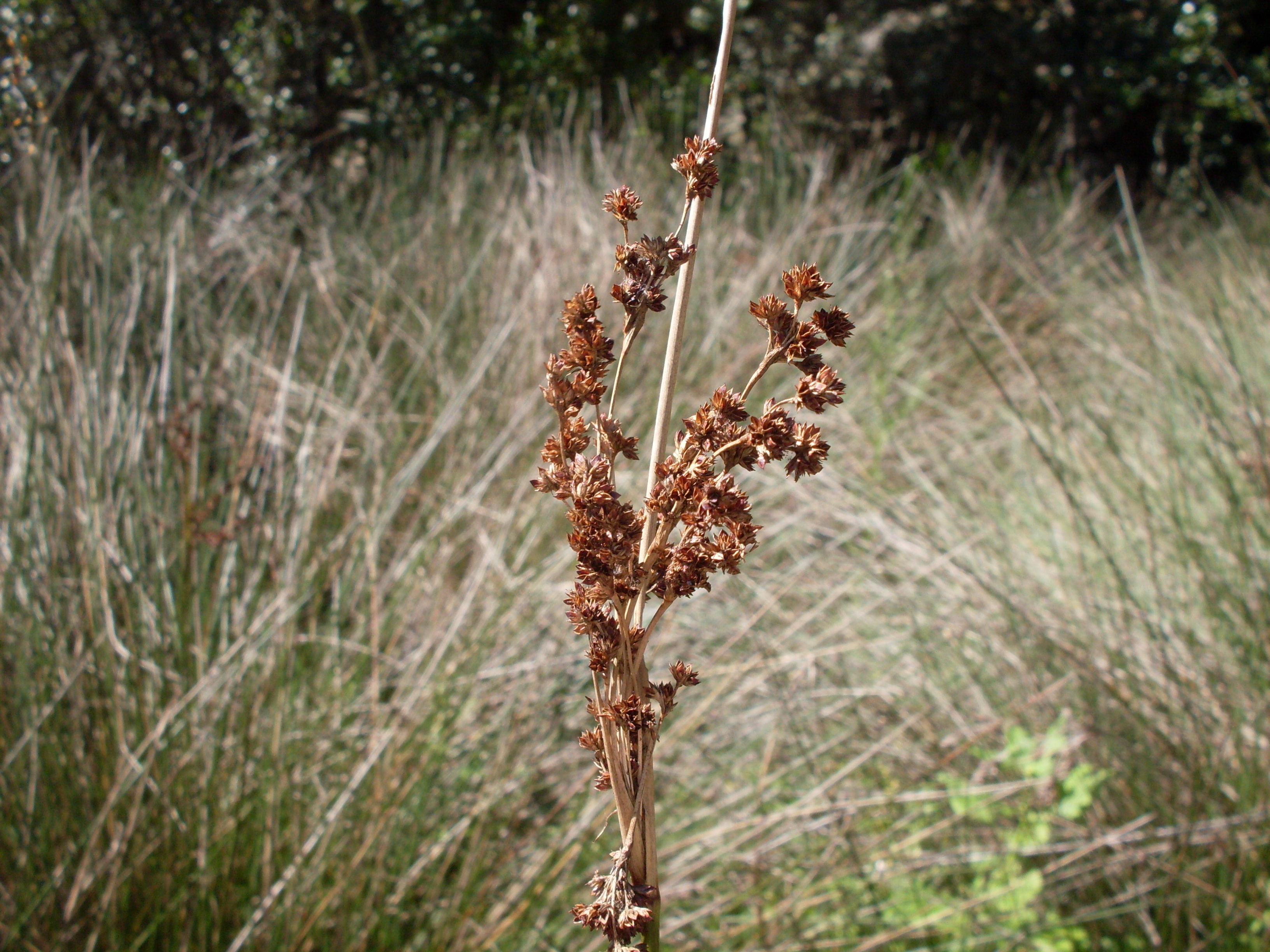
Sea rush (Juncus kraussii), Paruna Reserve, Como, NSW, Australia. Photo: John Tann, Wikimedia Commons, CC BY 2.0.
Vachellia karroo: sweet thorn / soetdoring
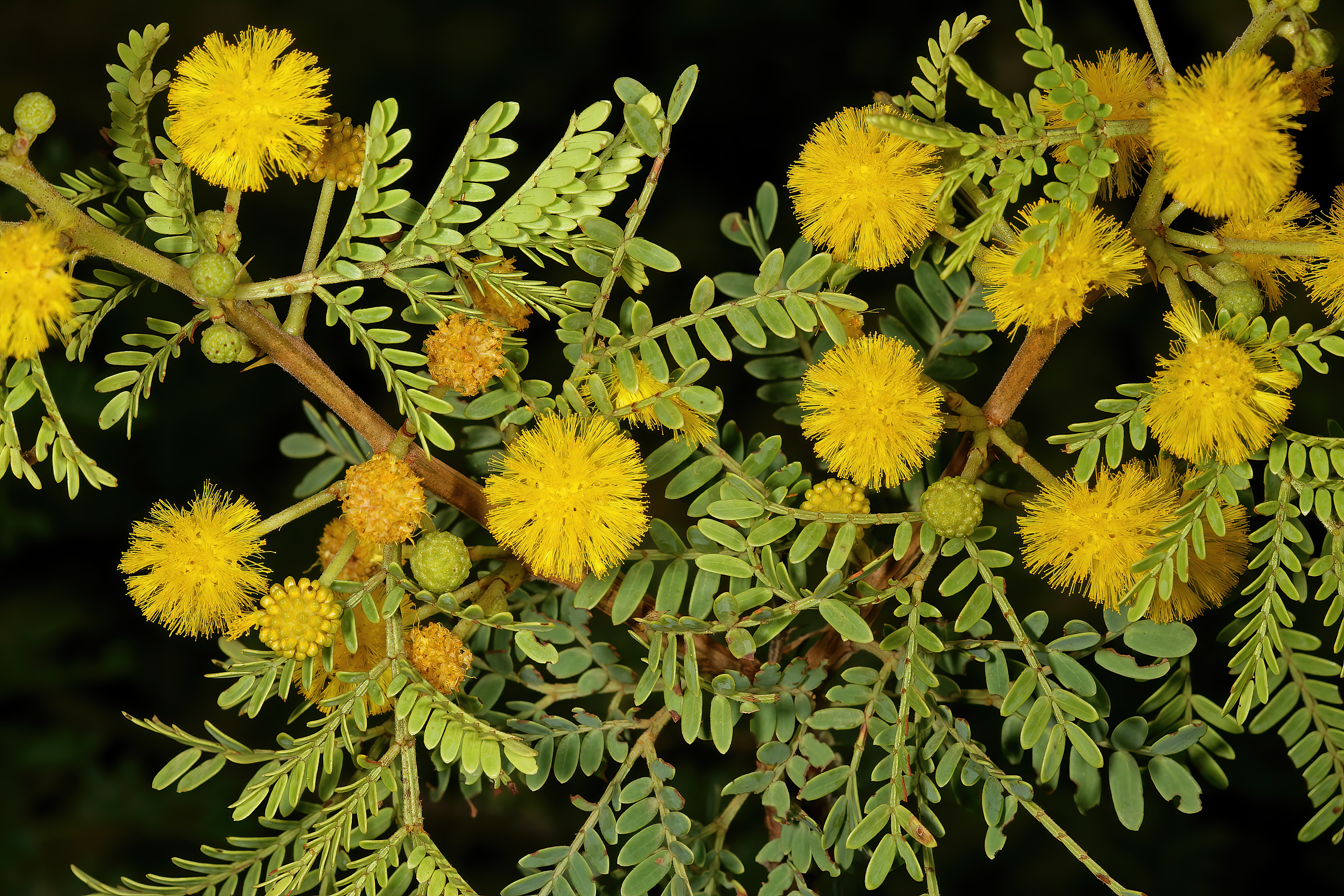
Sweet thorn (Vachellia karroo; syn. Acacia karroo), flowerheads near Wolmaransstad, North West, South Africa. Photo: SAplants, Wikimedia Commons, CC BY-SA 4.0.
Ziziphus mucronata: buffalo thorn / blinkblaar-wag-'n-bietjie
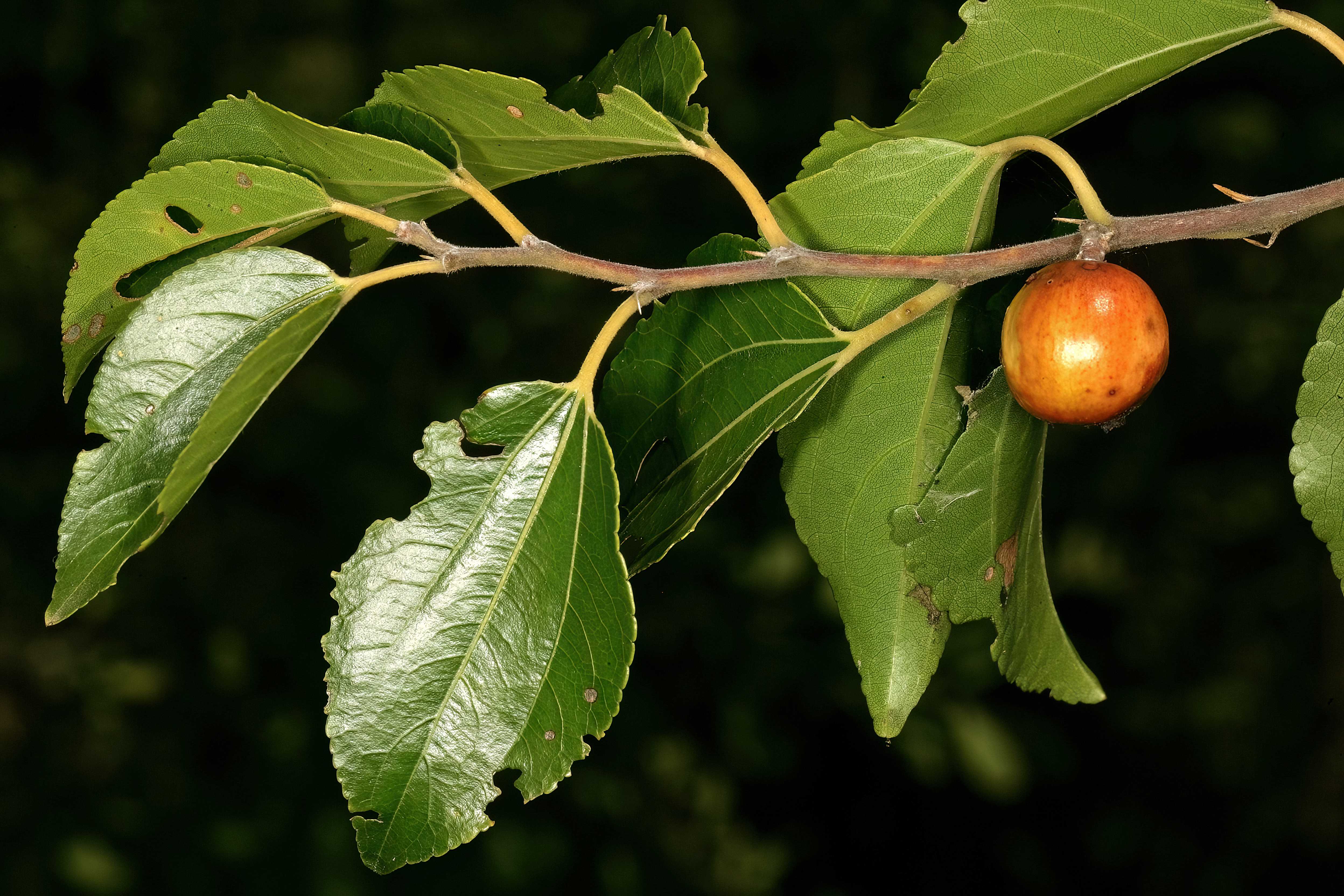
Buffalo thorn (Ziziphus mucronata), fruit, Faerie Glen Nature Reserve, Pretoria, Gauteng. Photo: SAplants, Wikimedia Commons, CC BY-SA 4.0.
Citrullus lanatus: tsamma / wild melon
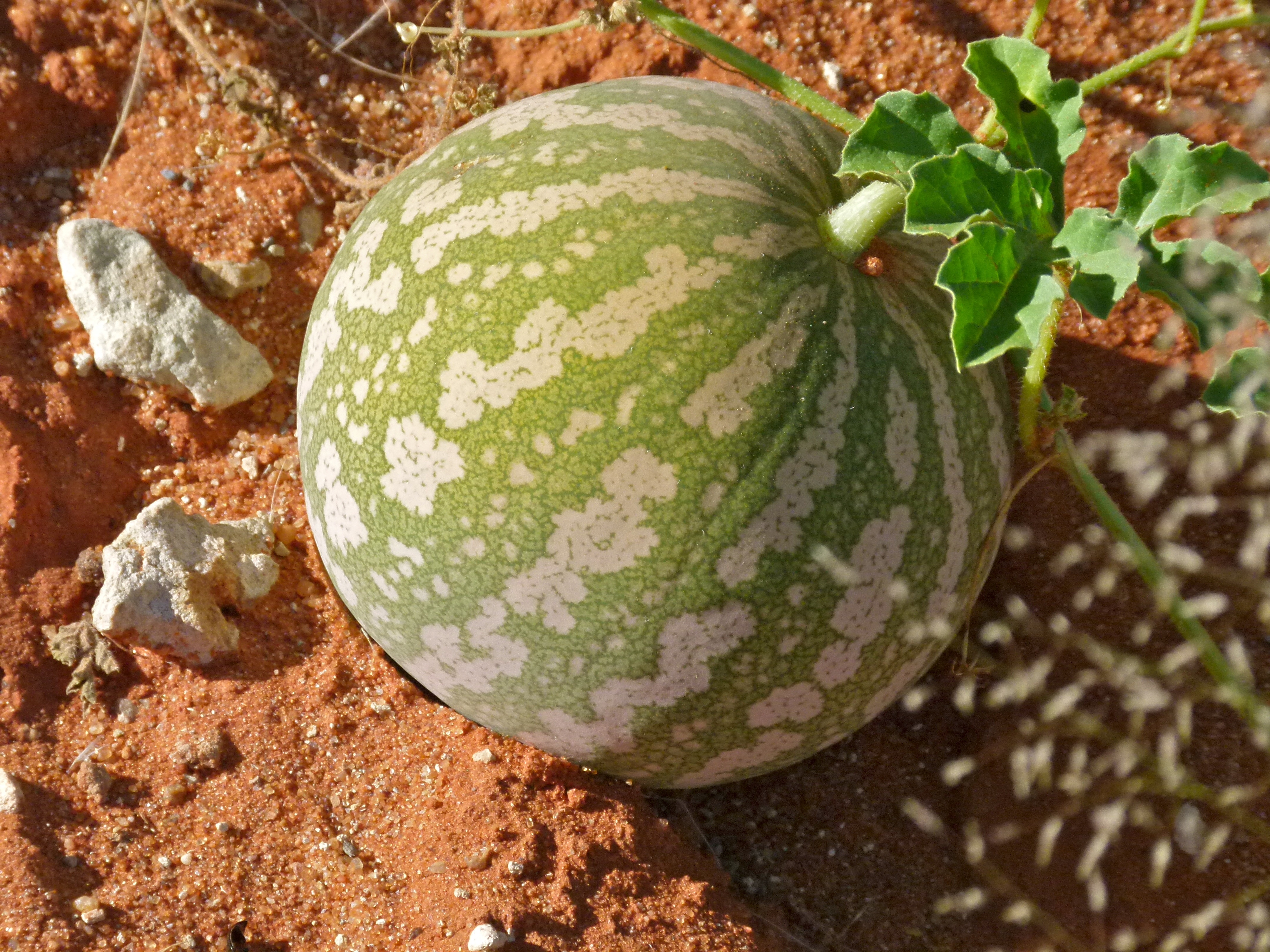
Tsamma melon (Citrullus lanatus), Twee Rivieren Camp, Kgalagadi Transfrontier Park, South Africa. Photo: Bernard Dupont, Wikimedia Commons, CC BY-SA 2.0.
Aponogeton distachyos: waterblommetjie
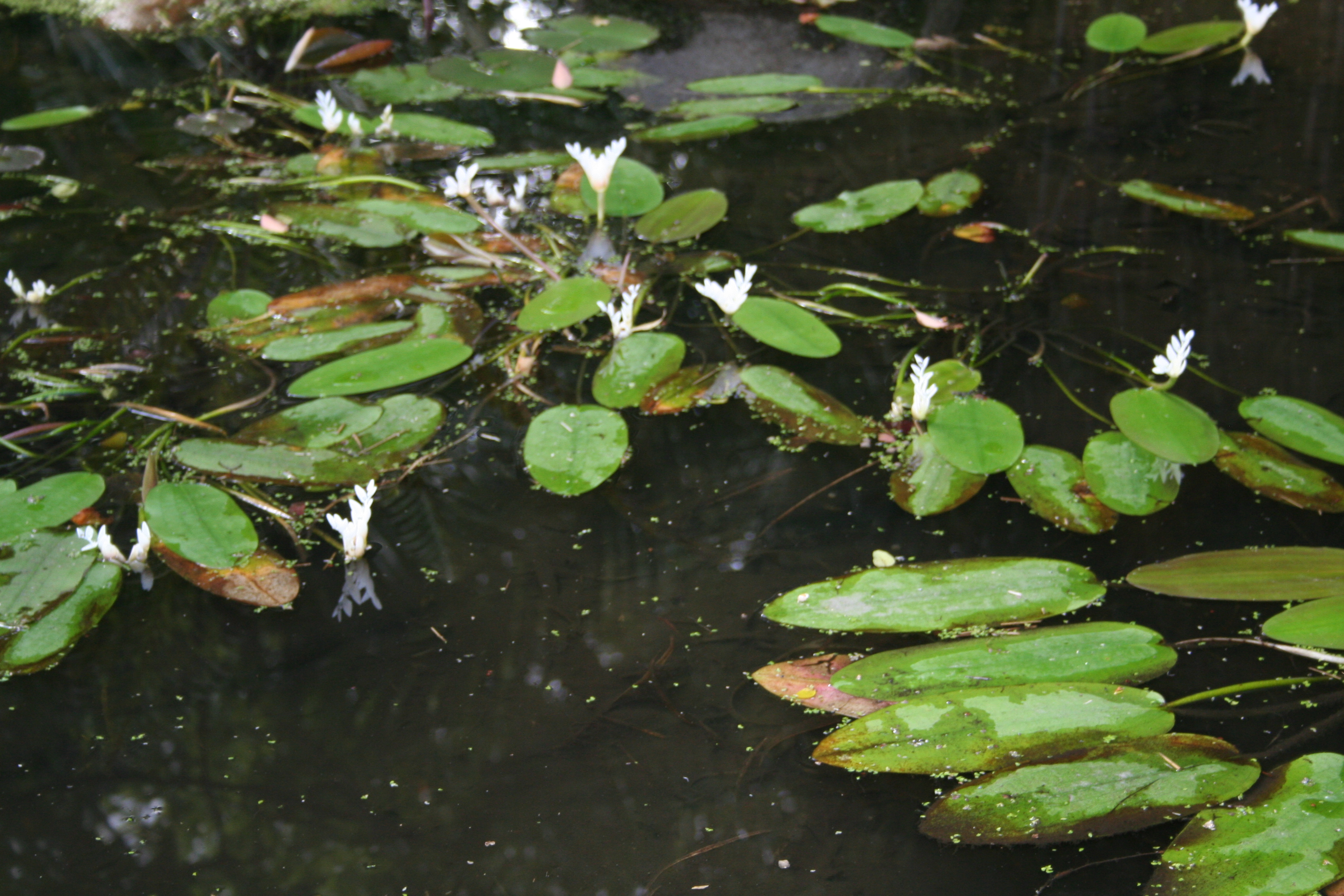
Waterblommetjie (Aponogeton distachyos) in a pond, Stellenbosch Botanical Garden, South Africa. Photo: Marco Schmidt, Wikimedia Commons, CC BY-SA 3.0.
Kigelia africana: sausage tree
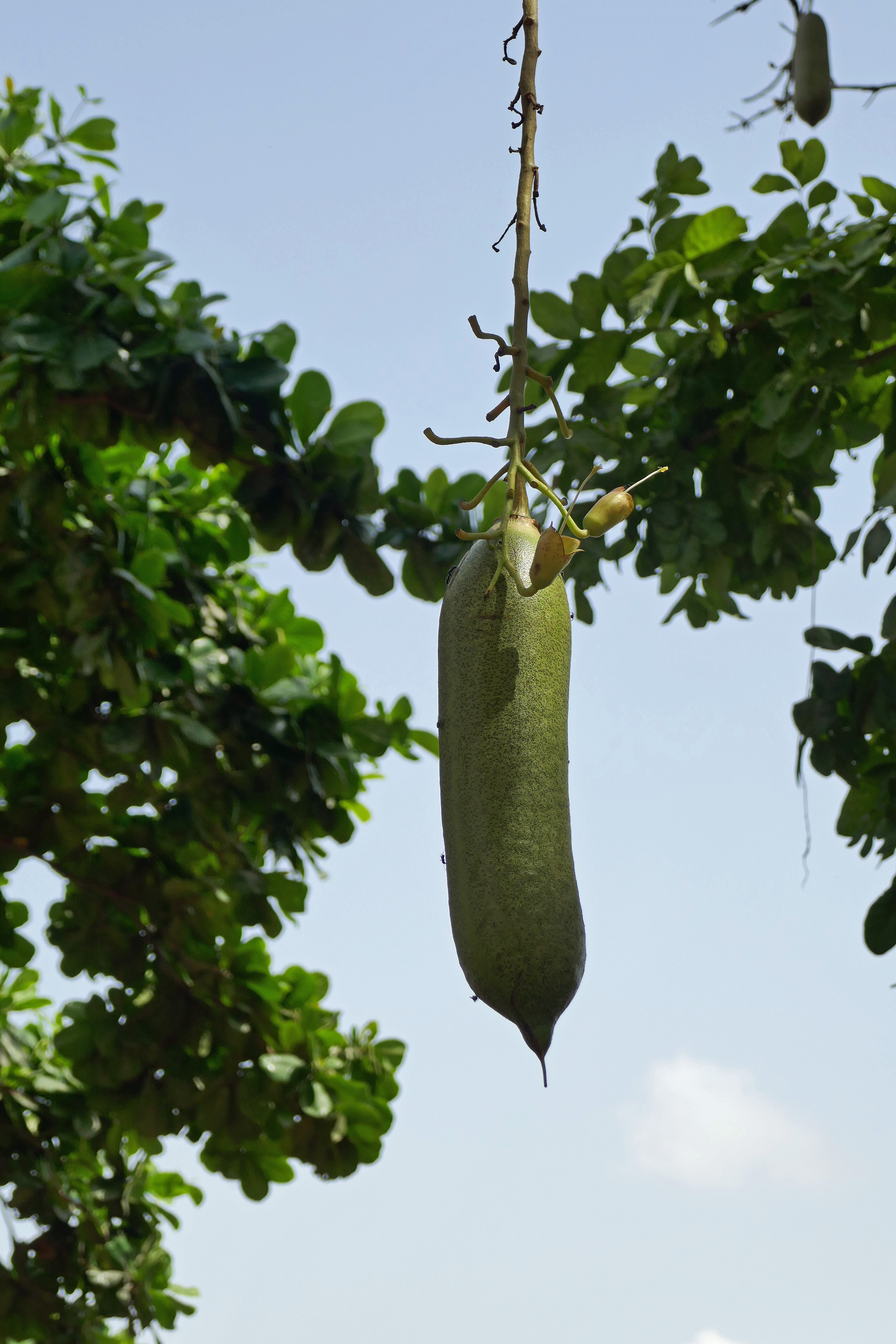
Sausage tree (Kigelia africana), hanging fruit on the Arbre du Retour, Ouidah, Benin. Photo: Ji-Elle, Wikimedia Commons, CC BY-SA 4.0.
Relationship to People's Plants
van Wyk, B.-E. & Gericke, N. (2018). People's Plants: A Guide to Useful Plants of Southern Africa (2nd ed.). Pretoria: Briza Publications. Secondary literature and the atlas agenda (~700 plants across these 20 chapters). The steward's physical copy is the desk reference; the Codex expands from independent open sources and custodian consent, never by transcription.
Next build steps
- Freely-licensed plates for every
plate_status=needrow inopenorcaution. - HOLD rows stay name-only until safety + consent review (Book VIII / XV).
- Promote rows to monographs only via Book XII blueprint + intake card.
- Grow toward the ~50 deeply sourced Phase-1 monographs (Book XIV), then toward
the broader People's Plants agenda without ever becoming a mirror of it.