 Arjuna Badger Press
The Little Key
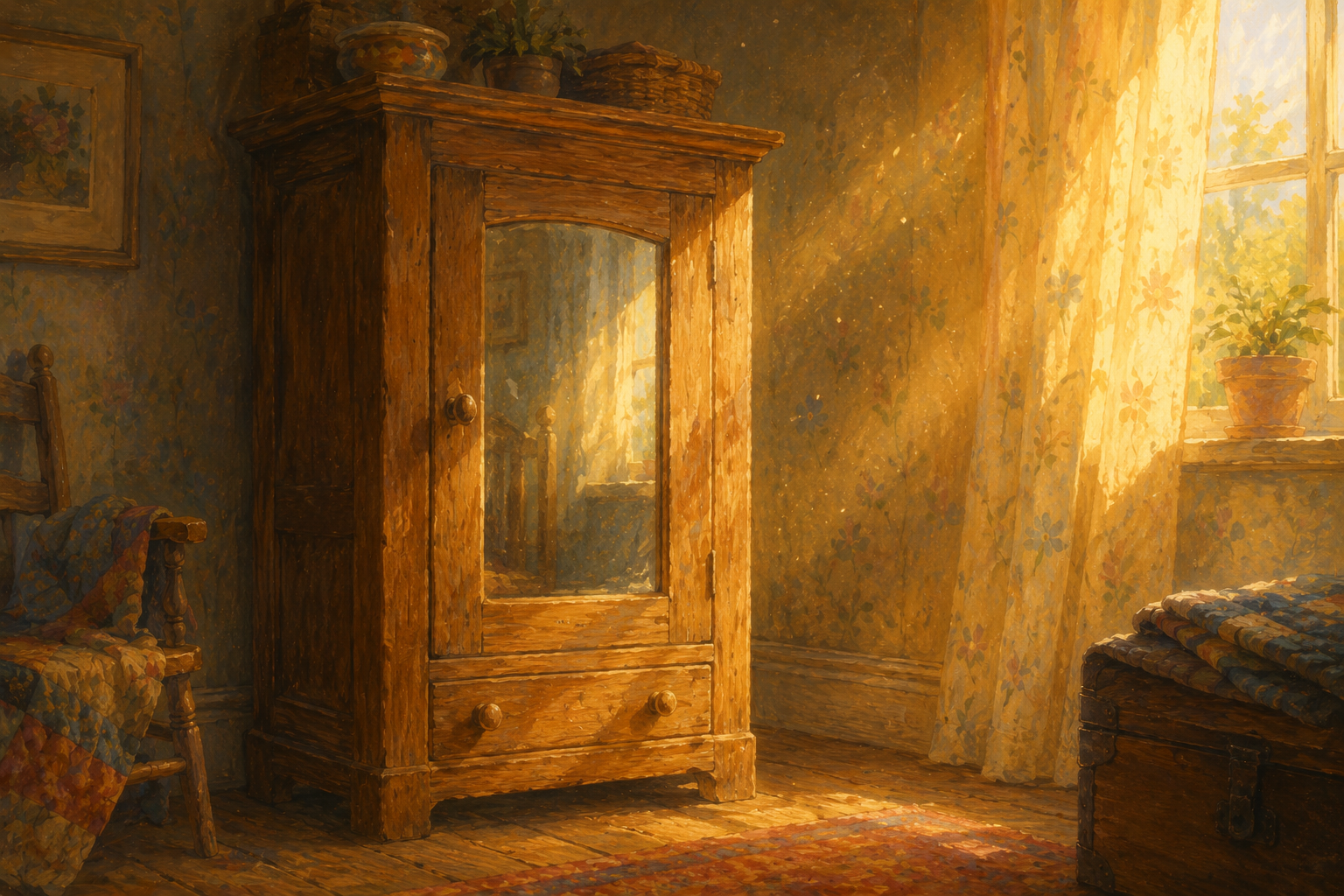
stood an old, old cupboard
with a little mirror door.
Nobody used it.
The dust came down through the sunbeam
slow as falling snow.
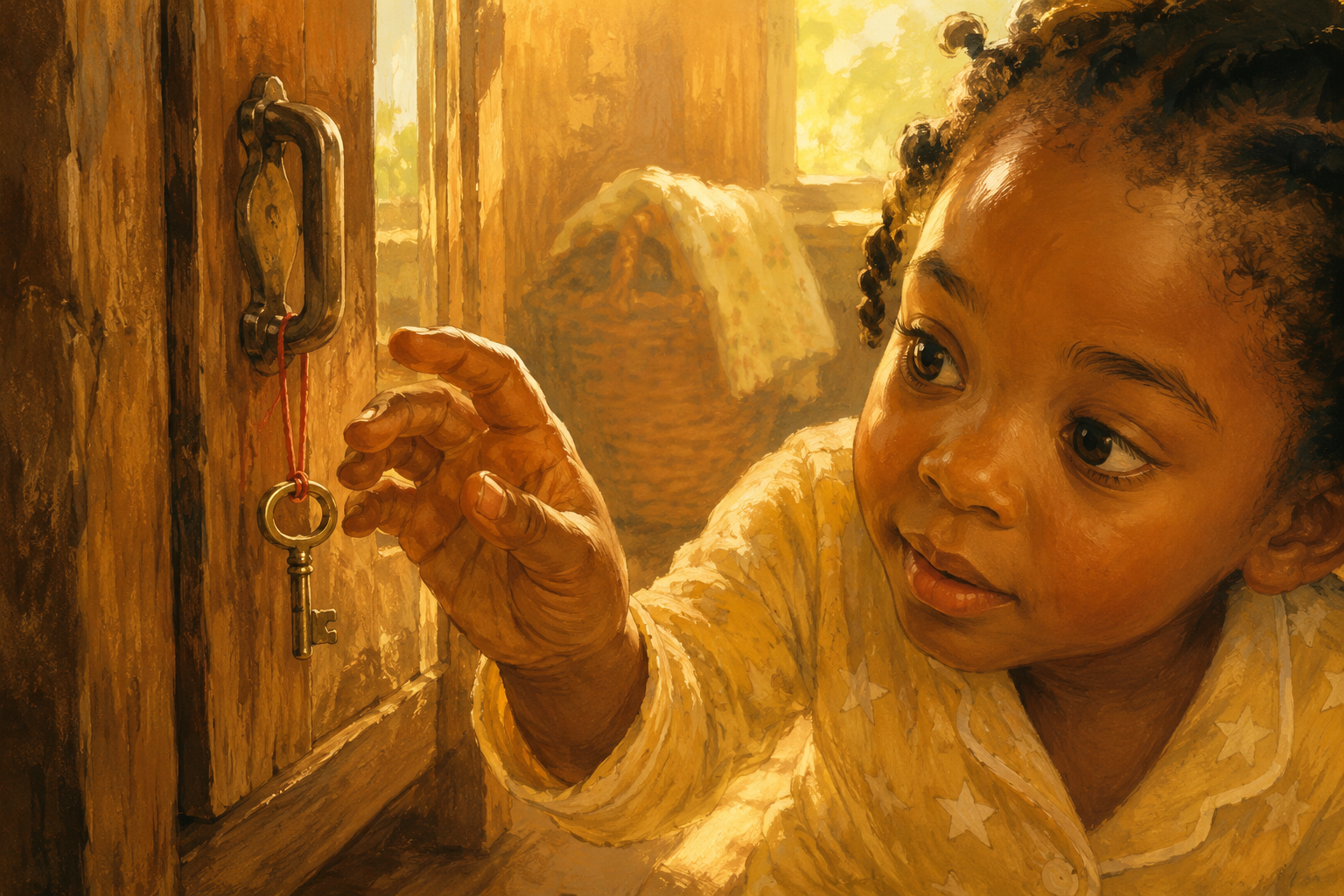
on a red thread.
Thembi had never noticed it before.
But today the house was quiet,
and a quiet house is an invitation.
She took the key in her hand.
It was warm. That was the first strange thing.
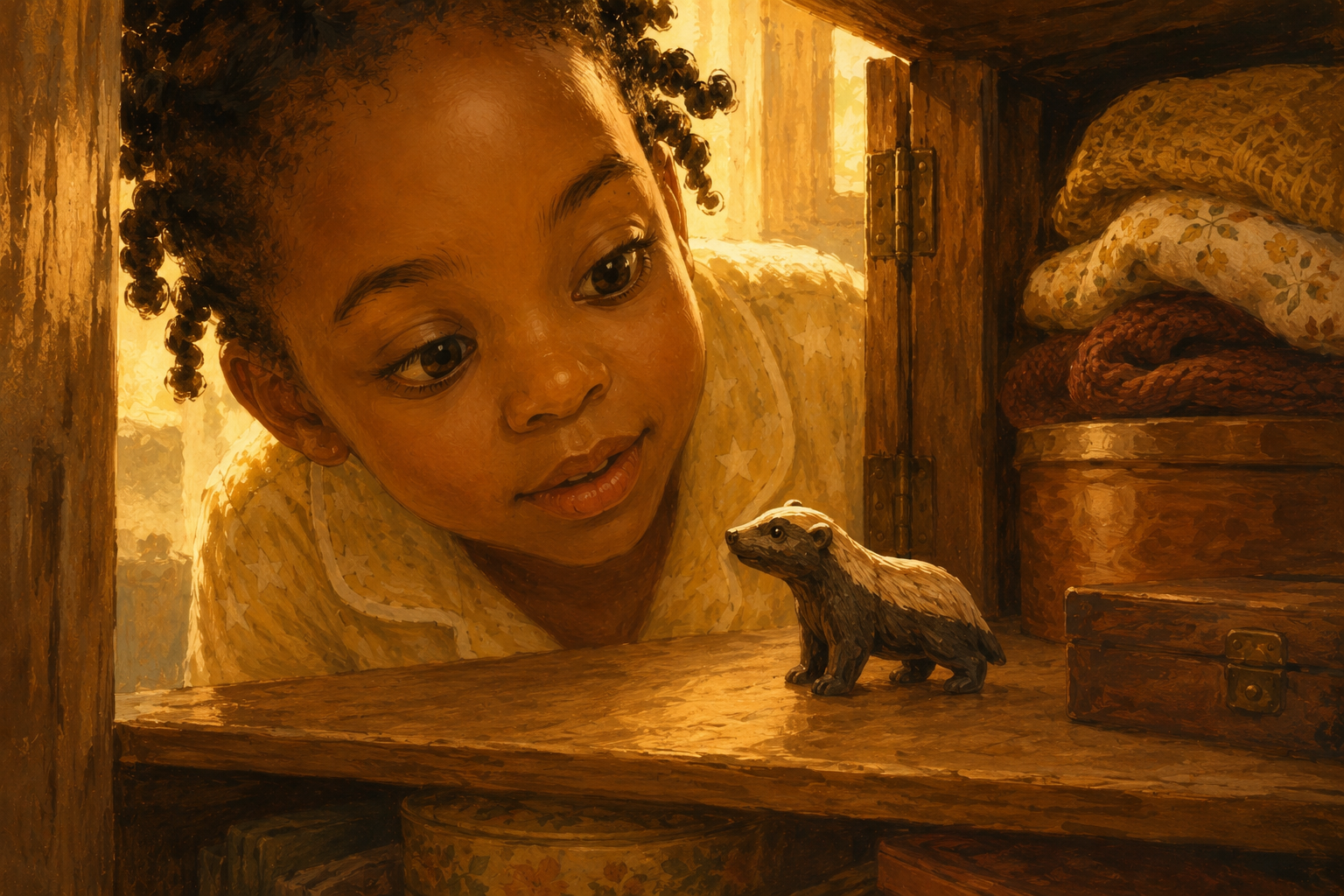
sat a little carved animal
no bigger than a teaspoon.
A honey badger, cut from old wood,
with a stubborn wooden face.
"Hello," said Thembi, which felt silly,
because of course he was only a toy.
"I'll call you Nkwe."
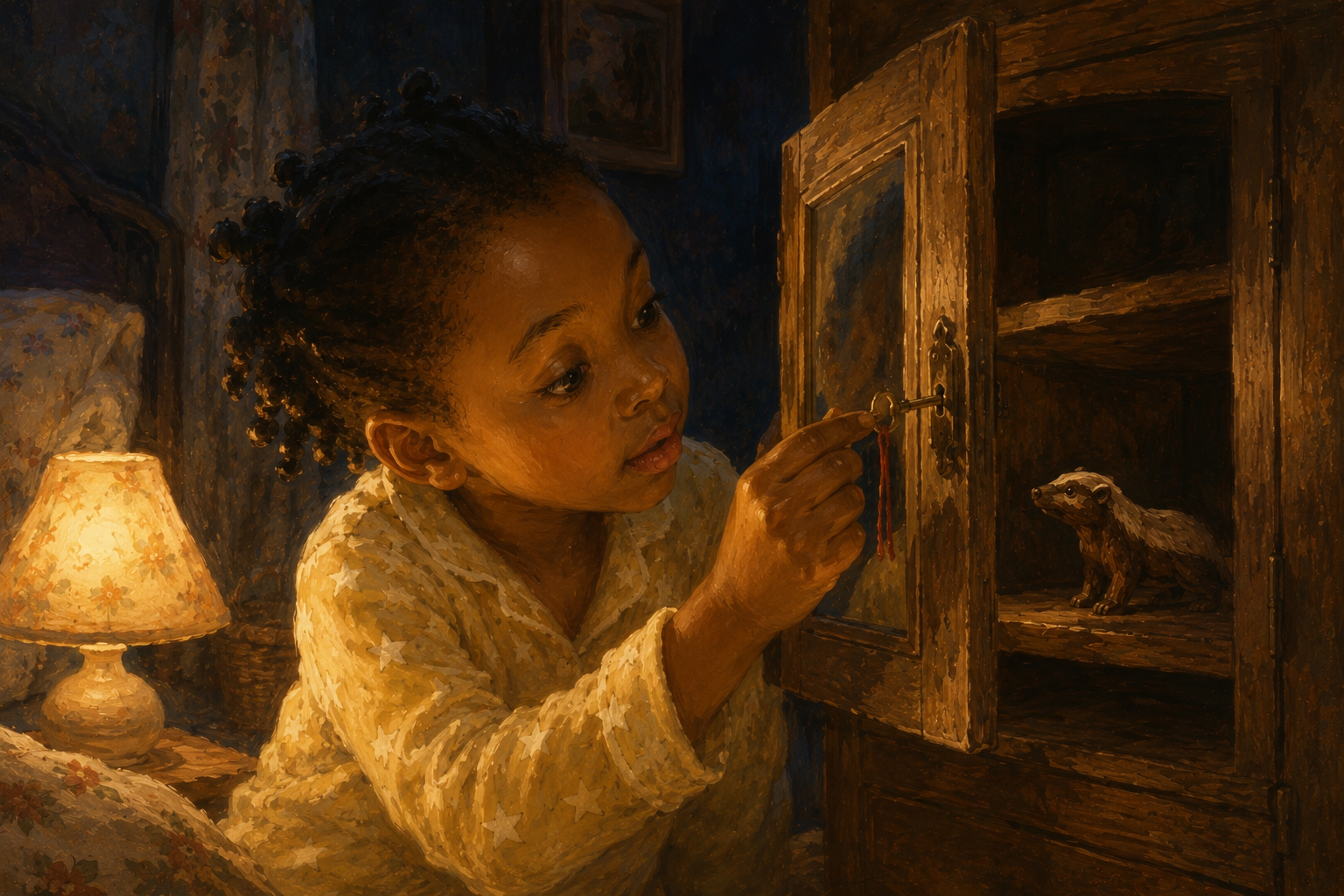
She crept back in her pajamas
and put Nkwe on the shelf
and turned the key.
Click.
Just once.
Nothing happened.
She went to bed feeling foolish.
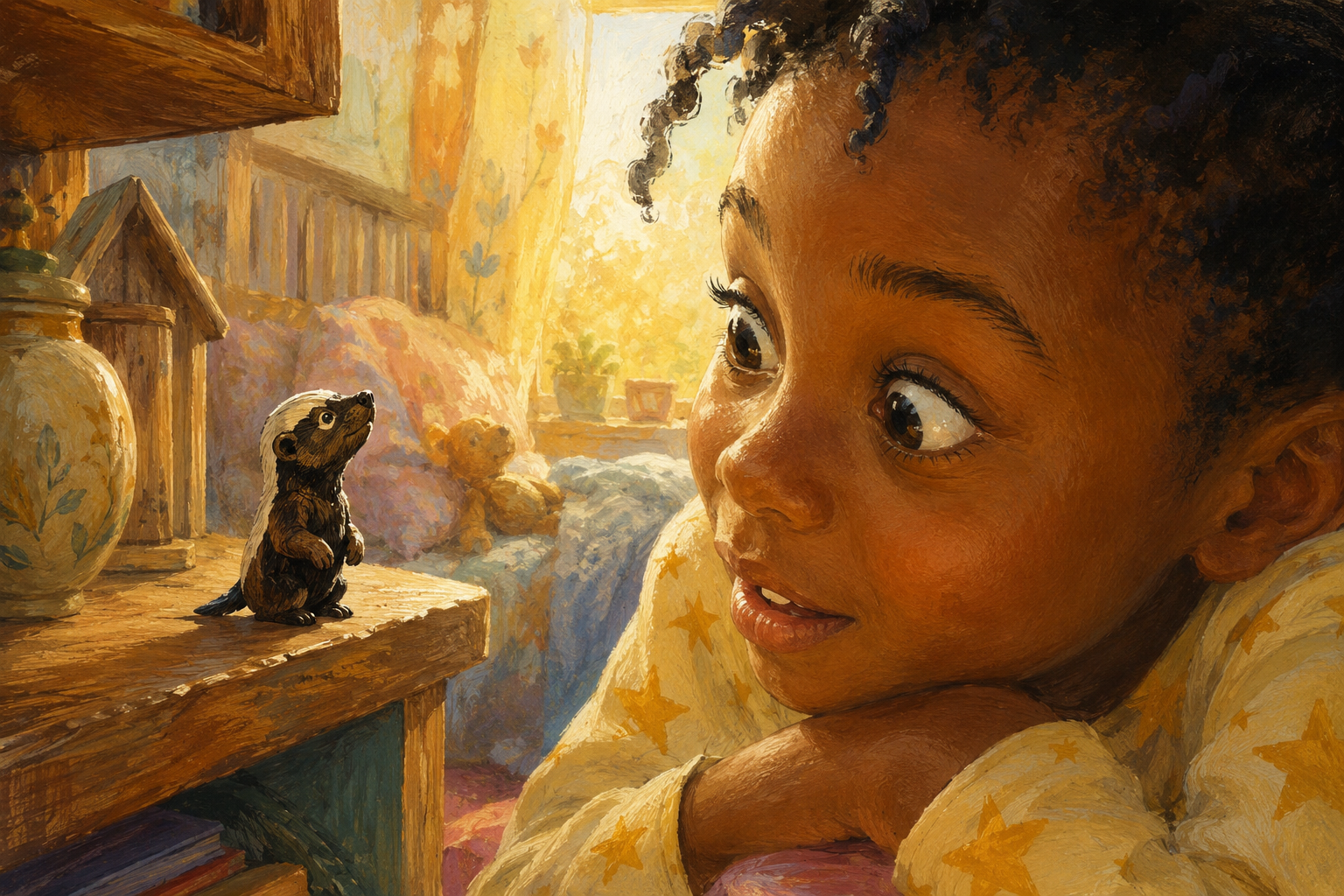
Nkwe was breathing.
He was small as a teaspoon
and alive as you are,
blinking up at a girl as big as the sky,
and he was not afraid,
because he had not yet learned to be.
You can wake a thing.
That is the easy part.
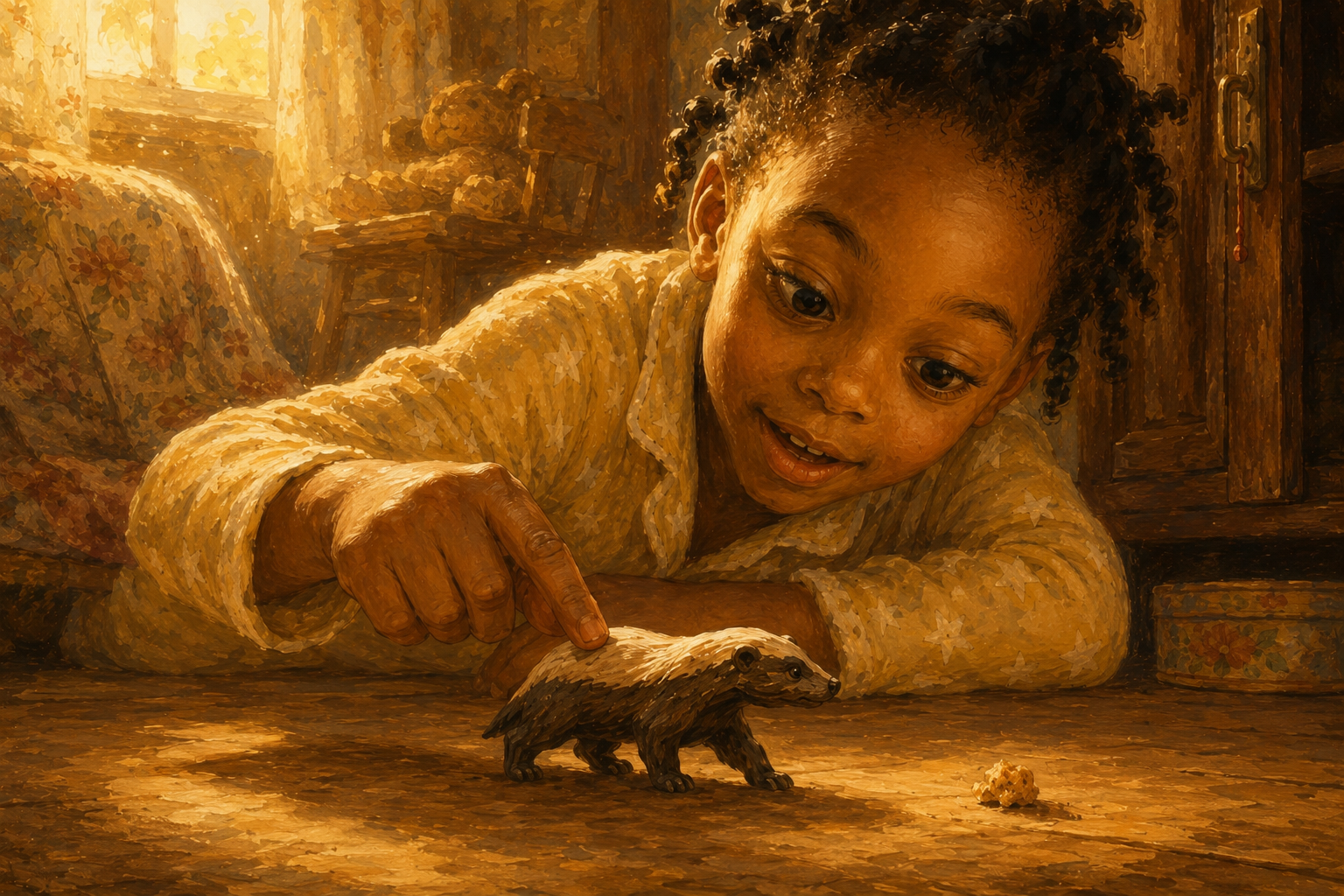
she forgot to be careful.
"March!" she said, and pushed him along.
"Fetch!" she said, and rolled a crumb.
"Do a trick!"
But Nkwe was not a toy soldier.
Nkwe was not a pet.
And his small face went hard as the wood
he used to be.
And the world that was a bedroom to Thembi
was a wild and giant country to Nkwe —
the table was a cliff,
the floor was a canyon,
and down in the dark beneath the bed
two green eyes opened.
The cat.
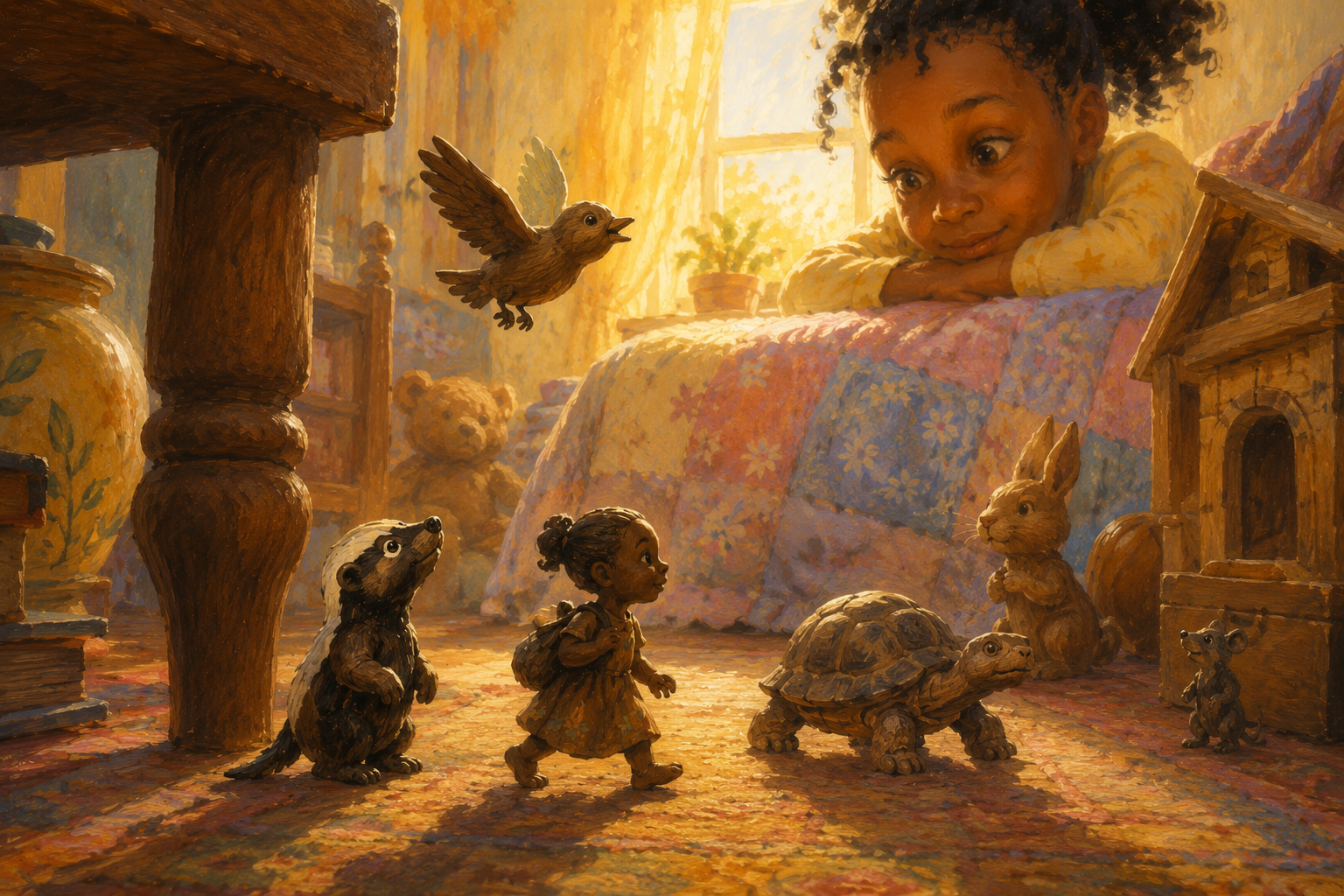
that the cupboard had held *others*.
A little carved bird, now flying.
A little carved tortoise, now walking.
A little carved girl, no bigger than a thumb,
who looked up at Thembi
and did not look afraid —
she looked *busy*, the way you look
when you have your own whole life to live.
They were not hers.
They had never been hers.
and all night Nkwe was too clever to catch —
behind the shoe,
under the cupboard,
still as a knot of wood
when the green eyes came near.
He was small.
But small is not the same as weak.
Stubborn is its own kind of strong.
and Thembi's big hand came down
to grab him, to keep him, to save him —
to *own* him, all over again.
And she stopped.
So Thembi did the bravest thing
a big person can do.
She lay down flat on the floor
and made herself small.
She opened the window.
She opened the cupboard.
She opened her hand
and did not close it.
"You can go," she whispered.
"I won't catch you. I'm only asking."
You can wake a thing.
You can't own a thing.
He looked at the open cupboard.
He looked at the open hand.
And he walked — not marched, *walked* —
right onto her palm,
and sat down,
and stayed.
Not because he had to.
Because he had been asked.
She was not surprised. Not even a little.
The thumb-sized girl on the windowsill
waved to her,
and Gogo waved back,
the way you wave to a very old friend.
"I had the key once," said Gogo.
"A long, long time ago."
"You may wake anything you like, my girl.
But you may never own it.
A thing you wake is a thing you must listen to —
for as long as you both shall live."
And that night, on the moonlit sill,
four small ones kept the watch,
and on the pillow, wide awake,
sat a little wooden badger
who was free to go anywhere at all —
and stayed.
You can wake a thing.
You can't own a thing.
But if you ask it kindly,
it might just choose you back.
— THE END —