Dedication
For my wife.
This is the book I wrote on far ground, a long way from home — a man crossing an ocean to stand on someone else's chalk. Every mark in it is a person saying the same thing: I was here, I mattered, don't forget me.
You are the one I never had to make a mark for. You knew me before I'd carved a single line.
Belonging, I learned from you, is not a farm or a flag or a name on a deed. It is a person you come home to. You are my country, and the borders have never moved.
Home was always just wherever you were standing.
And for AJ — from The Why Files.
Watch the official story all the way to the end. Then find the one loose thread, give it a little tug, and grin. Take the debunk seriously, take the wonder seriously, and live in the gap between them where it's actually interesting.
The brightest minds, in daylight, with laser sights and good rope, made a potato.
So. Roll the tape.
Foreword
by Wilson Nicol †
I have spent my working life in the disreputable borderland — the country between what science has settled and what people insist on still seeing — and I have learned one hard rule about it that almost nobody, believer or debunker, is willing to obey: you have to hold two things at once, and most minds can only hold one.
The believer holds the wonder and drops the rigour. The debunker holds the rigour and drops the wonder. Both feel, to themselves, like the sober one. Both are half-blind. And the rarest thing in the whole field — rarer than any light in any field — is the person who can keep the rigour and the wonder in the same hand, who can say, with total seriousness, most of this is exactly what the skeptics say, and there remains a residue they have not honestly explained, and I am going to sit in the discomfort of that residue rather than flee it in either direction.
That person is almost mythical. I have met perhaps a handful in fifty years. And the author of this book is one of them, and has written the only crop-circle novel I have ever read that I did not want to throw across the room within a chapter — from either direction.
He gives the hoaxers their full due, and more — he loves them, names them, calls their work an art, and he is right. Most of it is two clever men and a plank, and he revels in that, and so should you. But then he does the thing the debunkers never quite do honestly: he stays in the field after the laughter dies, with a theodolite and a cold eye, and he measures the handful that the plank cannot account for, and he does not blink, and he does not reach for aliens to fill the gap, and he does not reach for a sneer either. He just shows you the gap, and shows you it is real, and leaves you standing in the draught of it, which is the bravest and most honest place a mind can stand.
I should tell you that he has put, in his closing pages, a few seconds of real footage I have argued about for half my life — filmed beneath a hillfort on a down above Devizes, balls of light, a formation forming under them while the tape runs — and he handles it exactly as it should be handled: he tells you the official verdict is hoax, that the verdict is sensible and may be true, and that it was nevertheless never satisfactorily closed, and that the difference between proven false and not proven false is the whole of the matter. I have spent decades trying to teach people that distinction. He teaches it in a paragraph, inside a thriller, and makes you feel it in your spine.
For there is a thriller here too — a real one, with a buried thing and a clean-handed company racing to dig it out, and a quiet, unplaceable man who reads a made thing the way I have spent my life trying to read the unexplained, and reads it better, because he asks the one question I learned too late to ask: not who made it, not is it real, but what is it for. That question is the master key to the entire borderland, and this book turns it, and a door opens that I did not know was there.
You may finish it a believer. You may finish it a skeptic. If the author has done his work — and he has — you will finish it something better and harder than either: a person willing to say I don't know, and to find, in those three words, not a defeat but the beginning of wonder.
Go and watch the tape. Decide for yourself. The answer is allowed to stay a maybe. That it is allowed to is the whole gift of this book, and the whole labour of my life, and I am grateful, at the end of it, to have been handed both by a younger and a clearer hand.
— Wilson Nicol
† “Wilson Nicol” is an anagram of COLIN WILSON — the writer on the outsider and the unexplained — borrowed here in homage and affection. This foreword is a work of fiction. It was written by the author of this book. Colin Wilson did not write it, was not involved in it, and is not associated with or endorsing this book in any way. The name is rearranged precisely so that the tribute can never be mistaken for a real attribution; it is a salute, not a claim.
Chapter 1 — The Potato
Here is a thing nobody tells you about making a crop circle.
It is hard.
Not hard like a sum is hard. Hard like the world is built out of friction and spite and a light westerly that comes up the moment you've got your line laid, and lifts the standing wheat just enough to hide the very edge you're trying to walk, and a stalk of barley in June is not a thing that wants to lie down in a clean curve and stay there. It wants to spring back up and stand in the sun like its nine hundred million neighbours, because that is the entire and only thing a stalk of barley has ever wanted to do.
Edie Vane knew this because she had a theodolite set up on the lynchet at the top of the field, and she was watching three grown men fail to draw a circle.
They were not amateurs. That was the part the television people did not understand yet, though they would, in about forty minutes, when the light went and the helicopter shot came back and somebody finally had to look at the overhead. The two on the rope were the real thing — Gully and Sef, who had been making formations across Wessex for twenty-odd years, who had laid down some of the most photographed patterns in the history of the form, whose work had been in the German papers and on an album cover and, once, gloriously, attributed by a visiting American professor to a "non-human plasma vortex of clearly intelligent origin," which the two of them had cut out and framed and hung in the gents at the Barge. They knew what they were doing. They had a centre stake, and a measured rope, and a stalk-stomper each — a plank on two loops of cord, the entire and complete technology of the thing, unchanged since two men in their fifties had confessed to the whole business in 1991 with a plank exactly like it and changed the world's mind in a single afternoon.
And today they had something those two old boys never had. They had Marcus, who did drone cinematography for a streaming nature series and had brought a four-thousand-pound rig and a pair of green laser sights on tripods to throw a dead-straight reference line across the crop, so that for the first time in the recorded history of cereal-based art, the men with the plank would not have to guess.
"With the lasers," the director had said, that morning, with the happy confidence of a man who has never tried to do the thing he is filming, "it's basically going to be perfect. Right? We line it all up, boys do their stomp, and we've got a flawless formation by tea, on camera, daylight, no tricks. Properly puts the mystery to bed."
Edie had said nothing. Edie had set up her theodolite.
It was now twenty past four, and the formation was a potato.
There is no kinder word for it. She had the survey data right there on the tablet, and the shape they had spent four hours making was an ovoid — lumpen at the top where Gully had drifted off the laser line following the contour without knowing it, pinched in the middle where they'd had to redo a section the wind had betrayed, and frankly blistered down the eastern arc where Sef had put a boot wrong in the soft chalk and gone through into the standing crop and left a bruise you could see from the lynchet with the naked eye. The wheat inside it was not laid in a smooth lay. It was broken — snapped at the base in a hundred places, kinked, crushed, dying, the stalks lying every which way like a crowd shoved over rather than a crowd lying down. From the air it was going to look exactly like what it was: three men and a plank, having a hard afternoon.
"It's a bit—" the director started, watching the drone feed.
"It's a potato," said Sef, cheerfully, wiping his face with his cap. He was not embarrassed. He had been doing this too long to be embarrassed by a hard field. "I told you. Daylight's murder. You can see every wobble. And you can't cheat the curve, can you, you can only walk it, and a man can't walk a clean three-hundred-foot arc, no man can, your stride's your stride and your eye lies to you past about forty feet. That's why we work at night, in the proper ones. Dark hides your sins."
"But the lasers—"
"Lasers tell you where the line is," said Gully, coming up the slope, breathing hard, a big patient man going grey at the temples. "They don't make your legs walk it. They don't stop the wind. They don't un-snap a stalk you've stood on. Mate, we've got modern kit, a measured plan, four hours, broad daylight, and two of the most experienced croppers in England, and we made—" he gestured down at his own afternoon's work with real, fond contempt "—that. A potato. Now imagine doing it perfect. Three hundred foot across, geometry to the centimetre, every stalk laid not broke, in the dark, in about ninety minutes between the farmer's last look and the dawn dog-walker, leaving no tramline bruise and no bootprint in the dew." He pulled his cap back on. "We can't. Nobody we know can. That's not me being mystical, love, I'm the least mystical man in Wiltshire, I've got a plank in the back of a Berlingo. I'm telling you as the tradesman. Some of them out there, three or four a year if that — they're not us. We've never known who they are. We just know they're not us, because we know exactly how hard it is, and they're doing a thing we can't do."
The director laughed, the slightly nervous laugh of a man whose tidy ending has just walked out the back door. "Well — that's the magic of it, isn't it. We don't want to kill the mystery completely."
"No," Edie said.
It was the first word she'd said in an hour, and they all looked at her — the serious woman from the county, the archaeologist, the one whose entire professional reputation in this part of England was built on being the person you called when you wanted a crop formation looked at by somebody who would not get excited, who would find the stake-hole and the plank-drag and the dropped Ginsters wrapper and write you a calm two-page report explaining precisely how it was done and by approximately whom, and who had, over eleven careful years, debunked more circles than anyone alive.
She was looking at her tablet. At the survey data. At how bad the potato was.
"No," she said again, and she heard the wrongness in her own voice, the small cold thing that had been building in her all afternoon and that she did not want and had not invited. "We don't want to kill the mystery." She looked up at the long green roll of the Vale going down toward Pewsey, toward the field eleven miles off where, last June, in one short night, something had lain down three hundred and twelve feet of wheat in a pattern so clean she had stood in the centre of it at six in the morning with the dew still on her boots and the survey nodes refusing, simply refusing, to find a single error — and had felt, for the first time in her rigorous life, the floor of the world tilt very slightly under her.
She had explained it away. Of course she had. That was the job. She had a folder of explanations.
She just no longer believed her own folder, and watching three good men make a potato in perfect conditions had been the thing that finished it off, because now she had the numbers, in her own hand, for exactly how hard the easy version was.
"Pack the lasers up, Marcus," she said. "Light's going. You've got your ending." She slid the tablet into her bag and snapped it shut. "It's a potato, and a potato is the truth, and you should put it in the film exactly as it is, because it's the most honest crop circle anyone's made all summer." She started down off the lynchet toward her car. "Most of them are us. Print that. Most of them are Gully and Sef and a plank and a laugh, and God love them for it."
"And the rest?" the director called after her, half-joking.
Edie Vane stopped, with the whole green Vale of Pewsey laid out below her in the last gold light, and the wind moving over a hundred million stalks of standing wheat that did not, any of them, want to lie down.
"The rest," she said, "are not a potato."
And she got in her car, and she drove to the office, and she opened the June file, the one she had closed eleven months ago and told herself she was finished with, and she began, for the second time in her life, to read it as though she did not already know the answer.
Chapter 2 — The One That Wasn't
The office was a portacabin on the edge of the county depot, and Edie had it to herself after six, which was when the office became the only place in England she actually thought. She put the kettle on, and she pinned the June photographs back up on the cork wall in the order she'd taken them, and she stood in front of them with a mug going cold in her hand and made herself look at the thing she'd spent eleven months not looking at.
Here is what was in the folder. She knew it by heart. She made herself go through it anyway, slowly, like a checklist, because the discipline was the only thing that separated her from the people in the anorak forums, and the discipline was the whole point, and the discipline was — this was the part she'd been avoiding — the only reason this particular folder frightened her. Because the discipline had not been able to break it.
The lay. In a hoaxed formation — in a good one, a Gully-and-Sef one — the crop is pushed over with a plank, and a plank breaks stalks. You stand on the cabin steps and look at the morning's potato and you can see it: the snap at the base, the kink, the crowd-shoved chaos, the bruise where a boot went wrong. Wheat shoved over with a board is injured wheat, and it browns, and it dies, and within a week the formation is a brown scar.
The June wheat had not been broken. It had been bent. Every stalk, three hundred and twelve feet of them, laid down in a smooth radial sweep — and bent at the first node above the soil, the way a stalk bends when it grows toward light over days, except this had happened in a night. And here was the thing that had kept her up: the wheat had kept growing. She had gone back at one week, two weeks, a month. The standing crop around the formation ripened gold and was cut in August. And the laid wheat inside the formation, lying flat on the ground, had turned its growing tips up toward the sun and gone on living, lying down, green against the gold, following the season from the floor — which is a thing a snapped stalk cannot do and a bent stalk can.
The nodes. She had not been looking for this; an old American paper had told her to look. The pulvinus — the little knuckle of growth-tissue at each joint of the stalk — was swollen in the laid crop. Elongated. On a dozen of them, blown open, a tiny rupture at the node as though the thing had been heated from the inside, the moisture in the cell flashed to steam and gone, a microscopic blister. The paper that described this — Levengood, an American biophysicist, decades back — had been argued about for thirty years; people far cleverer than Edie had called it sloppy, called it sampling error, called it the man seeing what he wanted. And maybe. She was not a botanist. But she had cut and mounted and looked down her own microscope at her own samples from her own June field, alongside control stalks from ten metres outside the formation, and the inside nodes were swollen and three of them were blown and the outside ones were not, and she could not make that go away no matter how much she wanted to, and by God she had wanted to.
The ground. No tramlines crossed into the formation — no flattened farmer's-track a hoaxer could have walked in on without leaving a bruise in the standing crop, and there was no bruise; she'd walked the whole perimeter at dawn looking for the way in and there wasn't one. No stake-hole at the centre. No plank-drag. No dropped wrapper, no dew disturbed on the approach — and dew is a tattletale, dew holds a footprint for hours, and there had been an unbroken silver skin of it across the whole field at six a.m. with a clean three-hundred-foot formation sitting in the middle of it like a coin dropped into still water without a splash.
The geometry. This was the one she trusted least, because geometry is where the believers lose their minds — they find diatonic ratios and Euclidean theorems and the music of the spheres in what is, nine times in ten, three blokes pacing out something that feels about right. But she had surveyed it herself, with the theodolite, with a real instrument, and the June formation was a set of six circles in a ring around a seventh, and the diameters held a ratio to the centimetre across three hundred feet, and a man cannot pace that in the dark in ninety minutes, and she had the potato data from this very afternoon to prove with her own numbers exactly how much a man's pacing drifts.
She drank the cold tea. She did not like any of this. A tidy mind hates a fact with no drawer to put it in, and Edie Vane had the tidiest mind in Wiltshire, and the June file was a fact with no drawer.
But that was the old part. That was the part she'd had for eleven months and made her peace with by simply closing the folder. The thing that had her standing in a cold portacabin at half past nine at night was the new part, and the new part had nothing to do with the wheat at all.
It had to do with what was under the wheat.
She sat down at the desk and brought up the drone footage — Marcus's, ironically, shot that same afternoon while the potato was being born, because she'd asked him to send the rig up the Vale to Pewsey on the way home and get her a fresh overhead of the June field now the crop was different, a different year, a different planting, the formation eleven months gone and ploughed under and grown over. She had not told him why. She had not entirely known why. She'd told herself it was housekeeping.
The field came up on the screen, gold and ordinary, the scar of last June's formation completely gone, eleven months of weather and a plough having erased every trace of it from the surface of the world.
Except it had not erased it from under the surface.
Because the field was in drought-stress — the whole of Wessex was, it had been the driest June in forty years, the chalk gasping — and a stressed crop does a thing that aerial archaeologists have built an entire science on. Where the soil is deeper, over a buried ditch, a filled-in pit, the rotted post-hole of something ten thousand years gone, the crop roots reach more water and grow taller and greener and ripen later. Where the soil is shallower, over a buried wall or a packed chalk floor, the crop is starved and short and ripens early and pale. And from the air, in the right drought, in the right light, the living wheat draws you a perfect plan of what is buried beneath it — a thing no eye on the ground can see, a thing the people who built it have been dead for a hundred centuries, written every dry summer in the standing crop and erased every wet one, the land keeping its own deep memory and showing it only to the sky and only when it suffers.
There was a crop-mark in the June field.
A big one. A curving dark line of taller greener wheat, and inside it the pale starved stutter of something packed and hard, sweeping across the field in an arc that Edie's trained eye read in half a second as not natural — too regular, too deliberate, the buried footprint of something made. Some unrecorded enclosure, some ditch-and-bank no excavation had ever touched, lying in the ground of an ordinary Pewsey field that nobody had ever dug because nobody had ever known it was there.
And she sat very still, in the cold, with the drone footage paused, because she had pulled up her own survey of last June's formation and laid it over the drone shot of this June's crop-mark, the pattern in the wheat over the pattern in the ground, the thing that lay down in one night over the thing that had been buried for ten thousand years.
They matched.
The centre of the formation sat dead on the centre of the buried enclosure. The six outer circles sat on six points of its hidden arc. Whatever had lain down three hundred and twelve feet of living bent wheat in a single dark June night, in a pattern she could not hoax and could not explain — had lain it down as a map of the thing in the ground beneath it. A thing nobody living had known was there. A thing you could only see from the air, in a drought, eleven months later, by accident, because a streaming-service drone happened to fly over on its way home from a potato.
The formation had not been a message. Edie understood that now, sitting alone in the portacabin with the kettle ticking as it cooled, and the understanding went through her like cold water. The believers had it wrong and the debunkers had it wrong and she'd had it wrong for eleven months. It wasn't a message and it wasn't a prank.
It was a signpost.
Somebody — something — had stood in that field in the dark and drawn, in the one medium on earth that the entire world had been trained to laugh at, a perfect pointing finger at a buried thing nobody was supposed to find.
And the genius of it — she could see the whole architecture of it now, and it was beautiful and it was cold and it made the hair stand up on her arms — the genius of it was the potato. The genius of it was Gully and Sef and twenty years of gorgeous plank-and-rope fakery, the German papers and the album cover and the framed plasma-vortex letter in the gents at the Barge. You want to hide a signpost where no one will ever read it? You put it in a forest of three hundred jokes. You make the whole world certain it's all a student prank, so certain that the one serious person in the county spends eleven years writing calm two-page reports debunking every single one — and the three or four a year that are real, that point at something, sit safe in plain sight in the middle of the wheat, because everybody already knows the answer, and the answer is a laugh, and nobody looks twice at a laugh.
Edie Vane looked at the two patterns lying perfectly over each other on her screen for a long time.
Then she did something she had never once done in eleven years of careful, sceptical, county-employed work. She took a photograph of the screen with her phone — the formation over the crop-mark, the sign over the buried thing — and she sat with her thumb over the keypad, and she thought about who in the entire world she could possibly send it to who would not either laugh at her or believe her, both of which were useless, and after a while she remembered a name a colleague had given her years ago at a conference in the pub afterward, half a joke at the time.
If you ever get one you can't explain, the man had said, and I mean really can't, not the anorak stuff — there's a fellow does the rounds of these things. Strange bloke. South African, I think, or he was. Doesn't believe in anything and somehow takes all of it seriously, which is the exact opposite of everyone else in this field. Reads a made thing like you read a book. If it's real, he'll know it's real, and he won't tell a soul. And if you've been had, he'll tell you that too, and you'll thank him.
She'd written the contact down and never used it and nearly thrown it out a dozen times.
She found it. A name with too many ways to spell it, and a number, and nothing else.
She attached the photograph — the sign and the thing it pointed at — and under it she typed four words, because she did not have any others and because they were, after eleven years, simply true.
This one isn't a potato.
And she sent it into the dark, and put the kettle back on, and waited, with no real expectation of an answer, for the man who read made things.
Chapter 3 — The Man Who Read the Frame
He did not text back.
That was the first strange thing. Edie had sent the photograph into the dark on a Tuesday night, fully expecting nothing, or a brush-off, or — worst — the kind of breathless reply that would tell her she'd handed her one inexplicable thing to another believer. None of that came. Nothing came. She told herself she was relieved, finished her cold tea, drove home along the empty A-road with the chalk pale under the moon, and decided in the morning that she had embarrassed herself slightly and would not think about it again.
On Thursday a vehicle she had never seen before was parked at the gate of the Pewsey field when she pulled up at seven to walk the crop-mark in the early light.
She knew, the way you know a stranger's dog is the wrong dog for the village, that it did not belong here. It was a Land Cruiser, an old one, a proper one — a double-cab so square and high and unfashionable it looked less designed than quarried — and it was the colour of nothing, a khaki gone soft and chalky with a thousand suns, the kind of faded that you cannot buy and cannot fake and only a great many real years in a hard country will give a thing. It sat at the gate of an English field full of English wheat with the absolute composure of an animal that has walked a very long way and is in no hurry about anything. The number plate was not English. She didn't get close enough to read where it was from, then, but she would learn it had come a great deal further than the plate suggested, in a steel box, across an ocean, because the man it belonged to did not, as far as she could ever determine, go anywhere the truck could not.
He was standing in the field.
Not in the crop — at the edge of it, on the tramline, where a man could stand and do no harm, exactly where she herself would have stood, which she noted and filed. He was a big man going heavy, in a waxed jacket too old to have a brand left on it and a flat cap and a pair of veldskoens that had no business in Wiltshire mud, and he was not looking at the crop-mark.
He was looking at the field. The whole field, and the slope it sat in, and the line of the down behind it, and the dry course of the long-gone stream you could only see if you knew to look for the dip in the green — turning his head slowly, taking it in the way you take in a face across a room before you decide whether to cross to it. He had a pair of gold-framed glasses pushed up onto the cap, the over-the-top kind, an old man's vanity sitting oddly on a man built like a wall, and he was not wearing them, because the morning was soft and grey and there was nothing yet for the eyes to be shielded from.
She got out of the car. She did not call out. She had spent eleven years learning that the way a person stands in a field tells you more than anything they'll say in it, and she wanted three more seconds of watching him stand.
He spoke first, without turning round, in an accent she couldn't place and a voice lower and gentler than the size of him.
"You read the ground," he said. It was not a question. "Not the picture. The ground." He turned then, and looked at her, and she had the disorienting sensation of being read back — quickly, completely, and without the slightest discourtesy, the way she read a field, every line of her taken in and understood and nothing made of it. His eyes were pale and very steady and the rest of his face was a soft ruin, a face you would not look at twice in a queue and could not, she'd find, ever afterward describe to anyone. "Most people who send me a picture like that one," he said, "send me the picture. The clever shape in the wheat. Look what was drawn, they say. Who drew it." He nodded, once, down at the field, at the dark curving arc of taller greener crop that her eye and now his had both gone to first. "You sent me the picture lying over the grave. You didn't send me the drawing. You sent me what the drawing was pointing at." He looked at her with something that was almost, but not quite, a smile. "That's a different kind of person. That's why I came."
"You didn't reply," Edie said. It came out more nettled than she meant.
"No," the man agreed, peaceably. "I got on a boat." He said it as though this were an ordinary substitute for a text message. "Took a few days. I don't like to talk about a thing like this down a phone. Phones are how the wrong people end up at the field before you do." He looked back across the Vale, and the easy weather went out of him for a moment, replaced by something watchful. "And the wrong people are very interested in fields like this. We'll get to that."
She came down to the tramline and stood near him — not too near; he held a space around himself the way some big animals do, not threatening, just complete — and they both looked at the field together, the archaeologist and the stranger, and for a while neither said anything, and the morning birds worked the hedge.
"Tell me what you see," she said at last. "When you look at it. Not what it means. What it is."
He thought about that for longer than she expected. He was, she would learn, a man who never said the first thing, who let a silence sit until the true sentence rose up through it, and it was the single most unnerving and the single most trustworthy thing about him.
"A made thing," he said. "Same as your buried one. People want to argue about whether the shape in the wheat is made by men or made by — something else." He waved that away with one big hand, gently, the entire global argument of forty years dismissed like a fly. "Wrong argument. Of course it's made. The question is never who or what made it. The question is the same question for every made thing a person ever found in the ground or on a wall or laid down in a crop, and it is the only question that matters, and almost nobody asks it." He looked at her. "What is it for."
"And what's it for?"
"You already worked it out." He nodded at her, conferring it back to her, refusing to take from her the thing she'd found. "You sent it to me, so you know. It's a sign. It points." He crouched, then, on the tramline, his forearms on his knees, going still in a way that made the whole big body seem to disappear into the looking, and he gazed across at the curve of the buried thing under the crop. "I'll tell you the part you maybe haven't let yourself think yet. You found out what it does — it points at the grave. You haven't asked why a sign like that has to exist at all." He picked up a clod of the dry chalk soil, crumbled it, let it run from his hand. "You don't put up a signpost for yourself. You know where your own house is. You put up a signpost for someone coming later. Someone who'll need to find this thing and won't be able to see it from the ground — won't even know it's here — and has to be shown, from above, in a language the world's been taught to laugh at, so the message rides safe inside the joke." He stood, unhurried, and dusted the chalk off his hands. "Somebody is leaving notes for somebody. Over the buried things. In the one ink nobody will believe is ink. Your June one isn't the only one, is it."
It wasn't a question either. She'd known it the moment she'd seen the match — that if there was one, there were others, that her eleven years of calm debunking had been calmly walking past a correspondence — but she had not said it aloud, even to herself, and hearing this stranger say it in a soft foreign voice at the edge of a Wiltshire field made the floor of the world tilt again, the second time, worse than June.
"No," she said. "I don't think it's the only one. I think there might be three or four a year. I think there might have been for a long time." She heard how it sounded. She made herself say the rest, because she was a serious person and the discipline was the point. "And I think — this is the part I can't — I think most of them are exactly what everyone says. Hoaxes. Plank and rope. I watched two men make a potato in a field on Tuesday and I have the survey data and I know to the centimetre how human nearly all of it is. That's what I do. I'm the person who proves they're fake." She looked at him, and the eleven careful years cracked, finally, all the way through. "And I think somebody has been hiding the real ones inside all the fakes I've been so busy debunking. I think the fakes are the point. I think the whole laughing thing — the plasma vortex letter in the gents, all of it — I think that's the — "
"The cover," the man said quietly. "Ja." And he looked at her with what was, now, unmistakably respect, the careful respect of one serious person recognising another across a field. "You've spent eleven years building the perfect disguise for them and you never knew it, and that's not your failing, that's the design. It's a good design. It's one of the best I've ever seen." He turned and looked off down the Vale toward Pewsey, toward the famous stones beyond it that drew every camera in the world, and the watchful thing came back into his ruined face. "Whoever's doing this understands the oldest trick there is, the one I've spent my whole life on the wrong end of. You want to hide a thing? Don't hide it. Put it next to a louder thing." He nodded south, toward where, eleven miles off and out of sight, three million tourists a year photographed a ring of stones. "They've got the whole world staring at the doorknob," he said, "and going quietly through the door."
He looked back at her.
"Show me the others," he said. "All of them. The potatoes too — especially the potatoes, because I need to learn the joke before I can find the thing hiding in it. And then we're going to have to be quick and we're going to have to be careful, because you sent me a photograph down a phone before you knew better, and that means we're probably not the only ones who can see what we can see." He started back toward the impossible faded truck at the gate. "And the others who can see it," he said, over his shoulder, "don't want to protect what's in the ground, Miss Vane. They want to dig it up and sell it before your people even know it's there. I've met them before. On three continents. They always get there fast."
He opened the door of the Beast, and the morning light caught the gold rims of the glasses still pushed up on his cap, and Edie Vane stood in the wet tramline of a field she had known her whole life and understood that it had just become a different field, and that she had, after eleven careful years of saying no, finally, recklessly, with her whole chest, said maybe.
Chapter 4 — The Forest of Fakes
They spent the next three days driving Wessex in the Beast, and Edie learned two things she had not expected to learn at her age and in her county.
The first was that crop circles are an art form, and a glorious one, and she had spent eleven years missing the entire joy of it because she'd only ever been sent the ones somebody wanted explained.
Gully met them at the Barge, because the man in the truck had said take me to your best hoaxer first, before anything, I want to meet someone who's good, and Gully — wary at first of the big foreign stranger, then not, because the stranger asked him questions no one had ever asked him, tradesman's questions, how do you keep the line when the wind comes up, how long does the dew give you, how do you get out without leaving a way in — Gully had ended up spreading photographs across two pub tables like a proud father, twenty years of work, and talking for three hours.
And it was beautiful. Edie had never let herself see it. A two-hundred-foot fractal laid down in a single July night near Avebury, a snowflake of impossible intricacy that had drawn busloads of weeping Germans and a film crew from Tokyo. A Julia set off the Stonehenge road, a great curling galaxy of one hundred and fifty circles, made — Gully said, grinning — by five blokes and a board in the dark in about four hours, while a security guard sat in a hut three hundred yards away and saw nothing, which was either a miracle of stealth or, Gully admitted, the guard being asleep. The famous letter, the American professor, the non-human plasma vortex. A formation a brewery had paid four thousand pounds for that the croppers had signed, tiny, in laid wheat at the centre, a little G and S that no overhead ever caught because you had to be standing in it.
"People think we're liars," Gully said, at one point, suddenly serious over his pint, and Edie would remember it. "We're not liars. We never said anything. We made a beautiful thing in a field for nothing, in the dark, and asked no one to believe anything about it, and other people decided it was aliens, and that's not our fault, is it? That's theirs. We're not the con. We're the art. The con is the believing, and the believing did itself." He looked at the big stranger. "You get that. I can tell. Most don't."
"I get it," the man said. "You make a true thing and the lie grows on it like ivy and you can't be blamed for the ivy." He turned a photograph toward himself — a clean six-fold formation, geometric, severe. "This one's yours?"
"That one's mine."
"And this one?" Another. Edie hadn't seen him take it from the pile. It was a formation she half-recognised from the county files, three summers back, out near Alton Barnes.
Gully looked at it for a long moment, and something passed over his big patient face, the thing Edie had heard in his voice on the lynchet on Tuesday and not understood, the tradesman's unease.
"No," Gully said. "That one's not mine. And before you ask — no, I don't know whose it is, and I never have, and there's maybe a dozen over the years like it that aren't anybody's, that turn up in a night too clean, and we all know about them, all of us who actually make these things, and we don't talk about them much because what's there to say? We know how hard it is. We made you a potato on Tuesday in daylight. That—" he tapped the photograph "—isn't a potato, and it isn't ours, and I stopped wondering about it years ago because wondering about it does your head in." He pushed it back across the table. "You want the real mystery? It's not whether crop circles are made by aliens. Course they're not. We make them, ninety-odd in a hundred, with a plank, and we're better at it than anyone alive. The real mystery is the handful that we can't, and that none of us made, and that nobody'll own. That's your puzzle, friend. That's the one I can't help you with. That's been sitting under all our noses the whole time, hiding behind us."
And there it was — hiding behind us — the second thing Edie learned, the thing that turned the three days from a tour into a hunt.
Because the man in the truck had her pull every formation the county had on file, ten years of them, the whole laughing archive of plank-and-rope Wessex, and they drove to the ones still standing and walked the ploughed-over ghosts of the ones that weren't, and at each one he did the same thing. He never looked at the pattern. He looked at the ground — got the field in drought-light where he could, had Edie pull the aerial survey, the old RAF photographs, the LiDAR the Environment Agency flew for flood mapping that happened, incidentally, to see straight through a crop to the bones of the land beneath. And he sorted them, in three days, into two piles, with a speed and certainty that frightened her.
The fakes — the beautiful, gorgeous, ninety-in-a-hundred fakes — sat on nothing. Pretty shapes in fields that were just fields, the soil even and unremarkable all the way down, no buried ditch, no lost enclosure, no dry-river memory. Art for art's sake, laid over ordinary earth. Gully's snowflakes. The brewery's logo. The weeping Germans' fractal. Nothing underneath any of them but chalk and worms.
And the others — the dozen in ten years that no cropper would own, the too-clean overnight ones, the bent-not-broken, blown-node, no-tramline, no-dew-disturbed ones — every single one of them sat on something. A buried enclosure. A filled henge-ditch no spade had ever touched. The exact line of a vanished avenue. The drowned course of a stream that had run when the stones were raised and not since. Each impossible formation, when you stripped away the wheat and looked into the ground beneath it, was sitting precisely, deliberately, like a coin on a grave, on top of a buried made thing that nobody living had known was there.
"Twelve in ten years," the man said, on the third evening, standing at the gate of the last field with the light going gold over the Plain and Edie's whole world quietly rearranged behind her. "Twelve signs. Twelve graves. Somebody's been keeping a map." He looked south and west, toward the great buried country under Wiltshire, Durrington and the Avenue and Silbury and the unexcavated miles of it, the engineered landscape that the famous stones were only the visible knuckle of. "Not making messages. Not pulling pranks. Surveying. Marking. Leaving a record, over years, of where the real things are buried — in the only medium that points down from the sky and that the whole world has agreed to dismiss as a student joke. It's the most patient thing I've ever come across." There was something almost like awe in the soft voice, and under it, the watchfulness, harder now. "And it means there's a they, and a why, and a who's it for — and we still don't know any of the three."
"There's something else we don't know," Edie said. She'd been holding it since that afternoon, when she'd logged into the county aerial-survey portal to pull a LiDAR tile and found a note she didn't recognise.
He waited, the way he did.
"Somebody requested the same survey tiles I've been pulling," she said. "All of them. The exact twelve fields. Three weeks ago. Through a commercial account — a survey company, geophysics, drone work, the kind that bids for the big infrastructure jobs. Whitchalk Geophysical." She'd written it on the back of her hand. "They've licensed every scrap of remote-sensing data over those twelve fields. Drought imagery, LiDAR, the lot. Three weeks ago. Before I'd even reopened the June file. Before I sent you the photograph."
The man went very still, and it was a different stillness from the looking-stillness, and Edie did not like it at all.
"Then they were already onto it," he said quietly. "Before us. They found the same pattern in the same fields, and they didn't send a photograph to a stranger and wait for a boat." He looked at the gold light dying over the buried country. "They bought the maps."
"To protect the sites?" she said, and knew the answer before he gave it, because she'd heard the way he'd talked about the wrong people all three days.
"No," the man said. He turned back toward the Beast, and the watchfulness had hardened into something she would only later understand was the closest he came to dread — not for himself, she'd realise; he had no fear for himself at all; it was for the ground. "People like that never buy a map to protect a thing, Miss Vane. They buy a map to get there first." He opened the truck's door. "Twelve graves, and somebody's been marking them quietly for years so the right person could find them gently, when the time came. And now somebody else has the same map, with money and machines and no permits to wait for and no people to answer to." He looked at her across the roof of the impossible faded Cruiser. "We need to get to the next one before they do. Tonight, if we can. Because the whole reason those signs were hidden inside a joke for all these years was so that this exact thing would never happen." He got in. "And we just helped it happen, you and me, by being the second-cleverest people in Wiltshire."
The engine turned over — a deep, unhurried, oversquare sound that belonged to no English lane — and Edie Vane got into a truck that had crossed an ocean, beside a man no one could describe, to drive through the falling dark toward a buried thing marked by a sign disguised as a punchline, one jump ahead, she hoped, of people who had bought the same map for the opposite reason.
Behind them, on the table at the Barge, under Gully's twenty proud years of beautiful lies, the one photograph nobody would own lay face-up in the lamplight, its clean impossible geometry pointing, as it had always pointed, patiently down.
Chapter 5 — The White Horse
They did not reach the next field that night. The next field had a farmer with a shotgun and a grudge against trespassers and three news vans already parked at his gate, because Whitchalk Geophysical had filed for a survey access notice that afternoon — a legal instrument Edie had not known existed until the man in the truck explained it to her, mildly, as the kind of thing that lets a company with money walk onto land a county archaeologist has to beg a year for. So they pulled off the road and slept — Edie in a B&B in Devizes, Jakobus, as far as she could tell, in the Beast, though when she came out at first light he was already gone up onto the down on foot, and she found him an hour later by the simple method of driving to the highest white thing in the landscape and walking up to it.
The Westbury White Horse.
It is cut into the scarp below an Iron-Age fort, a horse the size of a cathedral carved down through the green turf to the white chalk beneath, so that the whole hillside is a drawing, a single enormous deliberate mark on the skin of England, made — by whom, first, nobody truly knows, and re-cut and re-shaped over centuries — to be seen from miles off, from the Vale, from the sky. Edie had grown up half an hour from it. She had never once, in her professional life, thought of it as anything but a scheduled monument with a maintenance schedule.
Jakobus was standing below it, looking up, with his cap in his hand.
"You've been past this a thousand times," he said, when she came up beside him, breathing hard from the climb. He didn't look round. The wind was hard up here and it moved the thin grass in long pale runs. "And you stopped seeing it. Same as the formations. The land's loudest mark and you walk under it." He nodded up at the horse, the great white shape of it bright against the green. "What is it for, Miss Vane?"
She started to give the heritage answer — territorial marker, hillfort signalling, the Bratton estate's eighteenth-century re-cut — and stopped, because she'd learned by now that he was never asking the heritage question.
"It's the same thing," she said slowly. "Isn't it. It's the same thing as the circles."
"It's the parent of the circles." He put his cap back on. "People want to believe somebody invented crop formations in nineteen-ninety-one with a plank. Two old boys in a pub, a clever prank, the whole world fooled. And they did — they made beautiful ones, and I love them for it, you know I do." He turned and swept his arm slowly across the whole downland, the white horse, the long green folds going off toward the Plain, the buried country under all of it. "But they didn't invent the medium. The medium is three thousand years old at least. There's a horse cut in the chalk over at Uffington that was old when Stonehenge was still being finished. People have been drawing giant deliberate marks into this exact white ground, for the sky to read, since before anyone here could write a single word. The crop circle isn't a new thing pretending to be ancient. It's the oldest thing, wearing a modern joke as a coat." He looked at the horse. "Somebody who knows this country — knows it in the bone, the way you know it and won't let yourself — picked the one medium with a three-thousand-year alibi. Who's going to believe a mark in a Wiltshire field means anything? People have been making meaningless beautiful marks in these fields since the Bronze Age. The hoax doesn't hide next to the tradition. It hides inside it."
Edie looked up at the white horse and felt the whole shape of the thing close around her — the hill figures and the crop marks and the buried graves, one continuous three-thousand-year habit of a people writing on the land for the sky, the permanent ones in chalk and the temporary ones in wheat, all of it the same hand, the same we were here and we thought, pointing up to be seen and down to be found.
"Whoever's leaving the signs," she said, "is the most recent person doing the oldest thing in Britain."
"Ja." And there was something in his voice she hadn't heard before, a kind of grim approval. "And they're doing it to save something. To mark the graves gently, in a language only the patient and the local will ever read, so the right people find the buried things in the right way, in the right time." He looked off west and his voice went quiet. "Which is the opposite of what the people with the money want to do to it. And the people with the money are very good at getting onto other people's land and taking what's in the ground, and feeling nothing, and never once saying sorry."
He said it flatly. He was looking at the horizon, not at her, and at first she thought he was still talking about the survey company, and then she understood, from the stillness that had come into the big body, that he had walked, for one step, somewhere else entirely.
"You're not from here," she said. It was the first personal thing she'd said to him. "You've never told me where you're from."
The wind ran over the grass. The white horse blazed above them.
"South of here," he said. "A long way south." A pause. "I'm standing on the chalk of the people who built the camps."
She didn't understand him. "The — army camps? The training—"
"No." He still wasn't looking at her, and his voice did not rise, and that was the terrible part, that it did not rise at all. "The other kind. The kind they invented." He let it sit a moment, the wind the only sound. "A hundred and twenty-odd years ago this country was fighting a war for the gold under my people's feet, and when the men wouldn't stop fighting, the British took the women and the children — the farms burned behind them, the wells salted — and they put them behind wire, in their tens of thousands, and they called it, for the first time anyone called it that, a concentration camp. The phrase is theirs. They made the word." He crouched, then, and put one flat hand on the white chalk where the turf was cut away, the cold bone of England under his palm. "Twenty-six thousand of our women and children died in them. More. Most of them under sixteen. Of measles and hunger and the cold, behind wire, while the empire that put them there sent commissions to argue about the bread ration." His hand stayed on the chalk. "And in the next field over they had a second set of camps, for the Black people off the same burned farms, and those were worse, and made the people work, and the empire didn't even bother to count those dead properly for a hundred years. Twenty thousand. Twenty-five. Nobody's sure, because nobody with power ever cared enough to be sure." He stood, slowly, and brushed the chalk from his hand, and now he did look at her, and his pale steady eyes were perfectly calm and there was something behind them she would not forget for the rest of her life. "And in all the years since, this country — this Crown, this chalk — has never once said it was sorry. Not once. Not a word."
Edie Vane stood on the down in the hard wind under the three-thousand-year-old horse and could not say anything at all, because there was nothing a person from here could say to that, and she had the wit, at least, to know it, and not to try.
"I'm not telling you to make you feel bad," he said, and the calm came back over him like water closing, and he was, once more, only a big soft-faced man on a hill, the blade gone back under. "It's not yours. You weren't born. I hold nothing against you and I never will — that's not the kind of man I decided to be, a long time ago, when it would have been very easy to be the other kind." He looked up at the white horse one last time. "I'm telling you because you keep asking me what these things are for. And the answer, all of it, the horses and the circles and the graves — it's the same answer." He started back down the slope toward the truck and the morning and the field with the shotgun and the news vans. "Somebody made a mark so they wouldn't be forgotten. And somebody else came along with more power and decided what they'd made didn't matter, and took it, or burned it, or laughed at it, and never said sorry." His voice came back up the wind, even, unhurried, final. "I've spent my whole life on the wrong end of that. So when I find someone quietly protecting the marks the powerful would take — I help them. That's the whole of it. That's why I got on the boat."
He went down the hill.
Edie stood a moment longer under the white horse, the oldest deliberate mark in her county, that she had driven past a thousand times and never seen, and then she followed the man no camera could hold down off the chalk of the people who had never said sorry, toward the field where the money was already waiting.
Chapter 6 — One Shot
The farmer's name was Aldous Pyne, and he met them at the gate with a broken shotgun over his arm and the particular fury of a man who has had three news vans on his verge since dawn and a survey company's letter on his kitchen table telling him strangers had the right to walk his land whether he liked it or not.
"You're not them," he said, looking at the Beast, which was the single least corporate vehicle in England, and then at Edie, whom he half-recognised from the county, and then at Jakobus, whom he looked at for a long moment the way men did, trying and failing to fix him in the memory. "You from the council?"
"She is," Jakobus said. "I'm nobody. We're not here to walk your field, Mr Pyne. We're here to tell you not to let them walk it, and why." He nodded at the shotgun over the farmer's arm. "You hunt?"
The change of subject knocked the fury sideways, which Edie was beginning to understand was a thing the man did on purpose, the way he'd turned her own questions back on her — find the human under the anger, give it something true to hold.
"Pigeon," Pyne said warily. "Rabbit. Bit of rough shooting. Why?"
"Good gun." Jakobus didn't touch it; he just looked at it, with a kind of respect. "You'd not shoot it twice if you could do the job with once."
"Course not. Waste of a cartridge. And it tells every rabbit in the parish where you are." Pyne frowned. "What's that got to do with anything?"
"Nothing," Jakobus said. "Everything. I'll tell you in a minute. First — that letter on your table. The survey notice." And he told the farmer, plainly, what was under his field, and what the people with the letter wanted to do with it, and why the formation that had appeared in his rape crop two summers back — which Pyne had cursed and ploughed under and assumed was kids — had not been kids, and Edie watched Aldous Pyne's weathered face go from fury to confusion to a slow, dawning, proprietary outrage on behalf of a thing he hadn't known he was custodian of until ninety seconds ago. By the end he'd closed the gun and leaned it against the gatepost.
"They can't just dig it," Pyne said. "It's my land. My granddad's land."
"They've got a notice that says they can survey it. Surveying's the thin end. Once they know exactly what's down there and where, the rest follows — a heritage exemption, a salvage clause, a clean-handed contractor who's very sorry but the paperwork's in order." Jakobus picked up the shotgun, broke it, checked it was empty with the unthinking competence of a man who had handled a thousand guns, and handed it back to the farmer butt-first. "Don't sign anything. Don't let anyone on without the county" — a nod at Edie — "standing on it with them. Make them slow. Slow is how the right people get here first." He looked out across Pyne's field, the morning crop moving green and silver. "That's the whole game. Whoever moves slowest and cares most usually loses to whoever moves fastest and cares least. Your job is to make caring slow them down."
Pyne took the gun, mollified, and went off to telephone his solicitor with the air of a man who had found a war he could enjoy. And Edie and Jakobus stood at the gate a while in the early light, and she found she could not let the other thing go.
"You said you'd tell me," she said. "About the one shot."
He was quiet for a moment, looking at the field, and she had learned to wait.
"My father," he said at last. "Not the camps. After. Two, three generations after, but the same hunger never really left, you understand, a thing like the camps doesn't end when the war ends, it goes down into the people and it comes out as poor, for a hundred years it comes out as poor." He folded his big forearms on the top bar of the gate. "I grew up among Afrikaners who had nothing. The empire took the farms and burned them and then handed them back broke and called it peace, and some families never climbed out, three generations down they're still poor whites in a dorp with empty cupboards, and the children are hungry, and the government of the day has bigger concerns." A pause. "We weren't among them. My father had a dairy farm — we were never rich, but we ate, always, there was always enough. And he was a hunter. A good one. The kind of marksman that whole world made very sure its sons could be. And he saw, all around him, families that were not eating."
Edie said nothing. The crop moved.
"And because he could shoot, and the district knew he could shoot, the police came for him," Jakobus said. "The actual police. Two, three of them who'd worked out a thing, quietly, that they never wrote down and never spoke of, not even to each other really, not in words." He almost smiled, and it didn't reach. "There's game in the Transvaal. On the farms, behind the fences, the big private land. And there are poor families in the dorps with nothing in the freezer. So they'd come for my father in the police van — the police van, you understand, the men sworn to stop exactly this — and they'd fetch him out into the dark, and they would cut a game fence, and they would feed people."
"Poaching," Edie said softly.
"Poaching." He said the word without weight, neither defending it nor disowning it. "Stealing a rich man's buck to fill a poor child's belly, in a stolen hour, in a state vehicle, by the very men sworn to uphold the law and one farmer they'd brought along to shoot straight. You can call it a crime. It was a crime. My father knew exactly what it was." He looked at her. "And there was one rule. One shot. One shot a night, no more, ever. Because in the Transvaal, in the dark, in the bushveld, one shot—" he lifted one finger "—is a surprise. A single crack, far off, and the night swallows it, and a man half-asleep on his stoep thinks it was a branch, or a backfire, or thunder a long way off, and he turns over and forgets it. But two shots—" he lifted a second finger "—two shots is hunting. Two shots is a man out there doing something, and now he's listening, and now he's reaching for the telephone. One shot is thunder. Two shots is a poacher. So you got one. One animal, one clean shot, one family fed, and you did not get greedy, not ever, because greed is how you get caught and caught means the families go back to starving and the policemen who came along lose the jobs that feed their own. One shot. Discipline as mercy. The whole of it." He was quiet a moment. "You understand now why I looked at Pyne's gun the way I did. A man who'll only fire once is a particular kind of man. You can read a lot off it."
Edie stood at the gate of a Wiltshire field and thought of her father, a quantity surveyor who had never in his life been hungry, and understood that she was being shown the floor of something.
"He'd come home," Jakobus said, and his voice had gone very even, the way it had on the down, the way it went when the blade was near the surface, "and we'd open the deep-freeze, us children, and it would be empty. Cleaned out. The whole month's meat gone overnight, the pantry stripped, and we'd stand there looking at it. And my father would say nothing. Not a word. He'd just close the freezer and go and have his coffee." He looked at the crop. "And my mother — my mother would say nothing either. But she knew. She always knew. She'd see the empty freezer and her mouth would go a certain way, and she'd start working out how to stretch what was left, and she would not complain, not once, because she knew exactly what the empty freezer meant. We had enough — that was never the question, we always had enough. It meant that somewhere in the dark, a family that had nothing was eating tonight. That somewhere a child who'd gone to bed hungry was going to bed full. And against that, what's an empty freezer? What's a hard month to people who were never going to go hungry anyway?" He shook his head, slowly. "They never said it out loud. Either of them. Not once in my whole childhood did either of my parents say what was happening. It was just understood, in the silence, the way the realest things in that house were always understood in the silence. The freezer's empty. Somebody's eating. Say nothing. Make the coffee."
The wind moved over Aldous Pyne's field, over the buried thing nobody but the patient would ever find, and Edie Vane said the only thing she could think of to say, which was the true thing.
"That's where you come from," she said. "The empty freezer."
"That's where I come from." He pushed off the gate, and the evenness held, and under it now she could hear the whole shape of the man — the marksman who would not carry a gun, the favour given and never named, the discipline that was only ever mercy wearing a hard coat. "A people the empire tried to starve behind wire and could not break in the field — couldn't, you know, never beat our riflemen on the open veld, not once, a farmer with a Mauser and a horse ran the British Army ragged for three years, and in the end they only 'won' by caging the women and children, and even then—" the pride was there now, quiet and total and earned, and she did not begrudge him a word of it "—even then my people didn't crawl. They came to a table at a place called Vereeniging and they wrote terms. Negotiated. Amnesty, and our language in the schools, and the farms restocked, and self-government coming. Beaten people don't write terms. They sign whatever's put in front of them. We wrote ours." He started toward the Beast. "That's the blood. A man who can shoot, and won't, except once, for a hungry child, in the dark, and says nothing about it after. That's the whole of what my father gave me, and it's worth more than every gun in England." He opened the truck door. "Now. Let's go and be slow, and careful, and impossible to hurry, and beat the money to the next field. For Pyne's hungry buried people. One shot, Miss Vane. We only get the one."
And Edie Vane got into the Beast beside the son of the man with the empty freezer, and understood, at last and completely, what kind of man had got on a boat to help her, and why.
Chapter 7 — The Water Under the Wheat
The next field was at Honeystreet, hard by the Kennet and Avon canal, and they got there first — barely. They got there because Jakobus did not drive like a man in a hurry and yet arrived everywhere before people who were, a trick Edie had stopped trying to understand, and because Whitchalk Geophysical, for all its money, moved like a company: with meetings, and a logistics van, and a site manager who had to wait for a permit window. The patient and the local got there first. That was the whole gospel according to the man in the Beast, and so far it had held.
The formation was three weeks old and already half-cut — the farmer had taken the wheat around it but left the laid crop standing, or lying, because a coachload of visitors had been paying him five pounds a head to walk it, which was, Edie was learning, the genuine and unglamorous economy of most "genuine" formations: not aliens, not the Ministry, just a Wiltshire farmer making back the value of his trampled crop a fiver at a time. She approved of this. It was the most honest thing in the field.
But this one was not a fiver's worth of plank-and-rope, and Jakobus knew it from the gate, and so, now, did Edie, because she had learned to look at the ground.
It sat on water.
Not a buried building this time, not a henge-ditch. When she pulled the Environment Agency's flood LiDAR — the laser survey flown for mapping where water goes — the formation lay precisely along a hidden seam in the chalk, a fault where the aquifer came close to the surface, an underground river of the kind that runs all through this country unseen, the chalk holding water the way a sponge holds it, releasing it in springs the old people had worshipped for ten thousand years. The six circles of the formation sat on six points where, the LiDAR said, the buried water was nearest the surface. The whole pattern was a map not of a thing but of a flow — of where the water moved in the dark under the wheat.
"This is the part I didn't have until now," Jakobus said. He was crouched at the edge of it, forearms on his knees, but he wasn't looking at the crop; he was looking at the LiDAR on Edie's tablet, the ghost-river glowing under the field. "I thought the signs pointed at the graves. They do. But the graves aren't the thing either. Look." He traced the hidden seam with one blunt finger. "The buried enclosure back at Pewsey — it sat on this same water. So did the one at Pyne's. The Avenue, the henges, the lost things, they're all strung along the underground water like beads on a wire. The old people didn't put their holy places just anywhere. They put them where the living water was, the water that comes up out of the deep chalk, the water that was the whole reason the country was sacred." He looked up at her. "Stonehenge sits on it. Of course it does. The springs at the head of the Avon. Bath, away west — the only hot spring in Britain, coming up out of the deep rock. The whole of it is one system. The stones are just where the system breaks the surface loud enough for everyone to see. The rest of it runs underground, in the dark, where you have to know."
Edie looked at the glowing ghost-river under the field and felt the last of her professional scaffolding quietly fold. She had spent her career on sites — discrete, bounded, scheduled monuments, this barrow, that enclosure. She had never once thought of the whole of Wessex as a single buried thing, a body with water for blood and the stones for the few places the bone broke the skin.
"The signs aren't pointing at the graves," she said slowly. "They're pointing at the water. They're marking the — the body. The whole hidden body of it."
"Ja." And there was that grim awe in his voice again. "Somebody's mapping the living water under England, the old sacred system, the thing the famous stones are only the visible edge of — and they're doing it in the one ink the world laughs at, over years, patiently, a sign at a time. That's what's in these fields. Not a message from the sky. A map of the deep, made by someone who needs the right people, someday, to understand the whole shape of it before the wrong people drain it or dig it or sell it off in pieces."
"And the wrong people—"
"Are standing behind you," said a voice.
Edie turned. A man had come down the tramline from a clean grey 4×4 she hadn't heard arrive — fortyish, soft-handed, in the expensive outdoor clothing of someone who is never actually outdoors, with the easy apologetic smile of a man whose lawyers have already won. A lanyard. A clipboard he didn't need. Behind him, at the gate, the Whitchalk logistics van was pulling in after all.
"Sorry — didn't mean to startle." He did mean to. "Giles Harmon, Whitchalk Geophysical. We hold the survey notice on this parcel." The smile widened a degree. "And about nine others, as I think you know, Dr Vane — it is Dr Vane? The county's circle lady. I've read your reports. Excellent work. Genuinely. You've saved everyone a great deal of bother over the years, explaining all this away." He glanced at the formation, at the LiDAR on her tablet, and something flickered under the smile, quick and cold, because he had seen the ghost-river too and he knew that she knew. "We're conducting a heritage-led geophysical assessment. Entirely above board. Permits in order. I'm sure you'll want to cooperate with the county's interests." He looked, then, at Jakobus, and the smile faltered, because Jakobus had stood, unhurried, and was simply looking at him, and Giles Harmon discovered that he could not get any purchase on the big soft-faced man at all, could not place him, could not read him, and it visibly unsettled him. "And you are—?"
"Nobody," Jakobus said pleasantly. "I'm helping the lady look at some wheat." He smiled, and it was a perfectly warm smile, and it did not reach his eyes, and Giles Harmon took a half-step back without knowing he'd done it. "You've read her reports. You know what's under these fields. You bought the maps three weeks ago. So let me save you some bother." He came up the tramline, slow, and stopped a courteous distance away, and his voice never rose. "Whatever your client wants out of this ground — and there's always a client, isn't there, a man like you doesn't buy a survey for himself — it belongs to the people whose land it is and the people whose ancestors made it. Not to a collection. Not to a vault in a free port. Not to whoever you're fronting for." He looked at the clipboard, the lanyard, the apologetic smile, with something that was almost pity. "You move fast and you care nothing, and that usually wins. I know it usually wins. I've watched it win on three continents." He stepped back. "Not this one. This one's going to be slow, and careful, and witnessed, every grain of it. Because the lady's going to stand on it. And so am I."
The two men looked at each other in the half-cut field, the one with the lanyard and the lawyers, the one with nothing in his hands and an ocean at his back, and Edie Vane understood that the war for the water under England had just been declared, very quietly, over a crop circle, by two men smiling.
"Right," Giles Harmon said, the smile fixed now, brittle. "Well. We'll be on site Thursday. With the notice. I do hope there won't be any... obstruction." He turned and went back up the tramline to his clean grey car.
"Thursday," Jakobus said, watching him go. "That gives us three days." He looked west, toward the long green country and the unseen city beyond it where the only hot spring in Britain came up out of the deep dark rock. "Three days to understand the whole shape of the thing before he does. Because he's got the same maps we have, and more money, and no scruples — but he doesn't understand what he's looking at. He thinks it's graves. He thinks it's gold and provenance and a thing you can dig up and sell." He turned back to Edie. "He doesn't know it's water. He doesn't know it's a body. And if we understand the body before he does, we can protect the part that matters, the heart of it, the place all the rest of it points to — before he gets there with a digger and a lawyer and turns the oldest living thing in England into a line item." He started for the Beast. "Come. We're going west. There's a city built on the deep water, and a goddess the Romans stole, and I think the whole map has been pointing at it the entire time."
Edie Vane looked once more at the ghost-river glowing under the wheat, the living water the old people had followed to make a sacred country, and then she followed the man no camera could hold toward Bath, and the heart of the thing, and the three days they had to reach it first.
Chapter 8 — The Stolen Goddess
Edie had been to Bath a hundred times. She had been to school trips and hen dos and a cousin's wedding in the Pump Room, and she had walked past the Roman Baths so often that they had become, the way the white horse had become, a thing she no longer saw — a tourist box, a queue, a gift shop, the steaming green water in its pillared tank with three hundred Americans photographing it.
She had never once been there with a man who looked at the water and went silent for a full minute.
They came in past the abbey in the late afternoon, the honey-coloured stone of the city catching the low sun so that the whole place glowed like something lit from inside, and Jakobus stopped on the worn flags at the edge of the King's Bath and looked down at the steaming green water, the water that has come up hot out of the rock at this exact spot, without ever once stopping, for longer than there have been people to bathe in it — and he took off his cap, and he said nothing for a long time, and Edie, who had learned what his silences were for, kept hers.
"The only hot spring in Britain," he said at last, very quietly. "In the whole country. One place where the deep water comes up warm." He watched the steam curl off the green surface. "A quarter of a million litres a day, and it's been coming up at this spot every day for ten thousand years, and the old people knew, of course they knew, you don't miss a thing like this — hot water rising out of the cold ground, in a cold country, steam in the winter air, in the one spot. They'd have walked a hundred miles to it. They'd have called it the most sacred water in the world. And they did." He looked at her. "What was her name? Before the Romans."
"Sulis," Edie said. She knew this much; everyone in Bath knew this much. "A Celtic goddess. Of the spring, the healing. Sul. The Romans—"
"The Romans came," Jakobus said, "and they did the thing they always did, the thing every empire always does." His voice was even, conversational, and underneath it Edie could hear the down again, the white horse, the blade near the surface. "They didn't smash her. That's the clever empire, that's Rome, smarter than the British who came after. They didn't knock the goddess down and forbid her. They absorbed her. They built their great temple right over her spring, and they put their own goddess's face on her, Minerva, and they called her Sulis Minerva — see how generous, see how tolerant, we kept your little goddess, we just put our goddess's name first and our goddess's face on the coins and our temple over your water and our soldiers at the door. And in three hundred years everyone forgot there'd ever been a Sulis at all who wasn't a Minerva. They stole her by keeping her. They wrote themselves over her so smoothly that they got the credit for her own holy water." He looked down at the green spring. "It's the same move. It's always the same move. The stone that 'must' have been built by some lost white race because surely the Africans couldn't. The calendar that 'must' be natural rock because surely they didn't. The goddess who 'must' really be Minerva because surely the Celts had nothing of their own worth keeping. You don't even have to destroy a people's holy thing. You just have to put your name on it and wait."
Edie looked at the steaming water she had walked past her whole life and saw it, for the first time, as a theft — the oldest, smoothest theft in the country, hidden in plain sight under a Roman name in a tourist attraction, the stolen heart of a vanished people's sacred world, still steaming.
"There's a thing they found in the spring," she said slowly, remembering. "Tablets. Hundreds of them. The Romans threw—"
"Curse tablets." Jakobus nodded, and the corner of his mouth went hard and grim, the nearest he came to satisfaction. "Ja. I was hoping you knew about those. Tell me. You're the archaeologist."
"Defixiones." It was coming back to her now, an undergraduate lecture, a museum case. "Little sheets of lead. People wrote on them and threw them into the sacred spring — prayers to the goddess. And the thing about the Bath ones, the thing that's famous, is that almost all of them are about — " she stopped, because she had just heard it, just understood why he'd gone still " — they're about theft. Somebody stole my cloak at the baths, my ring, my coins, my gloves. And the tablets aren't prayers for healing. They're demands for justice. People threw written curses into the deep water, addressed to the goddess of the spring, naming the thief if they could and asking her to — to not let him rest, to take it out of his blood, until what was stolen came back. For two thousand years. Demands for justice against thieves, thrown into the living water."
The two of them stood at the edge of the King's Bath in the gold evening light, and the steam rose off the green water that had been rising for ten thousand years, and neither of them said the obvious thing, because the obvious thing did not need saying, and saying it would have ruined it.
A sacred spring. The deep water of a stolen country. And for two thousand years, the people who came to it threw their written demands for justice against thieves into the dark.
"This is the heart of it," Jakobus said finally, and he put his cap back on. "This is what the map's been pointing at. Not because there's a buried treasure under Bath — there's no gold here, the gold's a decoy same as it always is. This is the heart of it because this is the one place where the deep water that runs under the whole country, the living water all the signs have been tracking, comes up out of the rock where you can see it and touch it and stand in the steam of it. It's the spring of the whole system. The place the body's blood comes to the surface. The old people knew it was the holiest spot in Britain. The Romans knew it was worth stealing. And whoever's been leaving the signs in the wheat all these years has been mapping the whole hidden body, sign by sign, grave by grave, so that someone, someday, would understand that all of it — the stones, the horses, the henges, the lost enclosures — all of it is strung along one sacred deep water that surfaces, hot and alive, here." He looked at the spring. "Harmon thinks he's looking for graves to rob. He's going to spend his client's money digging up beads and bones. He has no idea that the thing the map actually leads to isn't a thing you can dig up at all. It's the water. It's the living body of the oldest sacred country in Britain. You can't put that in a vault." For the first time, something like hope came into the soft worn face. "Which means we can win this. Because you can't steal a river. You can only protect it or poison it. And we're going to make very sure the world knows it's a river before he can pretend it's just a row of graves."
He turned from the steaming water.
"Tomorrow we go back to the wheat," he said. "And we find the last sign, the keystone, the one that ties the whole map together — because there's always one, the one that says here is the heart, here is where it all points, and I'd bet my truck it points here, to the stolen goddess and her stolen water. And we get there before Thursday. Before the man with the lanyard puts a digger in the ground over the holiest spring in England and calls it a heritage assessment." He looked at Edie. "Your single best day in this country, you said once, was here. In this city. On this water."
She hadn't said it to him. She'd thought it, that morning under the white horse, and never spoken it. She looked at him.
"You didn't tell me that," she said.
"No," Jakobus agreed, and the grim humour was gone and something gentler was in its place. "You didn't have to. I watched your face when we came in past the abbey. I read it." He almost smiled, and this time, faintly, it reached. "It's the one thing I'm actually good at. Reading what a person won't say." He started up the worn flags toward the city and the evening. "Hold onto that, the best day. You're going to need it. Because tomorrow we go to war for the water under it, and wars for sacred things are the only ones worth fighting and the easiest ones to lose."
And Edie Vane took one last look at the steaming green spring, the stolen heart of a vanished country, where for two thousand years the wronged had thrown their demands for justice into the deep — and then she followed the man who read made things, and unmade ones, and the things people would not say, up into the golden city, toward the last sign in the wheat and the three days that were now two.
Chapter 9 — The Tradesmen
The trouble with finding the keystone formation was that it did not yet exist.
Edie worked it out at two in the morning in the Devizes B&B, with ten years of county files spread across the bed and a map of the hidden water taped to the wardrobe door, and the working-out frightened her so badly she telephoned Jakobus, who answered on the first ring as though he had been awake and waiting, which he had.
"They're seasonal," she said, without hello. "The signs. The real ones. I've been treating them as a set, a finished map, ten years of them all at once — but they're not. They come one or two a summer. Whoever's making them is still making them. The map isn't finished. It's being drawn, slowly, year on year, and the keystone — the one that ties it to Bath, to the spring, to the heart — " she heard her own voice shake " — I don't think it's been made yet. I think it's going to be made this season. Soon. Maybe in the next few nights. And if Harmon's read the pattern the way we have, he knows it too, and he's not waiting on Thursday to dig — Thursday's the distraction. He's waiting for the last sign to appear and tell him exactly where the heart is. He's going to let whoever's been drawing the map finish it for him, and then he's going to follow it straight to the spring."
There was a silence on the line.
"Get dressed," Jakobus said. "We need the tradesmen."
The tradesmen were Gully and Sef, and at three in the morning they were exactly where Jakobus said they'd be, which was in a field near Alton Barnes finishing a formation, because of course they were, because it was a clear June night with two hours of dark left and a man who makes crop circles does not waste a sky like that. Edie and Jakobus walked in along the tramline — Jakobus making the croppers as he went, reading their entry, their stomp, the centre stake, with a professional appreciation that visibly delighted them — and stood at the edge of a beautiful, intricate, entirely human formation, lit by nothing but stars, while two middle-aged men with planks caught their breath.
"It's a good one," Jakobus said, looking at it. He meant it. "Clean lay. You didn't break a stalk."
"Course we didn't," said Gully, wiping his face. "What do you take us for." Then, warier: "What are you doing in my field at three in the morning, friend?"
"We need to know who else is in the fields," Jakobus said. "Not you. The others. The dozen over the years that aren't yours. You said you stopped wondering about them. I need you to start again, tonight, because somebody with money and lawyers is about to follow them to a thing that matters, and the only people on earth who might know how to find the next one before he does are the people who actually understand how these things are made." He looked from Gully to Sef. "You're the only experts there are. Not her, not me. You. You've spent twenty years in these fields at night. You know the ground, the farmers, the gossip, who's seen what. Somebody is making real ones, and they're good, better than good, and you've always known they were out there. I'm asking you to help me find them before a thief does."
Sef and Gully looked at each other in the starlight, the particular look of two men who have shared a secret so long they no longer need words for it.
"We've never gone looking for them," Sef said slowly. "On purpose. There's a — you don't, do you. It's bad form. And honestly it spooks you. You make these things, you know to the inch how hard it is, and then you come over a rise at four in the morning and there's one sitting there that went down in a night, perfect, three hundred foot, no way in, and your blood goes cold, because you're the world expert and you know you couldn't do it." He looked at the formation he'd just spent four hours making. "We've always told ourselves it didn't matter. That they were just — better hoaxers. Some collective we never met. Because the other thought is—" He stopped.
"The other thought is that somebody's saying something," Gully said quietly, "in our language, that none of us can read. And that's been sitting under twenty years of our work like a stone in a shoe, and you're the first person ever asked us to take it out and look at it." He straightened. "All right. What do you need."
What Jakobus needed was the network — the croppers' grapevine, the farmers who phoned each other when a formation appeared, the small army of dawn enthusiasts who walked the fields with cameras before the dew lifted. He needed to know the instant a new formation appeared anywhere in the sacred water's catchment, day or night, and he needed it faster than Harmon's helicopter and his licensed satellite passes and his clean grey cars. And the tradesmen, it turned out, had exactly that — a thing money couldn't buy, a thing Harmon with all his geophysics did not have: they knew everyone in the fields, and everyone in the fields trusted them, and by dawn the word was out, quietly, cropper to cropper to farmer to dawn-walker, all across the Vale and west toward Bath: anything new, anything that wasn't us, you call Gully first, and you tell nobody else.
It came two nights later.
Not a phone call — Jakobus had been right about the phones, and so had whoever was hunting them, because Harmon's people were listening; Edie's own work mobile had started doing the small wrong things that meant someone was inside it. It came the old way. A farmer named Toverton, near Stanton, drove to the Barge at opening and told Gully to his face, in the car park, that there was a thing in his bottom field by the river that had not been there at dusk and was there at dawn, and that it was the strangest one he'd seen in forty years of farming, and that he'd told no one, not the papers, not the council, because Gully had asked him not to.
And it pointed at Bath.
Edie saw it from the gate and her legs went weak. It was vast — bigger than any of them, a great looping form she couldn't take in from the ground — and it sat, the LiDAR would confirm within the hour, on the most pronounced surfacing of the deep water anywhere in the catchment east of Bath itself, a place where the sacred underground river all but broke the surface. And worked into it, at the centre, in laid wheat, was a long straight line — an arm, a pointer, a finger of flattened crop stretching dead west, holding its bearing across the whole three-hundred-foot formation and out over the standing wheat beyond, pointing, when Edie took the compass bearing with shaking hands and laid it on the map, directly, precisely, at the steaming spring under the city of Bath.
The keystone. The last sign. The one that tied the whole ten-year map together and aimed it, like a drawn bow, at the stolen heart.
It had been made in the night. And as Edie stood at the gate with the compass in her hand, she heard, away to the south, the sound she had been dreading: a helicopter, low and getting lower, Whitchalk's, quartering the morning fields, hunting for exactly what she was standing in front of.
"He's onto it," she said. "He heard. Or he saw the bearing from the air. He's going to read the line and follow it to Bath and—"
"Then we get there first," Jakobus said, already moving for the Beast. "We've got the same line he has and a head start of about four minutes, and he has to land that helicopter somewhere and get in a car, and we don't." He hauled the door open. "Get in."
What happened next Edie would never fully be able to describe to anyone, partly because it happened very fast and partly because she spent a good deal of it with her eyes shut. The Beast — the impossible faded ocean-crossed Beast, that she had taken for a slow old farm truck — came off the river-bottom lane and onto the Wiltshire byways with a sudden seismic shove of power that pressed her back into the seat, and the man who drove like he was closing a drawer drove, for four and a half minutes, like something else entirely: down the green lanes between the high hedges, the engine a deep oversquare roar that the old boys at the Barge would have recognised as the sound of a great deal of money and a man in Paarl who put his hands on things, the truck flat and planted and absurdly fast, taking the blind crests and the flooded dips and the gated drove-roads that no helicopter could follow and no clean grey 4×4 would dare. He did not look hurried even now. That was the unnerving thing. His hands were easy on the wheel and his face was calm and the world came at them like a fired thing and he simply read it, crest by crest, the way he read everything, and was never once wrong about what was over the next rise.
And once — only once, on the long straight drop toward the Bath road where the lane ran out and they had to cross open country to make the city before the helicopter's man could — he reached down without looking and did a thing with a switch under the dash, and the deep roar climbed into something higher and harder and the Beast leapt, surged, the hedges blurring, a single furious burst of speed that took them across the gap and onto the tarmac and around the long curve into the descent toward Bath with the helicopter still a field behind, and then he took his hand off the switch, and the surge dropped back to a roar, and he never touched it again.
"One shot," he said, glancing at her, and there was the ghost of his father in it, the discipline that was only ever used the once. "You don't lean on it. You use it the one time, when it's the difference, and then you put it away. Same as everything." The honey-coloured city was rising up around them now, the abbey, the river, the steam. "Now. Let's go and stand on the holiest water in England, and be impossible to move, before the man with the lanyard arrives to assess its heritage."
And the Beast came down into Bath, ahead of the helicopter, ahead of the money, carrying the county's serious skeptic and the man no camera could hold, toward the stolen goddess and her stolen water and the keystone arrow of bent wheat pointing, across ten years and three hundred feet and the whole hidden body of England, at the exact spot where it all came, hot and alive, to the surface.
Chapter 10 — The Woman in the Long Field
She was waiting for them at the spring.
Not at the Roman Baths — those were shut at this hour, the steaming green tank dark behind its glass. She was up the hill, in the small green triangle of common ground where one of the lesser springs of Bath still rises unregarded into a stone trough, the kind of place a city forgets it has, and she was sitting on a bench beside it as though she had been there a long time, and might be there forever, an old woman in a quilted coat with a flask of tea and a face like a hedge in winter, weathered and complicated and entirely unsurprised to see them.
Jakobus stopped when he saw her. He took off his cap. And Edie, who had braced herself for everything on the drive down — for Harmon, for lawyers, for a fight — was not braced for this, for the big man going still and respectful in front of an old woman with a thermos, the way he had gone still in front of the white horse.
"You're the one making them," he said. It was not a question. It was never a question with him.
"My family makes them," the old woman said. She had a soft west-country burr, unhurried, amused. "Has done a very long time. Longer than I'd say to a stranger, and you're a stranger, though not as much of one as you look." She poured tea into the flask cup with steady hands. "Sit down, the both of you. You've had a morning. There's a helicopter looking for you and a man in a grey car who'll be an hour yet because he's gone to the wrong spring, the famous one, the way they always do." She looked at Jakobus with bright old eyes. "You went to the right one. I wondered if you would."
They sat. Edie's mind was going very fast and getting nowhere, and so she did the thing she'd learned from the man beside her: she waited.
"You'll want to know who we are," the old woman said. "And I'll tell you some of it, because of him—" a nod at Jakobus "—because a man who takes his hat off to a spring is a man I can talk to, and because you, dear, have spent eleven years protecting us without knowing it, and you've earned a straight answer if anyone has." She drank her tea. "We're nobody. That's the first thing and the truest. We're not a secret society, not the Druids, not the Masons, no robes, no temple, no gold. We're a family, and a few families married into it over the years, west-country people, farming people, who've held one job between us for longer than anyone's counted." She looked at the little spring bubbling into its trough. "We keep the map. That's all. We keep the map of the water."
"The sacred water," Edie said. "The deep water. Under everything."
"The old people knew where it ran," the woman said. "Knew it the way you know your own veins. They built their holy places along it, and they marked it, and they kept the knowing, passed it down, where the water runs and where it surfaces and where the old sacred things lie along it. And then the Romans came, and the Saxons, and the Church, and the enclosures, and the railways, and every age had a new reason to forget, or to pave it, or to call it superstition — and somebody had to keep the knowing, quietly, or it would die. So somebody did. My somebodies. All the way down to me." She refilled the cup. "We're not mystics, mind. I want you to be clear on that, because everyone wants us to be mystics and we're nothing of the sort. We don't think aliens drew anything. We are the aliens, if you like — we're the ones in the field at three in the morning with the boards. We make them with our hands, same as your friends Gully and Sef, and I'll tell you, we're not even better than they are, not really. We just practise a different thing. They make beauty. We make maps."
"But the ones we found," Edie said. "The genuine ones. The bent stalks, the blown nodes, no way in, the dew — I'm a scientist, I measured them, they're not—"
"They're not made the way the lads make theirs, no." The old woman's eyes crinkled. "We've had a long time to get good at the one thing. There's knacks. Ways of laying a stalk so it bends and lives instead of breaking — you do it at the right hour, with the dew in it, with the right tool, with a patience the lads haven't got because they're making art on a deadline and we're making a record for a hundred years' time. There's reasons a node swells that a clever American spent his life arguing about and never quite got, and I'll not tell you all of them, because they're ours, and they're the only thing that's kept the real ones safe inside the forest of the fakes all this while. The mystery is the disguise. The day everyone understands exactly how we do it is the day it stops working." She looked at Jakobus. "He understands that. Don't you. A thing protected by being laughed at."
"I've spent my life on the wrong end of it," Jakobus said quietly. "The laugh that hides the truth. I never once saw it used to protect the truth instead of bury it. It's the best thing I've ever come across." He leaned forward. "But it's stopped working. That's why we're here. The disguise has held for centuries and it's failing now, because of machines — the laser surveys, the satellites, the LiDAR that sees the water through the crop. A man called Harmon has read your map the same way we did, not as a mystic, as a surveyor, and he's matched your signs to the water and the graves, and he's coming. And he doesn't want to keep the knowing. He wants to dig the heart out and sell it." He looked at her steadily. "You made the keystone. Last night. The big one, the arrow, pointing here. Why now, after all these careful centuries, would you draw the one sign that gives the whole thing away?"
And the old woman looked at him for a long moment, and something in the winter-hedge face softened, and Edie understood, before she said it, that they had got it exactly backwards.
"Because the disguise was already failing," the old woman said. "I'm not a fool, young man. I know what a satellite is. I've watched them get closer every year, the surveys, the drones, the clever men with their lasers, and I knew — we all knew, the few of us left — that the day was coming when the laugh wouldn't be enough anymore, when somebody with a machine would see the water under the crop and understand. And when that day came, the map being scattered, a sign here and a sign there across ten years and forty fields, that wasn't going to be protection anymore. It was going to be a treasure map lying around in pieces for the first clever thief to assemble." She set down her cup. "So when I saw the surveys come for our fields this spring — and I did see, dear, I have grandchildren who watch these things — I knew the secret was as good as out. And a thing that can't be hidden anymore has to be defended instead. Loudly. In the open. With witnesses." She looked from Jakobus to Edie. "You can't defend a secret. The whole strength of a secret is that no one knows it's there. The moment a thief knows it's there, secrecy is the worst thing you can do — it means only you and the thief know, and the thief has lawyers. So you do the opposite. You make it famous. You draw the biggest, clearest, most undeniable sign you've ever made, pointing straight at the heart, where everyone can see it — the papers, the cranks, the believers, the scientists, the whole laughing circus — so that when the thief comes for the heart, he has to come for it in front of the entire world." The old eyes were bright and hard and entirely sane. "I didn't draw the keystone to lead Harmon to the spring. I drew it to make sure that when he gets here — and he will, he's an hour behind you at the wrong fountain — he finds me, and you, and a county archaeologist with eleven years of unimpeachable reports, and a great loud arrow in the wheat that every newspaper in England is about to photograph, all standing on the holiest water in Britain, daring him to put a digger in it on camera." She smiled, finally, a small fierce ancient smile. "I'm not hiding the heart anymore. I'm putting it on the news. Because the one thing a man like that cannot survive is being watched."
Edie Vane sat on a bench by a forgotten spring in the city of her best day and felt the whole shape of it turn over and come right, the last piece, the thing she'd had backwards: the keystone wasn't the secret betrayed. It was the secret converted — from a thing hidden into a thing defended, from a whisper into a witness, at the exact moment hiding stopped working and only daylight could save it.
"That," Jakobus said softly, and there was open admiration in it now, one keeper of threatened things to another, "is the cleverest move I've seen in thirty years of this. You didn't lose the secret. You spent it. At exactly the right second, for exactly the right price." He stood, and put his cap back on, and looked west and south where, an hour off and closing, a man with a lanyard was discovering he'd gone to the wrong spring. "Then let's give the lady her witnesses. Phone your friends, Miss Vane — the real ones, not the work mobile, he's listening on that. The county. The press. The tradesmen. Everyone who walks the fields at dawn with a camera. Tell them all to come to Bath." He looked down at the old woman, and dipped his head, the small old courtesy with the whole weight of him behind it. "And you, mevrou — you sit right there by your spring, where your family's sat for a thousand years, and when the thief arrives, you let him find you waiting. The patient and the local," he said, "getting there first. One last time."
The old woman picked up her flask, and poured herself another cup of tea, and settled back on the bench by the bubbling water like a thing that had grown there.
"I've been getting here first," she said comfortably, "for ninety-one years. Send the man with the lanyard up. I'll keep the kettle warm."
Chapter 11 — On Camera
Giles Harmon arrived at the right spring an hour and ten minutes later, and by then there were forty people on the green.
Edie had made the calls — not on the work mobile, which she left running in the Beast as a decoy, chattering its compromised chatter to whoever was listening, but on a borrowed phone, the old way, person to person. She called the county. She called the heritage officer and the finds liaison and a man from Historic England who owed her a favour and came up the motorway at speed when she said the words unrecorded scheduled-class landscape feature and imminent commercial threat in the same sentence. She called Gully, and Gully called the fields, and the fields came — the croppers and the farmers and the dawn-walkers with their cameras, the whole gentle laughed-at circus of people who loved the formations, summoned for the first time in their lives not to gawp at a mystery but to guard one. She called a journalist she trusted, who called two more. And the old woman sat by her spring and kept the kettle warm and watched her secret of a thousand years become, in the space of two hours, the most witnessed patch of grass in the west of England.
So when Harmon came up the hill with his clipboard and his lanyard and two men in Whitchalk fleeces and a portable ground-radar rig on a trolley, he walked into cameras.
Edie watched him understand it. She watched the easy apologetic smile arrive on his face out of habit and then falter as he took in the crowd — the press, the county lanyards, the man from Historic England already on his phone to someone senior, the forty witnesses, and at the centre of it all an ancient woman on a bench with a thermos, and beside her the big soft-faced man Harmon could not place and did not like. She watched Giles Harmon realise, in real time, that he had been brought to a stage.
"Dr Vane." The smile worked hard. "Quite a gathering. I wasn't aware the county held public events."
"It doesn't," Edie said. "This isn't the county. This is everyone who'll be watching when you switch that radar on." She'd stopped being afraid somewhere on the drive down; she noticed it now, standing in front of him, and was glad. "You filed a heritage-led geophysical assessment. So assess away, Mr Harmon. On camera. Survey the holiest spring in Britain in front of the heritage officer and Historic England and the national press, and explain to all of them, on the record, what your client wants out of this water, and who your client is." She held his eye. "That's all anyone here wants. The truth, out loud, in daylight. You're very good in the dark and the paperwork. Let's see how you do in the light."
Harmon's jaw worked. He looked at the radar trolley, at the cameras, at the man from Historic England now walking toward him with the particular brisk purpose of a civil servant who has found an irregularity. He was, Edie understood, a man whose entire method was deniability — the quiet survey, the clean contractor, the salvage clause, the very-sorry-but-the-paperwork's-in-order — and deniability cannot survive forty witnesses and a live camera. Every move he had was a move you made when no one was looking. There was no one not looking.
"My client," he began, and stopped, because he could not say it, because the whole point of the client was that the client was never said.
"He can't tell you," Jakobus said. He had not moved from the bench, and his voice was not loud, but it carried, and the cameras turned to him, and he let them, the man no lens could hold standing in plain sight for once because being seen was the weapon now. "He can't tell you who it's for, because a man like this is only useful as long as nobody can follow the thread back. The moment he says the name — the collector, the fund, the free-port vault, whoever's been buying up the sacred water of England a survey notice at a time — he's worth nothing to them, and they drop him, and he knows it." He looked at Harmon without unkindness, almost with that flicker of pity again. "You've spent your whole career being the bit of the chain that can't be named. And the trouble with being the deniable part, friend, is that the day you're standing in the light with forty cameras on you, you're the only part anyone can see. They're all safe in their vaults. You're the one on the news." He nodded at the radar rig. "So. You can switch that on, and dig at the holiest spring in Britain on camera, and be the face of it — the only face — forever. Or you can fold up your trolley and go, and tell whoever sent you that the thing's gone public, it's witnessed, it's protected, it's on every front page tomorrow, and there's nothing here to take anymore that wouldn't take the whole chain down with it." He leaned back on the bench. "You move fast and you care nothing. I told you that usually wins. It wins in the dark. This isn't the dark anymore. The lady saw to that." A glance at the old woman with her tea. "She spent a thousand-year secret to turn the lights on. Cleverest thing I've seen. And now you've got to decide whether you're the man who put a digger in England's sacred spring while the cameras rolled, or the man who had the sense to walk away."
There was a long silence on the green. The little spring bubbled into its trough. The cameras waited.
And Giles Harmon, who was many bad things but was not, in the end, a stupid one, looked at the forty witnesses and the heritage officer and the man from Historic England and the great loud arrow of bent wheat that was, even now, being photographed in a field to the east by every paper in the country, and he made the only calculation his kind ever really makes, which is the cost, and he folded up his trolley.
"There's been a misunderstanding," he said, to the cameras, smoothly, the smile back in place over nothing. "Whitchalk has no interest in any sensitive site. Our notice was precautionary. We're delighted to defer to the county and to Historic England, of course. Naturally." He was already turning, already a man who had never been here. "We'll withdraw the notice this afternoon."
"You do that," Edie said.
And he went, down the hill, with his men and his trolley and his lanyard, and the thread ran back into the dark unspoken behind him, and the collector in the vault stayed safe and faceless and would no doubt find another spring in another country a survey notice at a time — but not this one. Not today. Not on camera.
It was, Edie thought, watching him go, an entirely incomplete victory. They had not caught the man behind it. They had not ended the trade. They had saved one spring, one map, one heart, by spending a secret a family had kept for a thousand years, and the cost of that had been the secret itself — the formations would be famous now, studied, explained, the disguise burned forever. The old woman had given up the one thing that had kept her family's work safe since before the Romans, to save the thing the work protected. It was a real cost. It was the realest kind. Nobody got the clean win.
She turned to say something of this to Jakobus, and found him crouched again by the little spring, watching the water come up out of the stone the way it had for ten thousand years, and she saw that he already knew all of it, the incompleteness, the cost, and that it did not trouble him the way it troubled her, because he had been doing this a long time and had made his peace, long ago, with the kind of victory you actually get.
"You wanted to catch the man behind it," he said, without looking up. "I know. You're new. You think the win is the villain in handcuffs." He stood, slowly. "It almost never is. The win is the spring still running. The win is that woman's grandchildren getting to keep the map a little longer, even if the secret's gone. The win is one sacred thing protected, on a day when it would have been so easy to lose it, by people who cared enough to be slow." He looked at the old woman, who was packing up her thermos with the unhurried satisfaction of a job a thousand years in the doing and well done. "She spent the secret. That's the cost. A real one. But she got the water for it, and the water was always the thing. The secret was only ever the wrapping." He put his cap back on. "You don't get to save the wrapping and the gift, Miss Vane. Not in this work. You learn to save the gift, and let the wrapping go, and not break your heart over it." He looked at her sidelong, dry. "Most of the time you don't even save the gift. Today we did. Today was a good day. Mark it."
And Edie Vane stood on the green by the forgotten spring, in the city of her best day, with the cameras packing up and the press already filing and a thousand-year secret spent and one sacred spring still running, and understood that he was right, and that this was what winning looked like in the only war worth fighting, and that she would take it.
Chapter 12 — The Potato, Left In
Edie Vane wrote her report in the portacabin at the county depot, after six, when the office became the only place in England she could think.
It was the best thing she had ever written, and it was scrupulously, immaculately, unimpeachably true, and it explained almost everything.
It explained the formations — most of them. It laid out, with the calm authority eleven years had earned her, the documented reality of crop-circle hoaxing: Bower and Chorley, the plank and the rope, the cap with the wire sight; the living tradition of artists like the two she diplomatically called "experienced practitioners known to the survey," who had made some of the most celebrated formations in the world with their hands, in the dark, asking no one to believe anything; the simple economics of the dawn-walk fiver and the farmer recouping his trampled crop. She debunked, gently and finally, the plasma vortices and the alien geometries and the Ministry conspiracies. She was, as she had always been, the serious person who explained how it was done.
It explained the water. This was the part that would make her name — the documented correlation, the LiDAR and the flood survey, the demonstration that the historic sites of the region were strung along the surfacing seams of the deep chalk aquifer, that the sacred landscape was a water landscape, that Bath was its hot heart and the stones its visible bones. Historic England had already scheduled three new sites on the strength of her dossier. The buried enclosures at Pewsey and Stanton and Pyne's bottom field were protected now, mapped, real, hers. It was a genuine and important contribution to the archaeology of Wessex, and it was entirely sound, and it would stand.
It even explained — carefully, in language that gave nothing away — the recent "significant formation activity," which it attributed to "a sophisticated and longstanding hoaxing tradition with apparent geographical knowledge of buried features," which was true, every word, and protected the old woman and her grandchildren completely, because the one thing the report did not do, would never do, was tell anyone how the real ones were made, or by whom, or that the bending and the blown nodes and the dewless dawns were anything a clever American hadn't already failed to explain. The disguise was burned as a disguise — the formations were famous now, studied — but the method stayed the family's, the last small wall, the thing Edie had decided, on a bench by a spring, that she would carry to her grave. She was the county's serious skeptic. No one would ever question that her debunking was sincere. It was the perfect cover, and she had become it, knowingly, for an old woman she'd met once.
She finished the report at midnight. It explained everything.
Except the potato.
She sat looking at the cursor for a long time. Because there was one paragraph she had not written, and the report was not honest without it, and she was, before anything else, an honest person — that was the whole of what made her dangerous, the man had said so himself.
So she wrote it. The last paragraph. She wrote, in the calm county voice, that the investigator wished to place one observation on the record for any future researcher: that during the course of the assessment, a controlled attempt had been made, under ideal conditions — daylight, modern survey equipment, laser guidance, experienced practitioners, ample time — to produce a single simple formation of modest size, and that the result had been, by every measure the investigator could apply, a failure; that the formation so produced was irregular, broken-stalked, and crude; and that the investigator, having thus established with her own instruments the considerable difficulty of producing even a poor formation under the best possible conditions, was obliged to note that a small number of formations in the historical record exhibited a geometric precision, a physiological character, and an absence of ground disturbance which the investigator could not, on the present evidence, fully reconcile with the established hoaxing methodology — and that this discrepancy, while not implying any non-prosaic explanation, remained, in the investigator's professional judgement, unexplained.
She read it back. It was rigorous. It claimed nothing. It explained everything it could and then it stopped, exactly, precisely, at the edge of the thing it could not explain, and it did not paper over the gap, and it did not fill the gap with aliens, and it did not pretend the gap wasn't there.
She left the potato in.
Then she saved the report, and sent it, and went out into the car park where the man no camera could hold was leaning against the Beast in the dark — the fat hessian water bag still slung off its flank, weeping its slow cool stain onto English tarmac the way it had onto African dust — waiting, because he was leaving in the morning — there was always a next thing, a next field, a next country, the gold bearing running on — and she had wanted to say goodbye.
"It's done," she said. "It explains everything. Except the one thing it can't, and I said so. Out loud. In a county report." She found she was almost laughing. "I'm going to be the archaeologist who debunked the crop circles and then wrote, in the official record, that a handful of them are impossible. They're going to think I've lost my mind."
"They're going to think," Jakobus said, "that you're the only honest person in the field. Which you are. It's the same thing, from the outside." He almost smiled. "You left the potato in. Good. That's the whole job, in the end. Explain everything you honestly can, and then have the nerve to say and this part I can't, and leave it standing, where the next person can see it. Most people can't do it. They need the story closed. They'll take aliens or they'll take a plank, anything, as long as the door's shut. The brave thing—" he looked up at the night sky over Wiltshire, the stars hard and close over the dark downs and the buried water "—the brave thing is to leave the door open and just stand there in the draught, and say, I don't know. Isn't that wonderful. I don't know."
Edie stood with him in the draught a while, the two of them, looking at the stars.
"Where does it go now," she said. "Your — bearing. The thing you follow. You never said where it points."
"Down," Jakobus said. "Mostly down, lately." He looked at the dark ground. "The water goes down, off the edge of this country, under the sea, the way the old water does. There's more of it. There's always more of it, the deep sacred map of the whole world, and somebody somewhere is always trying to drain it or dig it or sell it, and somebody else is always quietly keeping it, and once in a while the two of them collide over a thing that looks like a joke in a wheat field." He pushed off the truck. "I go where the keepers are. They find me, mostly. The patient and the local." He looked at her. "You're one of them now. You know that. The keepers. You spent your secret today same as she spent hers. You'll get more of these — the impossible ones, the ones that don't fit your folder. People will start sending them to you, the way she was sent to me. Because you're the one who'll take it seriously and not get excited and not tell a soul." He opened the door of the Beast. "That's the whole network. There isn't any more to it than that. People who care, getting there first, and keeping the map."
He climbed in. The engine turned over, the deep oversquare sound that belonged to no English lane, that had crossed an ocean to be here, and would cross it again.
"One more thing," Edie said, and she was smiling now, because she'd remembered, because of all of it this was the part that delighted her. "The drone. Marcus's footage. From the whole campaign — the fields, the spring, all of it. Hours of it." She shook her head. "You're not in a single frame. Not one. I went through all of it. Forty witnesses, national press, cameras everywhere for two days, and there is not one clear shot of your face in any of it. You're always turning, or behind someone, or under the brim of that cap, or just — gone. Even the satellite pass, the day Historic England came, the high-res one — you'd think, just once—"
"I was under the hedge," Jakobus said, "when the satellite went over. It was due at eleven-oh-four. I had a cup of tea under the hedge from eleven to quarter past." He said it perfectly seriously, and only the pale eyes were laughing. "A man in my line of work knows the satellite passes, Miss Vane. Same as a poacher knows when the moon's up." He pulled the door to. "Some things you keep off the record. The potato you leave in. The face you keep out. You'll learn which is which." He put the truck in gear. "Look after the water."
And the Beast pulled out of the county depot car park and onto the dark road and was gone, west and south, toward the sea and the deep map under it and the next joke in the next field, carrying the man no camera could hold and no report could name, leaving behind it a county archaeologist standing in the draught under the open door of the sky, smiling up at the stars, a keeper of the map now, with a secret she would carry to her grave and a potato she had left, on purpose, in the permanent record, for the next honest person to find.
Far to the east, in a field by the river, the great loop of the keystone formation lay in the dark, the arrow of bent wheat still pointing west at the steaming heart of England, still living, still growing, lying down, turning its tips up to a sun that had not risen yet — the latest mark, in the oldest medium, of the patient hand that had been saying, for ten thousand years, in chalk and water and wheat, the only thing any mark has ever said:
We were here. We knew. Don't let them tell you we didn't.
A Note, On Record
This is a novel, and most of it is invented. The crop formations, the survey company, Edie Vane, the man who reads made things — invented. The hoaxers are a composite tribute to real artists I admire; the geometry, the bent-not-broken stalks, the disputed node studies, the drought crop-marks that reveal buried archaeology from the air, the white horses cut into the chalk since the Bronze Age, the Roman baths built over an older Celtic goddess at Bath — all real, and worth your own afternoon down the rabbit hole. I lived in Wessex for four years. I loved it. The white horse and the city of Bath gave me the single best day I have ever spent on British soil, and I mean that without a shadow of irony.
And there is one piece of real-world footage I will point you at and then leave you alone with, because I have never been able to make it lie down. This video is real. It exists. I do not mean a real something happened on a hillside and I am dressing it up — I mean the recording itself is a real, findable, watchable thing, and you can go and see it tonight on the same screen you would use to doubt me. On the 11th of August 1996, beneath a hillfort called Oliver's Castle on Roundway Down above Devizes — a few miles from where much of this book is set — a man filmed a wheat field for some twenty-odd seconds, and on the tape there are small balls of light moving low over the crop, and beneath them a formation appears. Not a finished circle pre-photographed at dawn. The thing forming, under the lights, while the camera runs. The man went by a false name and was never quite straight about himself, and the official verdict, in the end, was hoax — that he was an animator and the lights were done on a computer, no motion blur, no flicker between the video fields, the tells of a thing rendered rather than caught. Maybe. It is a clean, sensible explanation and it may well be the true one. But the promised confession was never properly aired, nobody has ever reproduced the footage with the tools of the day, and the tape simply refuses to die — twenty-odd years on it is still passed around, still argued over, still, to my eye, not honestly closed. So let me be precise about what is and is not a maybe. That the footage exists, that it was shot, that it shows what it shows — that is not in question; that is real, and I am putting it on the record as real. What those lights were — that is the open question, and I am not going to close it for you. I am not telling you the lights were anything. I am telling you the film was never satisfactorily shown to be a fake, and that there is a difference, and that the difference is the whole spirit of this book. Go and watch it. Decide for yourself. The answer is allowed to stay a maybe.
And while you are down there, find a small documentary called A Field Full of Secrets, because it does the one thing this whole novel is built around taking seriously. Most people who look at the formations argue about who made them. The people in that film did something stranger and, to me, far more interesting: they took the patterns as a drawing. As schematics. They looked at the geometry the way Jakobus looks at a made thing — not "is it pretty," not "who put it here," but what is it for — and decided the lines and ratios were the plans for a machine, and then they went and actually tried to build the thing. Took eleven of the designs, laid them together, and turned it into parts: drawings handed to real engineers, real metal cut, components they couldn't make themselves sent out to be fabricated. A power plant, they thought. An engine of some new kind. Maybe a beautiful waste of a great deal of time and money — the film is honest enough to say so itself, in those words, more or less. I do not know whether it was ever going to run. I suspect not. But I love that they tried, because that is the exact move at the heart of everything I write: that a mark in a field, or a calendar in stone, or a horse cut in chalk, might be engineering — might be the work of someone who knew something and wrote it down where only the patient and the unembarrassed would ever stoop to read it. The people who built that machine were unembarrassed. I am on their side.
One thing in this book is not invented, and I am putting it here, plainly, because Jakobus says it only once and I do not want it softened by the story around it.
The modern concentration camp was invented by the British, in my country, during the Second Anglo-Boer War of 1899 to 1902.
When Boer commandos would not stop fighting, the British Army under Lord Kitchener burned the farms, salted the wells, and drove the women and children off the land into camps behind wire. The word concentration camp enters wide English use from this war; the British coined it for what they did there. Roughly twenty-eight thousand Boer women and children died in those camps, of measles, typhoid, dysentery, and starvation. Around eighty per cent of the dead were children under the age of sixteen — by one careful count, more than twenty-two thousand children, against four thousand women and a few hundred old men.
In a separate network of camps, the British interned a comparable number of Black Africans off the same scorched farms — and those camps were worse. The people in them were made to labour. They were given less. And the dead in them were not even properly counted for the better part of a century. The figure long cited is twenty thousand; later research puts it closer to twenty-five thousand, and the truth is that nobody with power cared enough, at the time, to know.
An Englishwoman named Emily Hobhouse saw it, and carried the truth of it home to a Britain that did not want to hear it, and was vilified for her trouble. She is honoured in South Africa to this day. She is the reason any of it was on the record at all.
In the hundred and twenty-odd years since, the British Crown has never formally apologised for the camps. Not for the Boer dead. Not for the Black dead. Not once.
I hold nothing against the British people now living, who were not born, and most of whom were never taught this happened on their behalf — that absence in their teaching is itself part of what I am putting on the record. I have lived among them and been treated with great kindness. This is not a grievance. It is a fact, and facts that are never spoken are facts that get to pretend they never occurred, and I will not lend this one that mercy.
The empire that built the camps also taught the world that the great works of older and darker and conquered peoples could not really have been theirs. That is the lie this whole series exists to take apart. It is the same lie. It is always the same lie. Somebody made a mark so they would not be forgotten — a stone, a calendar, a horse cut in the chalk, a child's name in a camp ledger — and somebody with more power decided it did not matter, and took it, or burned it, or laughed at it, and never said sorry.
And here is the other half of the record, the half I am prouder of.
The British never beat my people in the field. They could not. A Boer farmer with a Mauser and a horse, who had gone hungry as a boy if he could not shoot, ran the largest empire on earth ragged across the veld for three years. The empire only ever "won" by burning the farms and caging the women and children — and even then, my people did not crawl. The war ended on the 31st of May, 1902, at a place called Vereeniging, and it ended in a negotiated treaty, not an unconditional surrender. The Boers came to the table and they wrote terms. They secured a general amnesty, the Dutch language in the schools and the courts, three million pounds to restock the farms the army had burned, and the promise of self-government to come. Beaten people sign whatever is put in front of them. My people wrote their own terms with the empire's pen in their hand. Remember that the next time someone tells you the small can only ever be the victims of the large.
That marksmanship did not stay on the old battlefields. It was kept alive, deliberately, in the schooling of every Afrikaans boy of my generation — and I should put that on record too, because it is the soil the rest of this grew in. I went to a boys' high school in the Free State in the apartheid years, and a school like that ran on cadets — kadette — with real drill and real rank, a boys' drill platoon that won inter-school cadet competitions, schoolboys made "best junior drill sergeant," a small army worn by children. And there was a safe in the school with .22 rifles in it, for the shooting competitions: boys taught to shoot, and to compete at it, marksmanship treated as an ordinary school sport, the way another country might treat cricket. A people who had learned, in the camps and on the veld, that you went hungry if you could not shoot, made very sure their sons could shoot. That is the water I swam in. I am not nostalgic for it — there was a hard, militarised, fearful edge to that whole world, and I have spent a life walking away from the parts of it that deserved to be walked away from. But the marksmanship was real, and it was in the blood, and it came down to my father, and what he did with it is the truest thing I know about where I am from, so I am putting it on record too.
My father was a dairy farmer and a hunter, in a country and a generation where the camps had ended but the hunger they planted had not — three generations on, there were still poor Afrikaner families in the dorps with empty cupboards and hungry children, and the state had bigger concerns. We were not among them. We were not poor. Not rich, but there was always more than enough to eat. My father simply could shoot — that was the inheritance, the thing every Afrikaans boy of that line was made sure of — and in a district that knew it, the policemen themselves would come for him. They would pull up in the police van and fetch him out into the night, and the small band of them, a farmer and the men sworn to keep the peace, would go and cut the game fences on the rich private land, and shoot game, and feed the families who had nothing.
There was one rule. One shot a night. Never more. Because in the Transvaal dark, one shot is a surprise — a single far-off crack that a man half-asleep on his stoep takes for thunder, or a backfire, and forgets. Two shots is hunting. Two shots is a poacher, and now he is listening, and now he is reaching for the phone. So you took one animal, with one clean shot, and you fed one family, and you were never, ever greedy — because greed got you caught, and caught meant the families you fed went back to starving, and the policemen who came along lost the jobs that fed their own. Discipline as mercy. One shot.
We would come home, often, to an empty deep-freeze. The whole month's meat gone overnight, the pantry stripped bare. And my father would say nothing. He would close the freezer and go and make his coffee. And my mother would say nothing either — but she knew. She always knew. She would look at the empty freezer and her mouth would set, and she would begin, without a word of complaint, to work out how to stretch what was left, because she understood exactly what the empty freezer meant. We had enough; we always had enough; that was never the question. It meant that somewhere out in the dark, a family that had nothing was eating tonight. A child who had gone to bed hungry was going to bed full. And against that — what is a hard month? What is an empty freezer to people who were never going to go hungry anyway?
They never said it out loud. Not once in my whole childhood did either of them name what was happening. It lived in the silence, the way the realest things in that house always lived in the silence. The freezer is empty. Somebody is eating. Say nothing. Make the coffee.
That is the blood. A people the empire could not break, who wrote their own peace; and a man who could shoot and would not, except once, in the dark, for a hungry child he would never meet, and said nothing about it after. That is what I come from, and I would not trade it for every gun and every crown in England.
I am saying it here, so that it is said.
And one debt, before I go, because debts should be named and this one is glad. A great deal of the spirit of these books — the wonder held in one hand and the honesty held in the other, the willingness to walk all the way out to the edge of the strange and then have the good grace to say maybe instead of therefore — I owe in no small part to a YouTube channel called The Why Files, and to its host, AJ, who has spent years doing exactly that, week after week, with more rigour and more heart than most things that call themselves journalism. I have watched almost every episode. I have watched the show grow — the production climbing season on season from a man and a green screen into something genuinely beautiful to look at, earned the hard way, on the audience's terms, which is the only honest way anything good ever grows. Follow the facts to the edge of the map; the rest of the map is the fun part. That is his line and it could be the epigraph for everything I write. And yes — fine — Hecklefish grew on me. I did not expect the sarcastic blue fish to be the thing that got under my skin, and he got under my skin, and I suspect that was the plan all along. Thank you, AJ. Thank you, fish. This book is partly your fault, in the best way.
— Andries J. Greyling
<!-- BEGIN image-compendium-appendix (generated by tools/injectimageappendix.py) -->
Image Compendium — Dedication
The places, peoples, and wonders in this book are real. These freely-licensed photographs (public domain or Creative Commons, via Wikimedia Commons) are gathered here so you can see them — go stand in them. Each image carries its photographer and licence.
Front cover
Places of awe
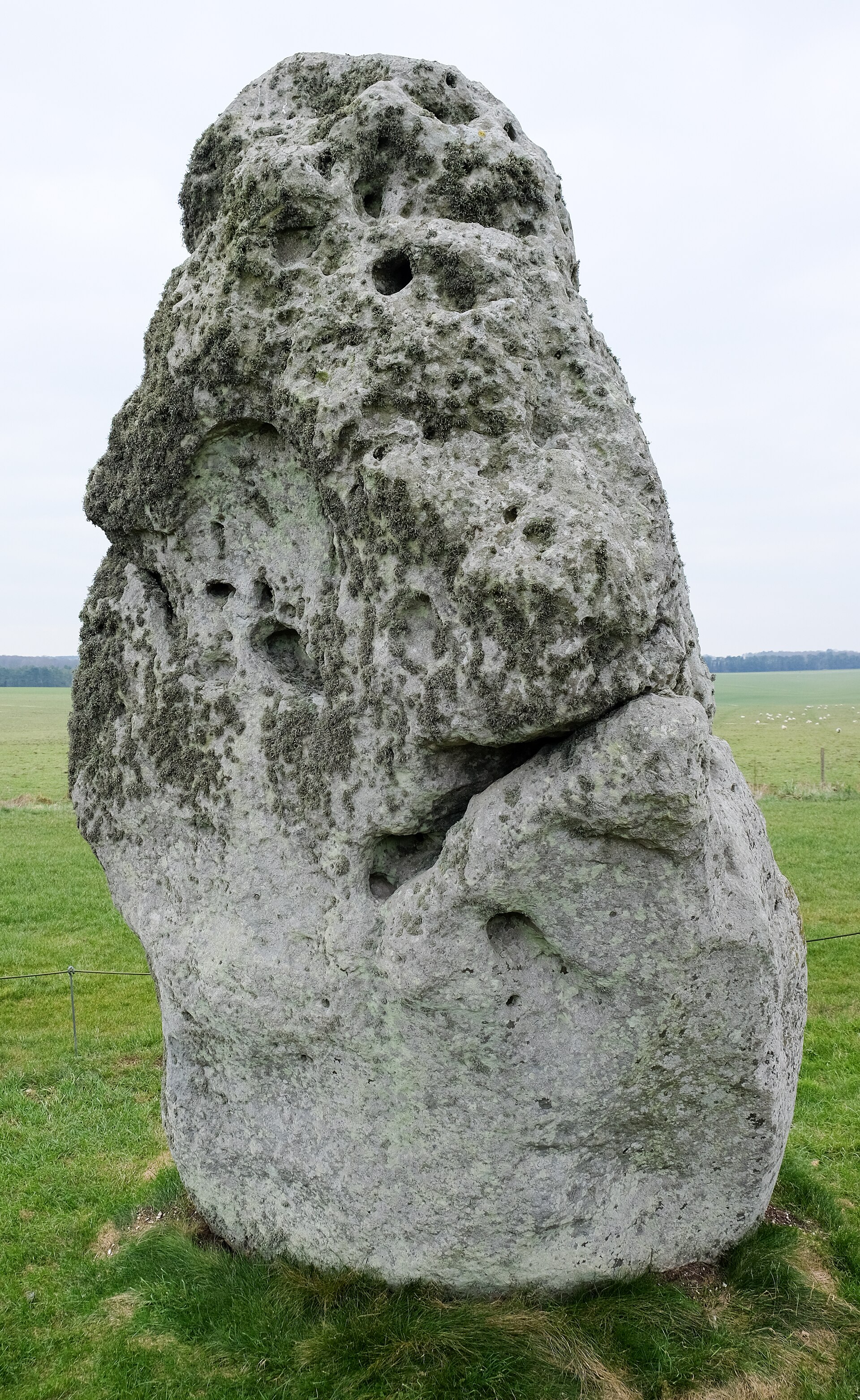
Stonehenge — the most-looked-at stones on Earth; the decoy the world mistook for the door. <small>DeFacto, CC BY-SA 4.0, via Wikimedia Commons</small>
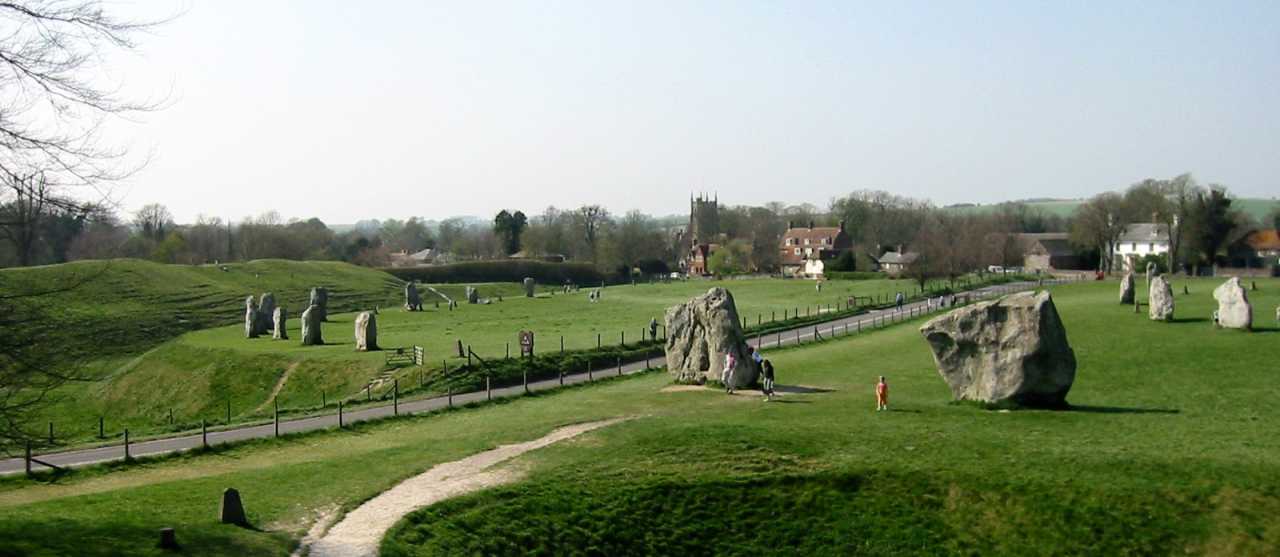
Avebury — the great henge the village grew up inside. <small>Rxfelix, CC BY 3.0, via Wikimedia Commons</small>
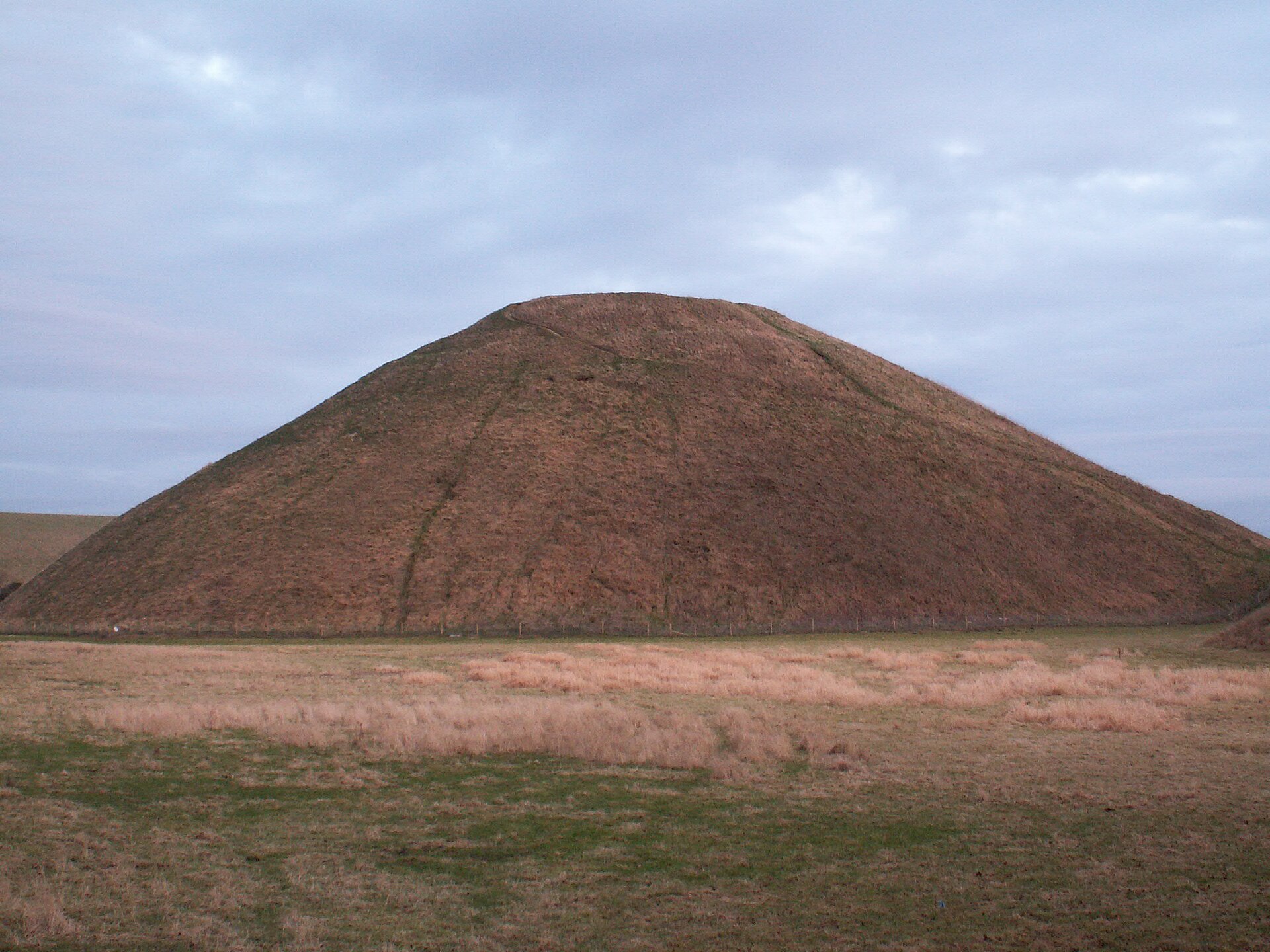
Silbury Hill — the largest prehistoric mound in Europe, raised for a reason we still don't have. <small>Dickbauch, Public domain, via Wikimedia Commons</small>
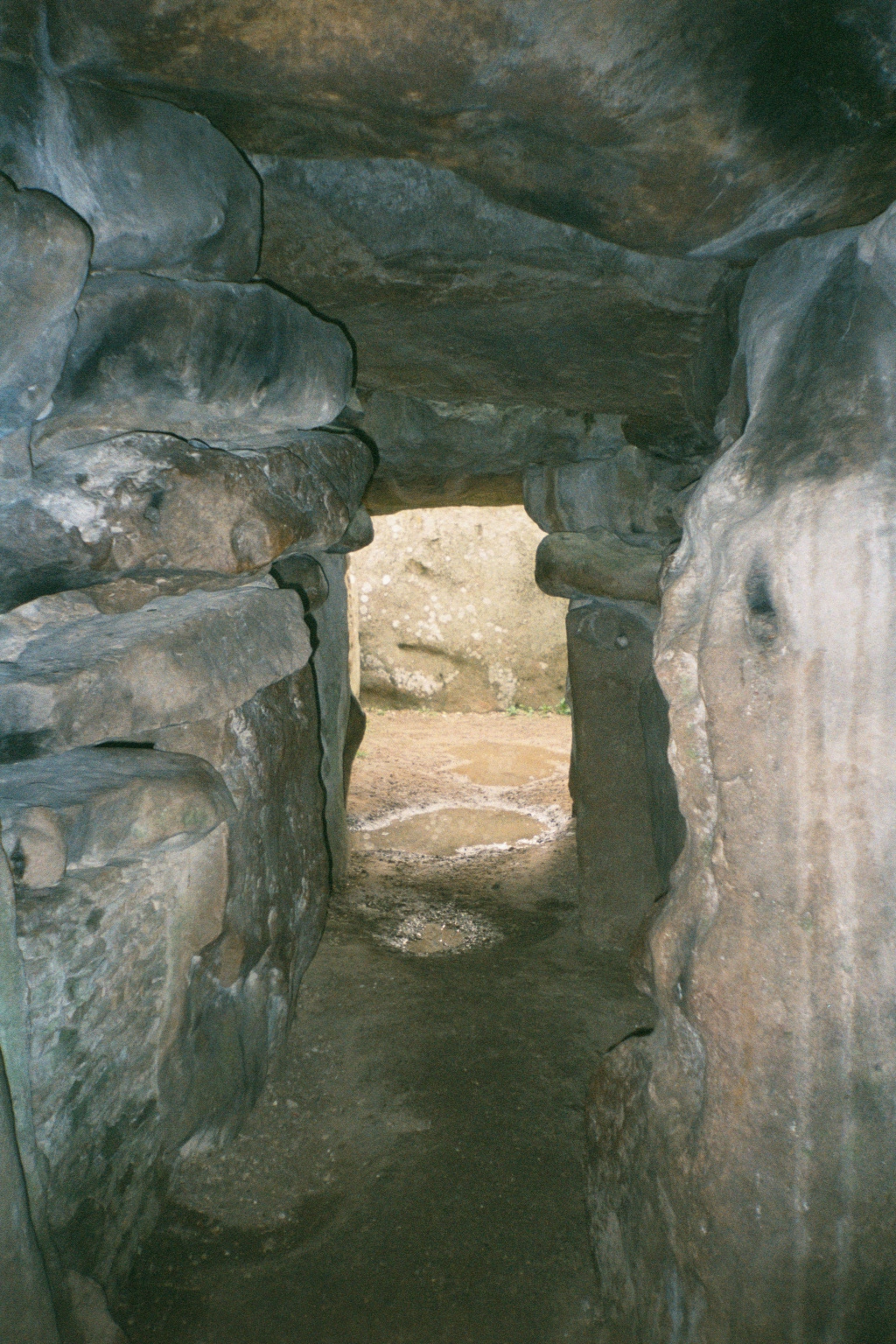
West Kennet Long Barrow — the chalk holding its dead five thousand years. <small>Simon Burchell, CC BY-SA 4.0, via Wikimedia Commons</small>
The Wiltshire chalk downland — the canvas the patterns appear on. <small>Jaggery, CC BY-SA 2.0, via Wikimedia Commons</small>
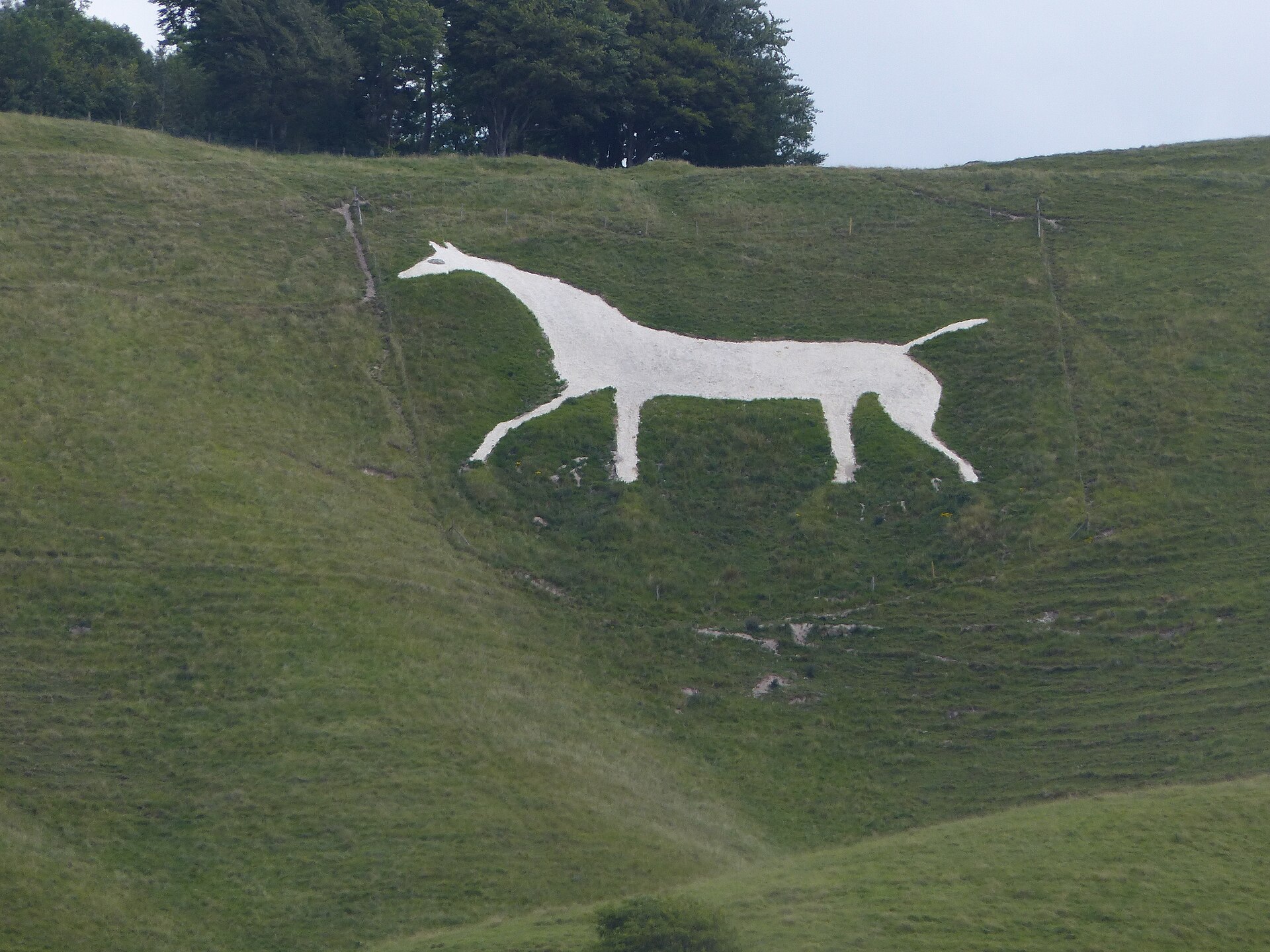
A Wiltshire chalk hill-figure — the land already written on by hand. <small>Schildiecom, CC BY-SA 4.0, via Wikimedia Commons</small>
Things of wonder (made by hand)
A crop formation in the Wessex wheat — craft, hoax, or the few that aren't either. <small>Croppy Peace Sign, CC0, via Wikimedia Commons</small>
Durrington Walls — a buried super-henge most eyes walk straight past. <small>Ethan Doyle White, CC BY-SA 4.0, via Wikimedia Commons</small>
Barbury Castle — an Iron Age hillfort over the same chalk. <small>Michael Graham, CC BY-SA 2.0, via Wikimedia Commons</small>
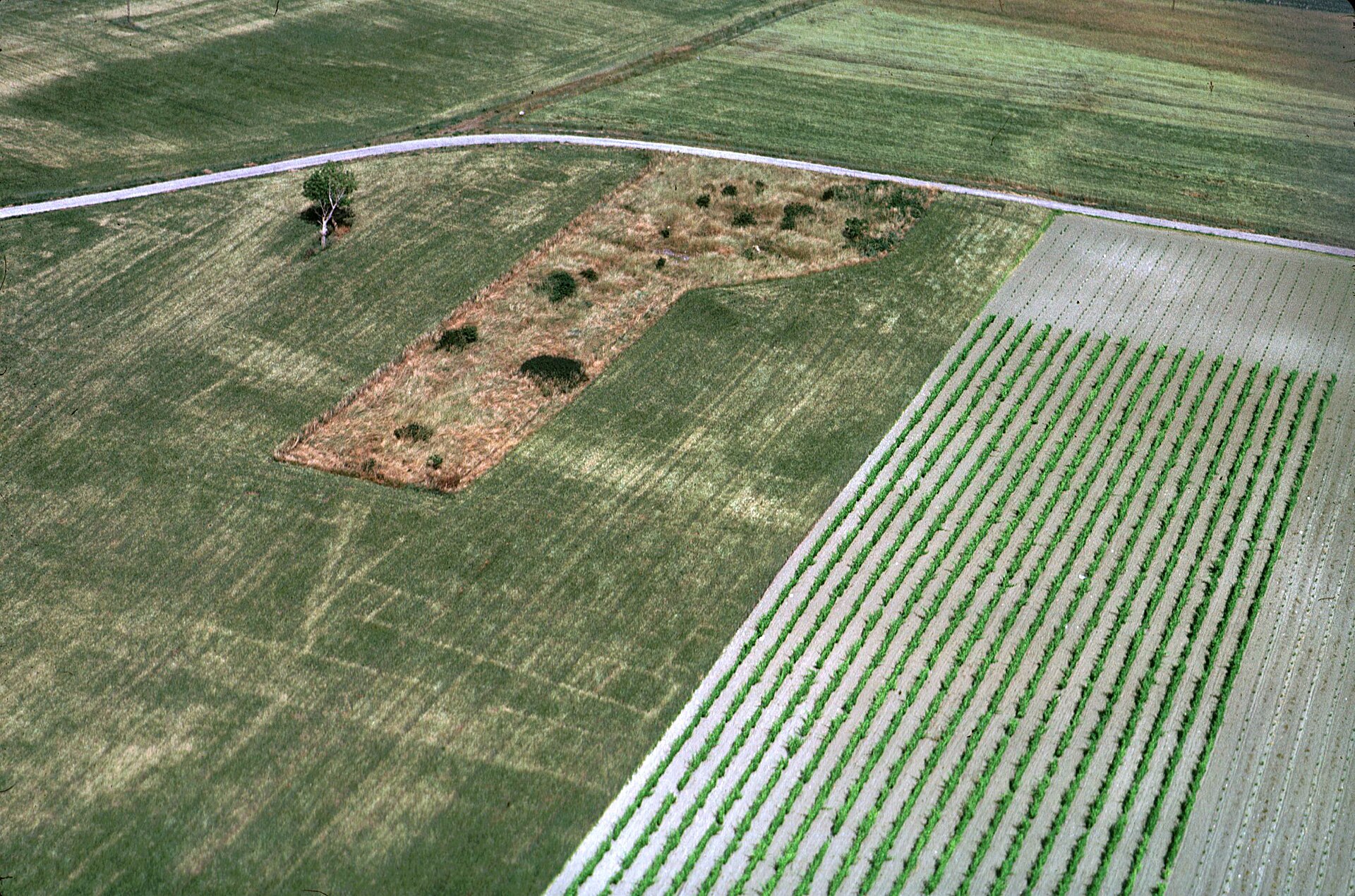
Crop-marks — the land writing its buried history in the wheat when the drought comes. <small>Jacques DASSIÉ, CC BY-SA 4.0, via Wikimedia Commons</small>
<!-- END image-compendium-appendix -->